Foenegriek: Benefits, Uses, Nutrition, Safety, and What Science Really Says
Foenegriek is a word that many people may not recognize at first, especially in the United States. In English, the herb is commonly known as fenugreek, while its scientific name is Trigonella foenum-graecum. It is a plant whose seeds and leaves have been used as food, spice, and traditional herbal preparations for a very long time. The seeds have a distinctive smell and flavor that can remind people of maple syrup, and they are widely used in South Asian, Middle Eastern, Mediterranean, and other food traditions. The National Center for Complementary and Integrative Health describes fenugreek as a clover-like herb native to the Mediterranean region, southern Europe, and western Asia.
Interest in foenegriek has grown because people often connect fenugreek with blood sugar support, digestion, breastfeeding, menstrual health, cholesterol, and other possible benefits. Some research has found promising results, especially around blood glucose, but the evidence is not strong enough to say that fenugreek is a treatment or cure for these conditions. The quality and size of studies vary, and researchers continue to study how the herb may work.
This distinction matters. Natural does not automatically mean proven, risk-free, or suitable for everyone. Foenegriek can be a useful culinary ingredient, but concentrated supplements are different from the small amounts normally used in food. Larger amounts may cause digestive problems, lower blood sugar too much, trigger allergic reactions, or interact with medicines. The National Center for Complementary and Integrative Health also advises against using fenugreek in amounts greater than those found in food during pregnancy because of safety concerns.
For people in the United States who are searching for foenegriek benefits, fenugreek uses, fenugreek tea, fenugreek seeds, or fenugreek supplements, the most important question is not simply whether the herb is “good.” A better question is where the evidence is strong, where it is uncertain, how it is normally used, and what precautions should be considered.
This guide explores foenegriek in simple language and separates traditional uses from what current scientific evidence can actually support.
What Is Foenegriek?
Foenegriek is the Dutch word commonly associated with fenugreek. In English-language health and nutrition information, the herb is generally called fenugreek. Its scientific name is Trigonella foenum-graecum, and it belongs to the legume family, Fabaceae.
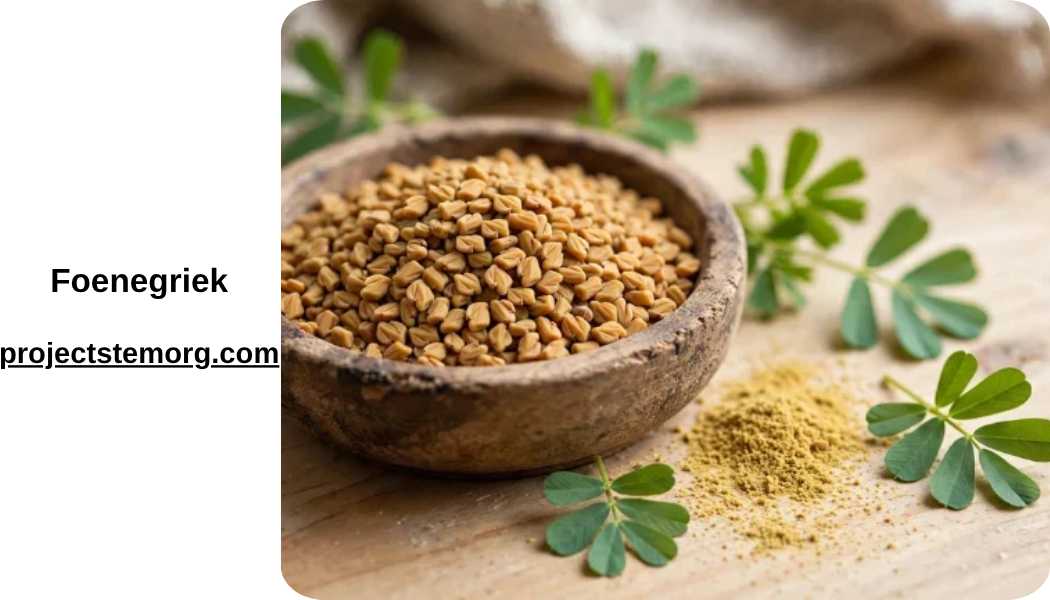
The plant produces small seeds that are usually yellowish-brown or golden in color. These seeds are one of the best-known parts of the plant because they have a strong aroma and slightly bitter, sweet, nutty flavor. The leaves can also be used as a food ingredient in some cuisines.
Fenugreek has a long history of use. The National Center for Complementary and Integrative Health notes that it has been used as a medicinal plant for about 6,000 years and has traditionally been used for purposes including digestive support, menstrual symptoms, and stimulating milk production.
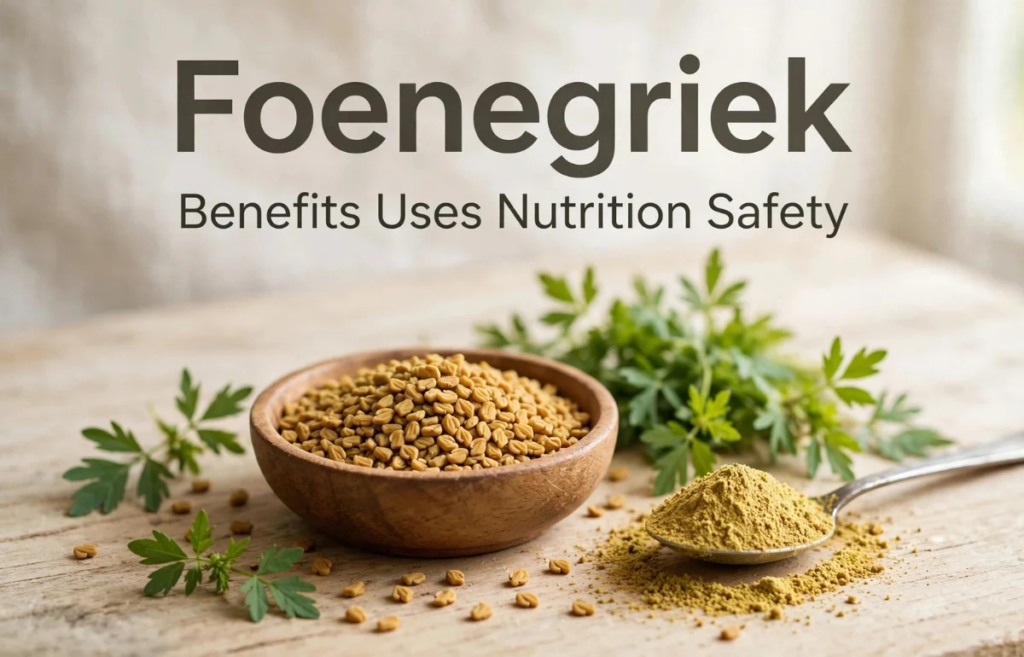
Today, foenegriek is available in several forms. People may encounter whole seeds, ground fenugreek powder, dried leaves, tea preparations, capsules, extracts, and products that combine fenugreek with other herbs.
Also read:Pravi Celer: Complete Guide to True Celery, Its Uses, Nutrition, Benefits, and Traditional Uses
These forms are not identical.
A small amount of fenugreek used as a spice is primarily a food ingredient. A concentrated extract or supplement can expose the body to a much larger amount of the plant’s compounds. This is one reason that safety information about food use should not automatically be applied to high-dose supplements.
Foenegriek and Fenugreek: Are They the Same Thing?
Yes. Foenegriek and fenugreek refer to the same herb.
The difference is mainly language. People searching for “foenegriek” may be using a Dutch term, while people in the United States are more likely to search for “fenugreek.”
This makes related search terms important when researching the subject. People may use phrases such as fenugreek seeds, fenugreek benefits, fenugreek tea, fenugreek powder, fenugreek supplement, Trigonella foenum-graecum, or fenugreek herb.
Understanding these names helps avoid confusion when reading health information.
The scientific name is particularly useful because common names can vary between languages and regions.
Where Does Foenegriek Come From?
Fenugreek is associated with regions around the Mediterranean, southern Europe, and western Asia. It has also become an important crop and culinary ingredient in parts of South Asia and other regions.
Today, fenugreek is familiar in many traditional cuisines. Its seeds can be roasted, ground, soaked, or added to dishes. The leaves can also be used in cooking.
Its distinctive flavor is one reason fenugreek has remained popular as a spice. The seeds contain aromatic compounds that give them their characteristic smell and taste.
Historically, however, food was not the only reason people valued the plant. Traditional systems of medicine used fenugreek for a wide range of purposes. Modern scientific research has examined some of these traditional claims, but not all traditional uses have been confirmed through strong human studies.
That difference between traditional use and modern evidence is important when evaluating foenegriek.
What Does Foenegriek Taste Like?
Fenugreek seeds have a strong flavor that can be described as earthy, slightly bitter, nutty, and naturally sweet. Some people notice a maple-like aroma.
The flavor can become stronger when the seeds are roasted.
Because the taste is distinctive, a small amount can affect an entire dish. This is one reason fenugreek is often used carefully in cooking.
The leaves have a different flavor and are commonly used in certain regional dishes. Dried fenugreek leaves can also add a noticeable herbal aroma.
For someone trying foenegriek for the first time, using a small culinary amount may be easier than starting with a concentrated supplement.
What Nutrients and Compounds Are Found in Fenugreek?
Fenugreek seeds contain several types of compounds that researchers have studied. These include dietary fiber, mucilage, steroidal saponins, flavonoids, trigonelline, and volatile oils. The National Institutes of Health’s LiverTox database describes fenugreek as containing substantial amounts of fiber along with several plant compounds that have been investigated for possible metabolic effects.
The fiber content is especially interesting because fiber can influence digestion and the way carbohydrates are processed.
Fenugreek also contains plant compounds that have been studied in laboratory and human research. However, the presence of a compound does not automatically mean that eating the plant will produce a specific medical benefit.
This is a common misunderstanding with herbal products.
Researchers need to determine whether a compound reaches the body in a useful amount, whether it produces a meaningful effect in humans, and whether the effect is large enough to matter in real life.
Foenegriek and Blood Sugar
Blood sugar is one of the most discussed areas of fenugreek research.
Some studies suggest that fenugreek may help lower blood glucose levels, particularly in people with type 2 diabetes. The possible effect may be related to its fiber and other plant compounds.
However, the evidence is not strong enough to consider fenugreek a proven treatment for diabetes.
The National Center for Complementary and Integrative Health states that research suggests fenugreek may lower blood sugar in people with type 2 diabetes, but it also notes that many studies were not high quality. Its diabetes information further explains that research on herbal supplements, including fenugreek, has been limited by differences in study size and quality and has not established these herbs as effective diabetes treatments.
This is a useful example of why scientific evidence needs careful interpretation.
A study showing that blood sugar decreased does not automatically mean that fenugreek can replace prescribed medicine.
For someone with diabetes, blood glucose control can involve medication, food choices, physical activity, sleep, and other parts of a treatment plan. Replacing proven medical care with an unproven supplement can be dangerous.
How Might Fenugreek Affect Blood Sugar?
Researchers have proposed several possible explanations.
The fiber in fenugreek may slow the digestion and absorption of carbohydrates. Certain plant compounds may also influence glucose metabolism.
However, laboratory explanations are not the same as proof of a clinically meaningful benefit.
A person may see a small change in a laboratory measure without experiencing a major improvement in long-term health.
This is why high-quality human clinical trials matter.
The current evidence suggests that fenugreek is an interesting area of research, but it should not be presented as a natural cure for diabetes.
Can Foenegriek Help With Digestion?
Digestive health is another traditional use of fenugreek.
Because fenugreek seeds contain significant fiber and mucilaginous material, researchers have considered whether they may affect digestion and bowel function.
Some people use fenugreek preparations as part of traditional approaches to digestive discomfort.
However, the relationship is not as simple as saying that fenugreek always improves digestion.
The same properties that may affect digestion can cause digestive symptoms in some people. NCCIH lists diarrhea, nausea, and other digestive tract symptoms among possible side effects.
This means that a person who experiences bloating or loose stools after taking a concentrated fenugreek product may not be experiencing a “detox.” It may simply be a side effect.
That distinction is important because the word detox is often used in supplement marketing without strong scientific support.
Foenegriek and Fiber
Fiber is one of the most interesting nutritional features of fenugreek seeds.
Fiber can help support normal digestive function and can influence how quickly food moves through the digestive system.
However, fiber needs to be considered as part of the entire diet.
Eating a varied diet that includes vegetables, fruits, whole grains, legumes, nuts, and seeds provides many different types of fiber and nutrients.
Fenugreek should therefore be viewed as one possible food ingredient rather than a replacement for a balanced diet.
Can Fenugreek Help With Cholesterol?
Fenugreek has also been studied for cholesterol and blood lipid levels.
Researchers have explored whether fenugreek’s fiber and plant compounds may influence cholesterol metabolism.
Some studies have reported potentially positive effects, but the evidence is not strong enough to make fenugreek a proven cholesterol treatment.
The NIH LiverTox resource notes that fenugreek has been used for cholesterol-related purposes, but also states that benefits for hypercholesterolemia have not been proven in rigorously designed prospective human trials.
For someone with high cholesterol, proven lifestyle and medical approaches remain important.
Fenugreek may be an interesting food ingredient, but it should not replace a treatment plan recommended by a healthcare professional.
Foenegriek and Women’s Health
Fenugreek has a long history of traditional use in women’s health.
It has been used traditionally for menstrual discomfort and to support milk production during breastfeeding.
Modern research has examined both areas, but the evidence is mixed.
NCCIH states that only a small number of studies have examined fenugreek for menstrual cramps and that the evidence is low quality. Research on breastfeeding has also produced mixed results, making it uncertain whether fenugreek reliably increases milk supply.
This is an area where careful language is especially important.
A traditional use does not guarantee that a supplement will work for every person.
Foenegriek and Menstrual Cramps
Fenugreek has traditionally been used to help with menstrual discomfort.
A recent systematic review and meta-analysis is listed among NCCIH’s key references, showing that researchers continue to examine this question.
Still, the overall evidence should not be overstated.
If someone experiences severe or unusually painful periods, it is important to understand why the pain is occurring. Menstrual pain can sometimes be associated with conditions that require medical evaluation.
Using an herb without investigating a serious underlying problem may delay appropriate care.
Foenegriek and Breastfeeding
Fenugreek is widely known in traditional herbal practice as a galactagogue, meaning an herb believed to increase breast milk production.
Some breastfeeding products contain fenugreek for this reason.
However, scientific evidence remains mixed. NCCIH states that it is uncertain whether fenugreek actually increases milk supply, and there is limited information about the safety of larger-than-food amounts during breastfeeding.
This means breastfeeding parents should not assume that taking more fenugreek will automatically increase milk production.
Low milk supply can have many causes, and a lactation professional or healthcare provider may be able to identify the underlying issue.
Is Foenegriek Safe During Pregnancy?
This is one of the most important safety questions.
Fenugreek is not considered safe during pregnancy when used in amounts greater than those normally found in food. NCCIH reports that use in larger amounts has been linked with an increased risk of birth defects in both animals and people.
Therefore, pregnant people should not treat fenugreek supplements as automatically safe simply because the product is labeled natural.
Food use and concentrated supplement use are different.
Anyone who is pregnant and considering an herbal supplement should discuss it with a healthcare professional before use.
Foenegriek and Breastfeeding Safety
Safety during breastfeeding is less clear than safety during pregnancy.
NCCIH states that there is not enough information to determine whether larger-than-food amounts of fenugreek are safe while breastfeeding.
This is particularly important because some breastfeeding supplements contain multiple ingredients.
If a product contains fenugreek along with several other herbs, it can become difficult to know which ingredient is responsible for an effect or side effect.
For that reason, breastfeeding parents should discuss concentrated herbal products with a qualified healthcare professional.
Common Foenegriek Side Effects
Fenugreek is generally considered reasonably safe when consumed in amounts commonly found in food, but larger amounts can cause problems.
Possible side effects include digestive discomfort, diarrhea, nausea, bloating, and gas. NCCIH also notes that fenugreek can cause allergic reactions in some people and that large doses may lower blood sugar too much.
The experience can vary from one person to another.
A person who tolerates a small amount in food may not necessarily tolerate a concentrated capsule.
This is why supplement labels and dosage instructions should be taken seriously.
Can Foenegriek Cause Low Blood Sugar?
Yes, concentrated or large amounts of fenugreek may lower blood sugar.
For someone who already takes diabetes medicine, combining treatments that lower blood glucose can potentially increase the risk of blood sugar becoming too low.
Low blood sugar can cause symptoms such as shaking, sweating, nervousness, irritability, confusion, dizziness, and hunger. MedlinePlus notes that blood glucose below 70 mg/dL is considered low and may require treatment.
This does not mean everyone who consumes fenugreek will develop low blood sugar.
It means that people using diabetes medication should be careful about adding concentrated fenugreek supplements without professional guidance.
Foenegriek and Medication Interactions
Herbal supplements can interact with medicines.
Fenugreek may be especially important to discuss with a healthcare professional if a person takes medication that affects blood sugar or blood clotting.
The NIH LiverTox database notes potential herb-drug interaction concerns related to fenugreek’s fiber, estrogenic, and coumarin-like effects, particularly when used in higher amounts with antiplatelet drugs or warfarin.
This does not mean that everyone taking these medicines will experience an interaction.
It means that supplement use should be discussed with a healthcare professional who knows the person’s medications and health history.
Can People Be Allergic to Fenugreek?
Yes.
Fenugreek can cause allergic reactions in some people. NCCIH reports that reactions can range from ordinary allergy symptoms to serious reactions.
People with known allergies to legumes should be especially careful when trying unfamiliar herbal products because fenugreek belongs to the legume family.
Anyone who develops serious symptoms after consuming a supplement should seek urgent medical attention.
Foenegriek and Liver Health
There is an important difference between saying that an herb is “good for the liver” and saying that available evidence has not shown it to commonly cause liver injury.
The NIH LiverTox database states that fenugreek has not been implicated in clinically apparent liver injury and gives it a very low likelihood of being a cause of such injury.
That is useful safety information, but it should not be converted into a claim that fenugreek treats liver disease.
Those are two different statements.
A lack of evidence that an herb commonly causes liver injury does not prove that the herb can cure or protect against every liver condition.
Foenegriek for Weight Loss
Fenugreek is sometimes promoted online for weight management.
Some explanations focus on its fiber content and the possibility that fiber may increase fullness.
However, there is not enough strong evidence to present fenugreek as a reliable weight-loss treatment.
Healthy weight management is influenced by overall food intake, physical activity, sleep, genetics, environment, medications, and many other factors.
A single herb is unlikely to replace those fundamentals.
For someone trying to manage weight, fenugreek can be considered a food ingredient, but it should not be marketed as a magic solution.
Foenegriek Tea: What Is It?
Fenugreek tea is commonly made by soaking or simmering fenugreek seeds in water.
Some people drink it because they enjoy the flavor, while others use it because of traditional beliefs about digestion, blood sugar, or breastfeeding.
The important point is that a tea is still a form of fenugreek consumption.
It should not automatically be considered risk-free simply because it is homemade.
The strength of the tea depends on how much seed is used and how it is prepared.
People who take medicines or have health conditions should be cautious about using strong herbal preparations regularly.
How Fenugreek Seeds Are Used in Food
Fenugreek seeds are used as a spice in many cuisines.
Also read:Seekde: The AI-Powered Discovery and Learning
They can be included in curry blends, vegetable dishes, sauces, breads, pickles, and other recipes.
Roasting can change their flavor and reduce some of their bitterness, although preparation methods vary.
Using small amounts in normal cooking is generally different from taking a concentrated extract.
This is one of the simplest ways to understand the safety distinction.
Food use typically exposes the body to smaller amounts than concentrated supplements.
Foenegriek Powder
Fenugreek powder is made by grinding dried seeds.
It can be added to food or used in traditional preparations.
Because the seeds are concentrated into a powder, it is still important to consider the amount being consumed.
A product marketed as a food ingredient is not necessarily equivalent to a standardized dietary supplement.
Consumers should read the label carefully and pay attention to the serving size and additional ingredients.
Foenegriek Supplements
Fenugreek supplements can come as capsules, tablets, powders, extracts, or combination formulas.
The main concern is that supplement strength can vary considerably.
A supplement may contain a concentrated extract that is very different from the amount found in ordinary food.
In the United States, dietary supplements are regulated differently from prescription drugs. NCCIH explains that dietary supplements generally do not undergo the same premarket approval process as drugs.
This means consumers should be careful with products that make dramatic health claims.
Statements such as “cures diabetes,” “replaces medication,” or “guarantees weight loss” should be treated with particular skepticism.
How to Choose a Fenugreek Product Carefully
If someone chooses to buy a fenugreek supplement, reading the label is important.
Look at the amount of fenugreek per serving and whether the product contains an extract or whole seed powder.
Check the list of additional ingredients.
Consider whether the company provides clear information about manufacturing and quality testing.
Avoid products that promise unrealistic results.
It is also useful to remember that a higher dose is not automatically better.
Herbal supplements should be approached with the same care as other products that can affect the body.
Foenegriek and Natural Health Claims
The word “natural” can create a false sense of safety.
Many natural substances have powerful biological effects.
Some can interact with medicines. Others can cause allergic reactions or become harmful at high doses.
Fenugreek is a good example because the plant can influence blood sugar and can cause side effects in some people.
A responsible approach is therefore neither to fear every herb nor to believe every herbal claim.
The better approach is to examine the evidence.
What Science Really Says About Fenugreek Benefits
The strongest current message from major U.S. health sources is that fenugreek is promising in some areas but not proven as a treatment for most health conditions.
Research suggests possible effects on blood sugar, but study quality has been inconsistent.
Research on menstrual cramps is limited.
Research on breastfeeding has produced mixed findings.
Evidence for many other conditions remains too limited to draw firm conclusions. NCCIH’s updated fenugreek page, last reviewed in February 2025, continues to emphasize these limitations.
This balanced position is more useful than either extreme.
Fenugreek should not be dismissed simply because every benefit has not been proven.
At the same time, it should not be promoted as a cure based on small or low-quality studies.
Traditional Use vs. Scientific Evidence
Traditional knowledge can provide valuable clues for researchers.
If a plant has been used for centuries for a particular purpose, scientists may investigate why.
But traditional use is not the same as clinical proof.
Scientific research asks additional questions.
Does the effect occur consistently?
How much of the herb is needed?
Which people benefit?
How long should it be used?
What are the risks?
Does it work better than a placebo?
Does it interact with standard treatment?
These questions help transform traditional observations into evidence.
Fenugreek remains an interesting example of a traditional herb that has moved into modern research without every historical claim being confirmed.
How Much Foenegriek Should You Take?
There is no single dose of fenugreek that is appropriate for everyone or every purpose.
Research studies have used different preparations and amounts. The NIH LiverTox database notes that historical study and clinical preparations have varied widely, from a few grams to much larger daily amounts.
This variation is one reason it is not responsible to give a universal supplement dose for blood sugar, breastfeeding, weight loss, or another medical goal.
The appropriate amount depends on the form of the product, the reason for use, medications, health conditions, and other factors.
For culinary use, following a normal recipe is a very different situation from taking a concentrated supplement.
Who Should Be Especially Careful With Foenegriek?
People who are pregnant should avoid fenugreek supplements or medicinal amounts unless specifically advised by a healthcare professional because larger-than-food amounts are not considered safe during pregnancy.
People who take diabetes medicines should also discuss concentrated fenugreek use with a healthcare professional because fenugreek may lower blood sugar.
People taking anticoagulant or antiplatelet medicines should ask about possible interactions.
People with allergies should be cautious.
Children should not be given larger-than-food amounts without professional advice because there is not enough reliable information about safety in children.
Foenegriek for Everyday Cooking
For many people, the simplest role of fenugreek is as a culinary herb.
Using a modest amount in food can add a distinctive flavor without turning the herb into a high-dose supplement.
This approach also fits naturally into a balanced diet.
Instead of thinking of foenegriek as a replacement for healthy eating, it can be viewed as one ingredient among many.
A healthy diet does not need one “superfood” to work.
Variety is more important.
How Foenegriek Fits Into a Balanced Diet
A balanced diet contains a wide range of foods that provide protein, fiber, vitamins, minerals, healthy fats, and other nutrients.
Fenugreek can contribute flavor and some nutrients, but it cannot provide everything the body needs.
Someone who wants better blood sugar control, for example, should consider the whole eating pattern rather than focusing on one herb.
Vegetables, whole grains, legumes, protein sources, fruits, and healthy fats can all play a role.
Regular physical activity and adequate sleep can also influence metabolic health.
Fenugreek should therefore be considered a supporting food ingredient rather than the foundation of a healthy lifestyle.
Foenegriek and Modern Research
Research on fenugreek continues because the plant contains several biologically active compounds.
Scientists are studying how these compounds may interact with glucose metabolism, inflammation, digestion, and other biological processes.
The existence of ongoing research is encouraging, but it also tells us something important: some questions remain unanswered.
A responsible health article should not turn every promising laboratory result into a proven human benefit.
Future studies may clarify which forms of fenugreek are useful, which doses are appropriate, and which people are most likely to benefit.
Until then, consumers should rely on the strongest evidence currently available.
How to Read Online Claims About Foenegriek
People searching online may encounter very different claims.
One website may call fenugreek a miracle herb.
Another may say it is useless.
Both extremes can be misleading.
When evaluating a claim, look for information about the type of evidence behind it.
A laboratory experiment is different from a randomized human trial.
A small study is different from a large systematic review.
A traditional claim is different from a treatment recommendation from a medical organization.
The strongest sources usually explain uncertainty instead of pretending that every question has a simple answer.
For fenugreek, major U.S. health information sources such as NCCIH provide a useful starting point because they summarize the evidence while also discussing safety and limitations.
Foenegriek and E-E-A-T Health Information
Health content requires extra care because readers may make real decisions based on what they read.
For this reason, trustworthy information about foenegriek should clearly separate established facts, traditional uses, possible benefits, and uncertain claims.
It should also explain risks.
For example, saying that fenugreek “lowers blood sugar” without mentioning the quality of evidence and possible medication interactions would provide an incomplete picture.
A more accurate statement is that research suggests fenugreek may lower blood sugar in some people, but evidence quality is limited and concentrated use may create safety concerns.
That type of wording is more useful because it gives readers enough information to make informed decisions.
Common Myths About Foenegriek
One common myth is that anything natural is automatically safe. Fenugreek shows why this is not true because it can cause digestive symptoms, allergic reactions, and potentially excessive lowering of blood sugar at larger doses.
Another myth is that fenugreek can cure diabetes. Current evidence does not support replacing diabetes treatment with fenugreek. NCCIH specifically warns against replacing effective diabetes treatment with unproven products.
Another common claim is that more fenugreek always produces better results. There is no good reason to assume this. Larger amounts can increase the chance of side effects.
A final myth is that fenugreek tea and supplements are exactly the same. They may differ significantly in concentration and preparation.
The Most Practical Way to Think About Foenegriek
The most useful way to think about foenegriek is as a traditional herb and food ingredient with interesting areas of scientific research but with benefits that should not be exaggerated.
It may have useful properties.
It may support certain aspects of health in some people.
Research may eventually establish clearer benefits.
But none of those statements means that fenugreek should replace professional medical treatment.
This balanced view allows people to appreciate traditional herbs without making unrealistic health promises.
Foenegriek in the United States
In the United States, consumers can find fenugreek in international grocery stores, spice sections, herbal products, teas, capsules, and online supplement marketplaces.
Because products vary widely, American consumers should pay attention to labeling and avoid assuming that every product has the same strength or quality.
A spice sold for cooking is not necessarily equivalent to a concentrated supplement.
A supplement containing fenugreek plus several other herbs is also not the same as plain fenugreek seed.
Reading the complete label can help consumers understand what they are actually buying.
Why Food Use and Supplement Use Should Be Separated
This is perhaps the most important practical lesson in the entire discussion.
Using a small amount of fenugreek in a meal is primarily a culinary choice.
Taking a concentrated extract every day for a medical purpose is a different decision.
The body may receive a much larger amount of active compounds in the second situation.
That is why safety advice often distinguishes between normal food amounts and larger medicinal or supplemental amounts.
NCCIH specifically states that fenugreek is generally believed to be safe in amounts commonly found in foods, while safety information becomes less certain at larger amounts and some risks become more important.
What Makes Foenegriek Interesting to Researchers?
Fenugreek combines several features that make it scientifically interesting.
It contains substantial fiber.
It contains saponins and other plant compounds.
It has a long history of traditional use.
It has been investigated in areas such as glucose metabolism and women’s health.
At the same time, research results are not always consistent.
This combination makes fenugreek a good example of why botanical research requires careful study.
A plant can contain potentially useful compounds without the whole plant functioning like a prescription medicine.
Can Foenegriek Replace Healthy Habits?
No.
No single herb should replace healthy eating, physical activity, sleep, stress management, or medical care when those things are needed.
For example, a person who wants better blood sugar control should not depend on fenugreek while ignoring a healthcare provider’s recommendations.
Likewise, someone trying to improve digestion should not assume that a supplement can replace a varied, fiber-rich diet and appropriate medical evaluation when symptoms persist.
Fenugreek may fit into a healthy lifestyle, but it should not become the entire strategy.
How to Talk With a Healthcare Professional About Foenegriek
Some people feel uncomfortable telling their doctor that they use herbal products.
It is better to be open.
A healthcare professional can check whether the supplement may interact with medicines or affect an existing condition.
Bring the product label if possible.
Tell the provider how often you use it and how much you take.
This information can help the professional give more accurate advice.
The National Center for Complementary and Integrative Health recommends discussing herbal products with healthcare providers, particularly when a person takes medicines.
Conclusion
Foenegriek, better known as fenugreek in the United States, is a useful and interesting herb that sits between traditional food culture and modern health research. Its seeds contain fiber and several plant compounds that scientists continue to study, and some research suggests possible benefits for blood sugar and other areas of health. At the same time, the evidence is not strong enough to support many of the dramatic claims found online. Fenugreek should not be viewed as a cure for diabetes, a guaranteed weight-loss solution, or a replacement for medical treatment. For most people, the safest and simplest way to enjoy it is as part of normal food use, while anyone considering concentrated supplements should pay attention to dosage, possible interactions, pregnancy safety, and individual health needs.
FAQs About Foenegriek
What is foenegriek called in the United States?
Foenegriek is commonly called fenugreek in the United States. Its scientific name is Trigonella foenum-graecum. Fenugreek seeds and leaves are used as food ingredients, spices, and in traditional herbal preparations.
Can I use foenegriek every day as a spice?
Small amounts of fenugreek used as a normal food ingredient are generally considered safe for most people. However, using a concentrated supplement every day is different from culinary use. People taking medicines or managing a health condition should discuss regular supplement use with a healthcare professional.
Does foenegriek have a maple-like smell?
Yes. Fenugreek seeds have a distinctive aroma that can resemble maple syrup. Their flavor is also earthy, nutty, slightly bitter, and naturally sweet, which makes them useful in certain spice blends and traditional dishes.
Can children take fenugreek supplements?
There is not enough reliable information to establish the safety of fenugreek in amounts greater than those normally found in food for children. For that reason, parents should not give children concentrated fenugreek supplements without appropriate professional advice.
Should I stop prescribed medicine if I start taking foenegriek?
No. Fenugreek should not be used as a replacement for prescribed treatment. This is especially important for diabetes because some evidence suggests fenugreek can lower blood sugar, while reliable treatment may be needed to control the condition. Anyone considering fenugreek alongside medication should discuss it with a healthcare professional first.