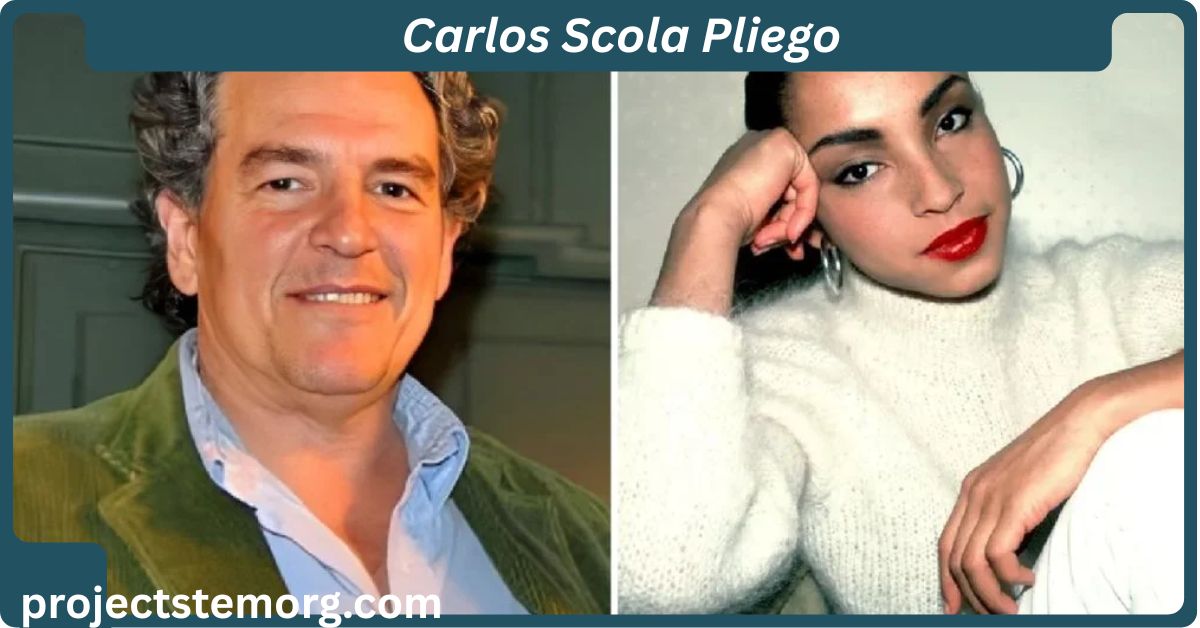
Carlos Scola Pliego: Biography, Film Career, Marriage to Sade Adu, and Life Story
Carlos Scola Pliego is a Spanish filmmaker whose name is often searched because of his former marriage to internationally famous singer Sade Adu. However, describing him only as Sade’s former husband leaves out an important part of his story.
Carlos Scola Pliego worked in the film industry for many years, mainly behind the camera. His professional credits include assistant-director work on Spanish and international productions, as well as directing and writing documentary projects. Film databases commonly list him under the shorter professional name Carlos Scola.
His connection with Sade Adu brought him considerable public attention in the late 1980s and early 1990s. Sade’s official biography confirms that she married the Spanish film director Carlos Scola Pliego in 1989.
At the same time, much of Carlos Scola Pliego’s private life remains difficult to document. Reliable sources do not provide a complete biography covering his childhood, education, parents, exact birth date, current residence, or finances. For that reason, a responsible account should not turn repeated internet claims into established facts.
This article explains what is known about Carlos Scola Pliego, his filmmaking career, his relationship with Sade Adu, his documentary work, the different names used in film records, and why some information about him should be treated carefully.
Who Is Carlos Scola Pliego?
Carlos Scola Pliego is a Spanish film professional who worked as an assistant director, director, writer, producer, and member of film production teams.
His professional identity is particularly interesting because he did not become famous as an actor or as a major celebrity director. Much of his work was performed behind the scenes, where assistant directors and other production professionals help organize the practical process of making films.
IMDb lists Carlos Scola as a second-unit director or assistant director, director, and writer. The database also identifies Carlos Scola Pliego as an alternative name. Its career record includes nine credits in second-unit or assistant-director work, two directing credits, two writing credits, two producing credits, script and continuity work, and additional crew work.
His name therefore appears in two forms:
- Carlos Scola Pliego
- Carlos Scola
These names generally refer to the same filmmaker in the available film records.
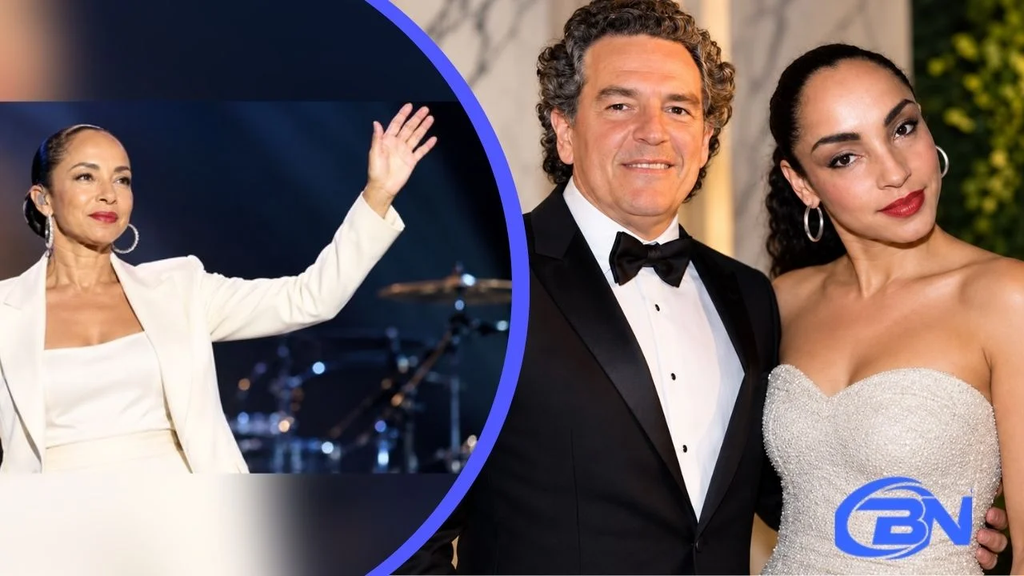
For many people in the United States, however, the name Carlos Scola Pliego is most familiar because of his marriage to Sade Adu. Sade’s official website identifies him specifically as a Spanish film director and records their marriage in 1989.
Carlos Scola Pliego Quick Facts
| Detail | Information |
| Full name | Carlos Scola Pliego |
| Professional name | Carlos Scola |
| Nationality | Spanish |
| Profession | Filmmaker, director, writer, producer, assistant director |
| Known publicly for | Film career and former marriage to Sade Adu |
| Former spouse | Sade Adu |
| Marriage year | 1989 |
| Divorce | 1995, according to IMDb’s biographical record |
| Known directing work | Ngira: Gorilas en la montaña and Donde termina el corazón |
| Film and television production work | Includes Never Say Never Again, Eleni, Christopher Columbus and other productions |
| Exact date of birth | Not reliably established in the sources reviewed |
| Education | Not reliably documented |
| Current residence | Not reliably documented |
| Verified net worth | No dependable public figure established |
The most important point is that the absence of reliable information about some personal details should not be filled with guesses.
What Is Known About Carlos Scola Pliego’s Early Life?
The early life of Carlos Scola Pliego is one of the least documented areas of his biography.
There are numerous websites that publish supposed details about his date of birth, age, family, education, and childhood. However, these claims are not consistently supported by strong primary or institutional sources.
Also Read: Infiltrasjon: How Rainwater Moves Into Soil, Reduces Runoff, and Supports Groundwater
That creates an important distinction between what is known and what is simply repeated online.
His professional history provides much stronger evidence. Film records show that Carlos Scola developed a career in Spanish filmmaking and production. His work eventually extended to international projects and documentary filmmaking.
Some recent biographical reports describe him as being from Madrid, and Spanish reporting has connected him with Madrid’s audiovisual production community. However, an exact birth date and detailed childhood biography should not be presented as confirmed without a reliable primary source.
Carlos Scola Pliego’s Birth Date and Age
One of the most common questions about Carlos Scola Pliego is how old he is.
A precise answer is difficult because a reliably documented public birth date has not been established in the sources reviewed for this article.
Some websites give specific years or ages, but these figures often appear without an identifiable authoritative source. Because of that, it is more accurate to say that his exact age is not publicly confirmed through dependable biographical records.
This is a useful example of why online biography research requires caution. A number repeated across several websites does not automatically become verified simply because many pages contain the same number.
Carlos Scola Pliego’s Family Background
There is also limited reliable information about his parents, siblings, childhood home, and wider family.
Unlike Sade Adu, whose career has generated decades of interviews, biographies, music coverage, and official material, Carlos has remained largely outside mainstream celebrity coverage.
As a result, information about his family background is not extensive.
Readers should be particularly cautious about websites that provide detailed names of parents or siblings without linking those claims to credible records.
Carlos Scola Pliego’s Film Career
Carlos Scola Pliego’s film career is the strongest documented part of his biography.
He worked across several areas of production rather than limiting himself to one job. This included assistant directing, second assistant directing, directing, writing, producing, and script or continuity work.
This type of career was valuable in an era when Spanish film production was also attracting international projects.
Film databases connect Carlos Scola with productions dating back to the early 1980s and later with documentary filmmaking.
His career demonstrates an important point: people who work in cinema are not always visible to audiences. A movie may be remembered because of its actors and director, while assistant directors, production personnel, cinematographers, continuity staff, and other crew members remain largely unknown outside professional circles.
Carlos Scola’s credits are a good example of that behind-the-scenes career path.
Carlos Scola Pliego and Never Say Never Again
One of the better-known productions associated with Carlos Scola is Never Say Never Again, the 1983 James Bond film starring Sean Connery.
It is important to describe his role accurately.
Carlos Scola did not direct Never Say Never Again. IMDb’s production records identify him as second assistant director for Spain.
That distinction matters when discussing his career.
An assistant director has production responsibilities that can include helping coordinate departments, schedules, locations, cast movements, and other practical aspects of filming. A second assistant director may have specific coordination responsibilities within that larger production structure.
Therefore, his involvement with an internationally recognizable movie demonstrates professional experience in film production, but it should not be confused with directing the movie.
Carlos Scola Pliego and Christopher Columbus
Carlos Scola also worked on the 1985 television production Christopher Columbus.
The production records identify Carlos Scola as assistant director for Spain, with the full name shown in parentheses as Carlos Scola Pliego.
This credit is particularly useful because it demonstrates how the shorter and longer versions of his name appear in professional records.
It also shows that his career involved international productions rather than only small local projects.
His work in Spanish production was part of a broader environment in which international filmmakers and television crews used Spanish locations and production services.
Carlos Scola Pliego and Eleni
Another documented credit is Eleni, the 1985 film directed by Peter Yates.
Available film records identify Carlos Scola as an assistant director associated with the Spanish production side. This is another example of his role as a behind-the-camera professional rather than as the main creative director of the production.
Looking at these credits together gives a clearer picture of his career.
Rather than appearing suddenly because of his relationship with Sade, Carlos had already been working in filmmaking.
Other Film Credits Associated With Carlos Scola
IMDb’s career record includes several additional productions associated with Carlos Scola.
Among the listed credits are:
- Dos y dos, cinco
- Black Commando
- Hundra
- G’olé!
- Never Say Never Again
- Eleni
- Christopher Columbus
- Ngira: Gorilas en la montaña
- Donde termina el corazón
- Goal II: Living the Dream
The exact role varied from one production to another.
For example, IMDb lists him as a second assistant director on productions such as Black Commando, Hundra, and Dos y dos, cinco. It also lists directing and writing responsibilities on his later documentary projects.
This variety is one of the most useful ways to understand Carlos Scola Pliego’s professional background.
Carlos Scola Pliego as a Documentary Filmmaker
The documentary side of Carlos Scola’s career is particularly significant.
His documented directing work includes Ngira: Gorilas en la montaña from 1988 and Donde termina el corazón from 1989.
These projects are important because they show him taking greater creative responsibility.
Instead of assisting another director, he became involved in creating and shaping documentaries himself.
That transition—from production support to directing and writing—is one of the most interesting aspects of his career.
What Is Ngira: Gorilas en la montaña?
Ngira: Gorilas en la montaña is a 1988 Spanish documentary short.
IMDb lists the production as approximately 25 minutes long and credits Carlos Scola as director and writer. The database also identifies the Democratic Republic of the Congo as a filming location and Creativos Asociados de Radio y Televisión as the production company.
Its subject matter centered on gorillas and the natural environment.
IMDb’s full credits also identify Carlos Scola as producer and co-director in its production records.
Spain’s film records and secondary research also connect the project with Carlos Scola and Lorenzo Queipo de Llano.
This documentary is important when studying Carlos Scola Pliego because it represents a clear move toward personal filmmaking.
Why Is Ngira Important to His Career?
The documentary provides evidence that Carlos was interested in subjects beyond conventional commercial cinema.
Working with wildlife requires a different filmmaking approach. Unlike a fictional movie, a documentary about animals cannot completely control its subjects, environment, weather, or timing.
That means the filmmaker must often observe patiently and adapt to what happens in the real world.
Carlos’s involvement with a documentary about mountain gorillas therefore adds another dimension to his professional profile.
It shows a filmmaker interested in real environments and subjects rather than only scripted entertainment.
What Is Donde termina el corazón?
Donde termina el corazón is another important Carlos Scola documentary.
Released in 1989, the film runs approximately 95 minutes. IMDb identifies Carlos Scola as its director and writer. The film was produced in Spain and lists the Democratic Republic of the Congo as a filming location.
The documentary presents views of Africa, including material associated with the Ituri Forest and areas around Nairobi.
A research work from Universidad Rey Juan Carlos also discusses Donde termina el corazón in the context of Spanish documentary cinema and identifies Carlos Scola as its filmmaker.
This academic material is useful because it places the film within a larger history of Spanish documentary filmmaking rather than treating it simply as a celebrity-related curiosity.
What Does Donde termina el corazón Tell Us About Carlos Scola?
The film provides one of the clearest windows into Carlos Scola’s creative interests.
Its subject was much broader than a conventional entertainment movie. It dealt with African landscapes, communities, cultures, and different forms of human experience.
Academic discussion of the film also shows that it can be studied as part of the development of Spanish documentary cinema during the late 1980s.
However, it is important not to exaggerate the film’s historical impact.
Research cited above does not establish it as a major commercial success or universally recognized landmark. The documentary is historically traceable and professionally significant within Scola’s career, but that is different from saying it became a major international hit.
How Did Carlos Scola Pliego Meet Sade Adu?
The connection between Carlos Scola Pliego and Sade Adu appears to have developed through their professional worlds.
Spanish reporting has connected Carlos with work on music videos associated with Sade’s 1985 album Promise. Later, Sade spent significant time in Spain, where the relationship developed further.
The details of their private courtship are not extensively documented in primary sources, so it is better to avoid turning the relationship into a dramatic story unsupported by evidence.
What can be established more confidently is that Carlos was working in Spanish film and production while Sade was an internationally successful musician.
Their shared connection to visual production provided a natural professional environment in which they could meet.
When Did Carlos Scola Pliego and Sade Adu Get Married?
Carlos Scola Pliego and Sade Adu married in 1989.
Sade’s official biography confirms that she married the Spanish film director Carlos Scola Pliego that year.
IMDb’s biographical record gives a more specific marriage date of February 11, 1989, and records the marriage as ending in divorce in 1995.
Because the official Sade biography confirms the year but does not provide the same level of date detail, it is sensible to distinguish between the two sources rather than presenting every date as equally authoritative.
How Long Were Carlos Scola Pliego and Sade Adu Married?
The marriage lasted from 1989 until 1995 according to the biographical record on IMDb.
That means the legal marriage lasted several years.
However, readers should be careful with descriptions of exactly when their relationship began or ended emotionally. A legal marriage date does not necessarily tell us when two people began living together, separated, or privately ended their relationship.
Much of that information has never been publicly documented in detail.
Why Is Carlos Scola Pliego Known as Sade Adu’s Former Husband?
Sade Adu became a globally recognized singer through her work with the band Sade.
Also Read: Classroom15x: Complete Guide to Browser Games, Features, Safety, and Digital Use
Her international success means that people connected to her personal life have naturally attracted public interest.
Carlos Scola Pliego became one of those people.
For general audiences, searching for “Carlos Scola Pliego” often means looking for information about the man who married Sade in 1989. That is the main reason his name continues to appear in celebrity biographies and online searches decades later.
However, his film career predates the marriage.
This is an important distinction. His connection with Sade explains his public recognition, but it does not define his entire professional history.
Did Carlos Scola Pliego Influence Sade’s Music?
This is a frequently searched question, but it requires careful treatment.
Sade’s music is often discussed in connection with relationships, love, separation, emotion, and personal experience. Because Carlos was her husband during an important period of her career, some online articles speculate that specific songs were written about him.
There is not enough reliable evidence to state that particular Sade songs were definitely written about Carlos Scola Pliego unless Sade herself explicitly identified him as the subject.
This is an important example of the difference between interpretation and documented fact.
Listeners can interpret songs through the context of an artist’s life, but that does not prove the identity of a song’s subject.
Therefore, Carlos should not automatically be described as the inspiration for a particular Sade song.
Did Carlos Scola Pliego Have Children With Sade?
There is no reliable evidence in the sources reviewed establishing that Carlos Scola Pliego and Sade Adu had children together.
Sade’s official biography discusses her child being born in 1996, after the marriage to Carlos.
Therefore, online claims that suggest Carlos was the father of Sade’s child should not be treated as established fact.
This is another area where celebrity biographies can become confusing because dates, relationships, and family information are sometimes copied inaccurately between websites.
Carlos Scola Pliego’s Life After Divorce
The post-divorce life of Carlos Scola Pliego is not well documented.
This is one of the biggest gaps in his public biography.
IMDb lists a later additional-crew credit associated with Goal II: Living the Dream in 2007.
That provides evidence that his name remained connected with film production well after his marriage ended.
However, there is not enough reliable information to construct a detailed account of his later personal life.
There is also no strong evidence establishing his current occupation, current residence, current relationship status, or daily activities.
That lack of information should not be interpreted as evidence that he disappeared completely from professional life. It simply means that his later activities are not well represented in publicly accessible sources.
Is Carlos Scola Pliego Still Working in Film?
There is not enough current, reliable public information to confirm his present professional status.
His filmography includes a later 2007 credit, but an old credit cannot establish what someone is doing in 2026.
This distinction is particularly important for people who have intentionally maintained a private life.
A search result that says someone “still works in film” may simply be repeating an earlier biography rather than providing recent evidence.
Therefore, the safest statement is that Carlos Scola has documented experience in filmmaking, with records extending into the 2000s, while his current professional activities are not reliably established.
Carlos Scola Pliego Net Worth
Another common search query is “Carlos Scola Pliego net worth.”
There is no dependable public figure that establishes his current net worth.
Film credits can demonstrate that a person worked professionally, but they do not reveal salary, investments, property ownership, savings, taxes, debts, or other financial information.
His former marriage to Sade Adu also cannot be used to calculate his present wealth.
A spouse’s income or career success is not evidence of another person’s current assets.
For that reason, exact net-worth numbers published on unsourced biography websites should be treated as estimates or speculation rather than verified financial facts.
Carlos Scola Pliego Name and Credit Variations
Searching for Carlos Scola Pliego can sometimes be confusing because different sources use different versions of his name.
Film databases commonly use Carlos Scola.
Other records use Carlos Scola Pliego.
IMDb specifically lists Carlos Scola Pliego as an alternative name for the Carlos Scola professional profile.
This matters when researching his filmography.
A search for only “Carlos Scola Pliego” may miss some of his professional credits because older film records may have been entered under “Carlos Scola.”
The name variation does not necessarily mean that two different filmmakers are involved.
Why Is Carlos Scola Pliego’s Biography Difficult to Research?
There are several reasons.
First, his career was largely behind the camera. People working in assistant-director and production roles generally receive less media coverage than actors and celebrity directors.
Second, his most widely recognized connection is personal rather than professional. Search engines often associate his name with Sade Adu because that is what attracts public interest.
Third, he has not built a large public media profile.
Fourth, many newer websites have published biographies containing details that appear to be copied from one another. Repetition can make information appear more reliable than it actually is.
This creates a research problem known as source duplication.
If ten websites repeat the same claim but all obtained it from the same unsourced page, there are not really ten independent sources.
How to Research Carlos Scola Pliego Responsibly
A good approach is to separate information into three levels.
Level One: Strongly Documented Information
This includes information supported by official biographies, film databases, institutional catalogues, production records, and academic research.
Examples include:
- His identity as a Spanish filmmaker
- His professional name Carlos Scola
- His film production roles
- His directing credits
- His 1989 marriage to Sade Adu
- His association with documentary projects
Level Two: Reasonably Reported Information
This includes information supported by reputable journalism or multiple independent sources but not necessarily by a primary record.
Such information can be discussed, but it should be presented with appropriate wording.
Level Three: Unverified Online Claims
These include exact details about:
- Birth date
- Private family history
- Personal finances
- Current residence
- Current relationships
- Private conversations
- Alleged inspiration behind specific songs
These details should not be presented as established facts without reliable evidence.
Carlos Scola Pliego and Digital Privacy
The continued interest in Carlos Scola Pliego also raises an important digital-literacy issue.
When someone is connected to a famous person, search engines can encourage users to look for personal details that may not have been publicly confirmed.
Readers should remember that being a former spouse of a celebrity does not mean every part of that person’s private life is public information.
Unverified social media accounts, unofficial profiles, leaked documents, supposed addresses, private contact information, and claims about family members should be treated carefully.
A responsible biography focuses on information that has legitimate public value.
It should not attempt to expose private information simply because readers are curious.
Also Read: Wollmatten: A Complete Guide to Wool Mats, Uses, Benefits, and Care
Frequently Asked Questions About Carlos Scola Pliego
1. What language did Carlos Scola Pliego work in?
Carlos Scola was a Spanish filmmaker, and his documentary Donde termina el corazón is listed as a Spanish-language production.
His work on international productions also placed him in multinational film environments, where different languages and production teams could be involved.
2. Was Carlos Scola Pliego a famous director in Spain?
The available evidence confirms that he worked as a director, writer, producer, and assistant director, but it does not support describing him as one of Spain’s most famous directors.
His documentary credits are professionally significant, but his public profile remained relatively limited.
3. Did Carlos Scola Pliego work with international film crews?
Yes. His credits include work associated with international productions such as Never Say Never Again and Christopher Columbus. IMDb identifies him as assistant director for Spain on Christopher Columbus.
This indicates experience working within productions involving international filmmaking teams.
4. Is Carlos Scola Pliego related to any other famous filmmaker?
No reliable source reviewed for this article establishes a family relationship between Carlos Scola Pliego and another famous filmmaker.
Online biographies sometimes add family details without providing evidence, so such claims should be checked against reliable records before being repeated.
5. Where can researchers find information about Carlos Scola Pliego’s films?
Film databases such as IMDb provide production credits, while Spanish institutional and academic sources can provide additional information about his documentary work. IMDb’s Carlos Scola profile, for example, records his assistant-director, director, writer, and related production credits.
Researchers interested in his documentary career can also consult Spanish film catalogues and academic research concerning Spanish documentary cinema.
Conclusion
Carlos Scola Pliego remains an intriguing but relatively private figure in modern entertainment history.
For many people, his name is connected first with Sade Adu. Their marriage in 1989 made him part of the biography of one of the most recognizable singers of her generation. Sade’s official biography confirms his identity as a Spanish film director and records their marriage.
But his own professional history deserves attention.
Carlos Scola worked behind the scenes on film and television productions, including international projects. His documented credits show experience as an assistant director and other production roles. Later, he moved into documentary filmmaking, with projects such as Ngira: Gorilas en la montaña and Donde termina el corazón.
His documentary career is particularly useful for understanding him as an individual. It demonstrates that his professional identity existed independently of his marriage to Sade Adu.
At the same time, there is a valuable lesson in researching Carlos Scola Pliego: not every detail published online is equally reliable. His exact birth date, family background, finances, present location, and later personal life remain insufficiently documented in strong public sources.
A trustworthy biography should therefore resist the temptation to fill those gaps with speculation.
The most accurate picture is of a Spanish filmmaker who built a career behind the camera, moved into documentary work, became internationally recognizable through his marriage to Sade Adu, and then largely remained outside the public spotlight.
That combination of professional film work and personal privacy explains why Carlos Scola Pliego continues to attract curiosity decades after his marriage to Sade ended. His story is not simply the story of a celebrity’s former husband. It is also the story of a film professional whose documented work provides a more meaningful way to understand his place in entertainment history.