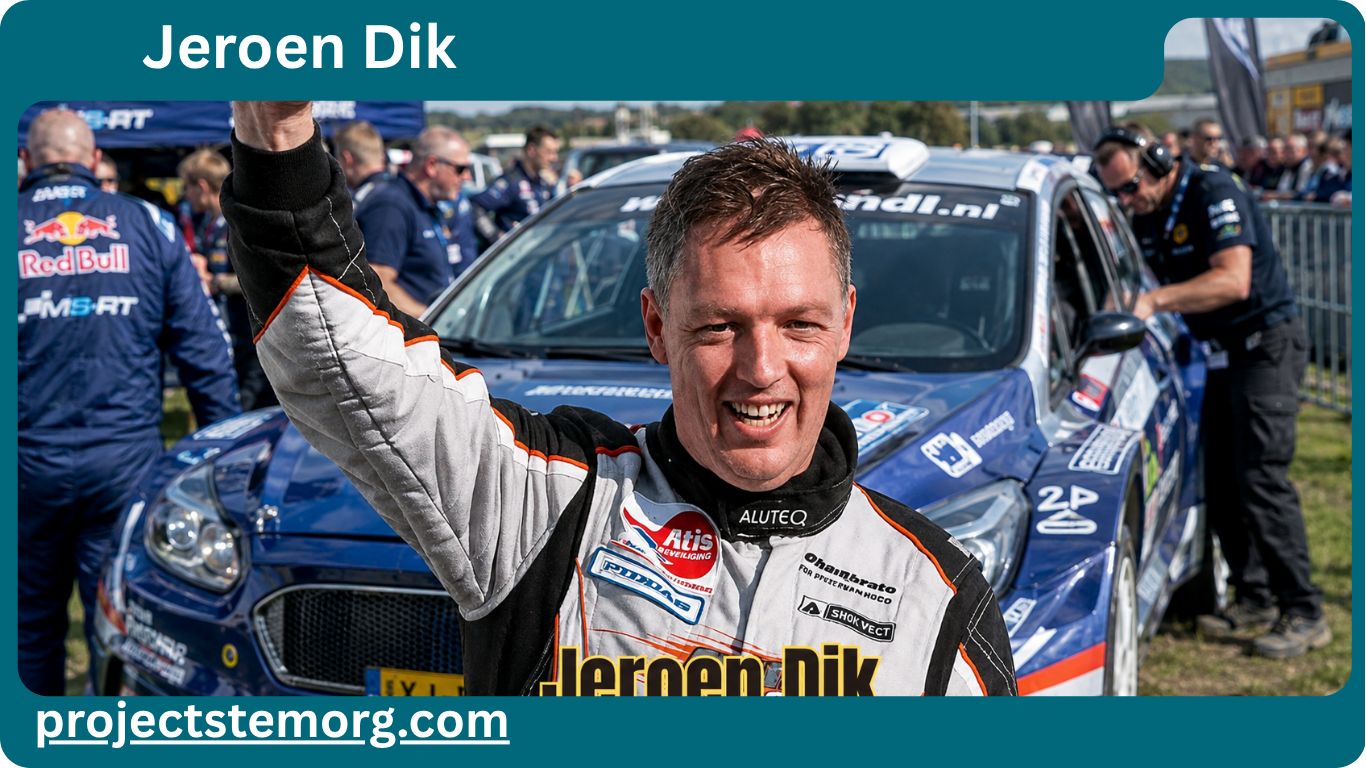
Jeroen Dik: Career, JD Engineering, Automotive Tuning, and Motorsport
Jeroen Dik is a Dutch automotive tuning specialist best known for his connection with JD Engineering, Volkswagen Group performance tuning, and motorsport.
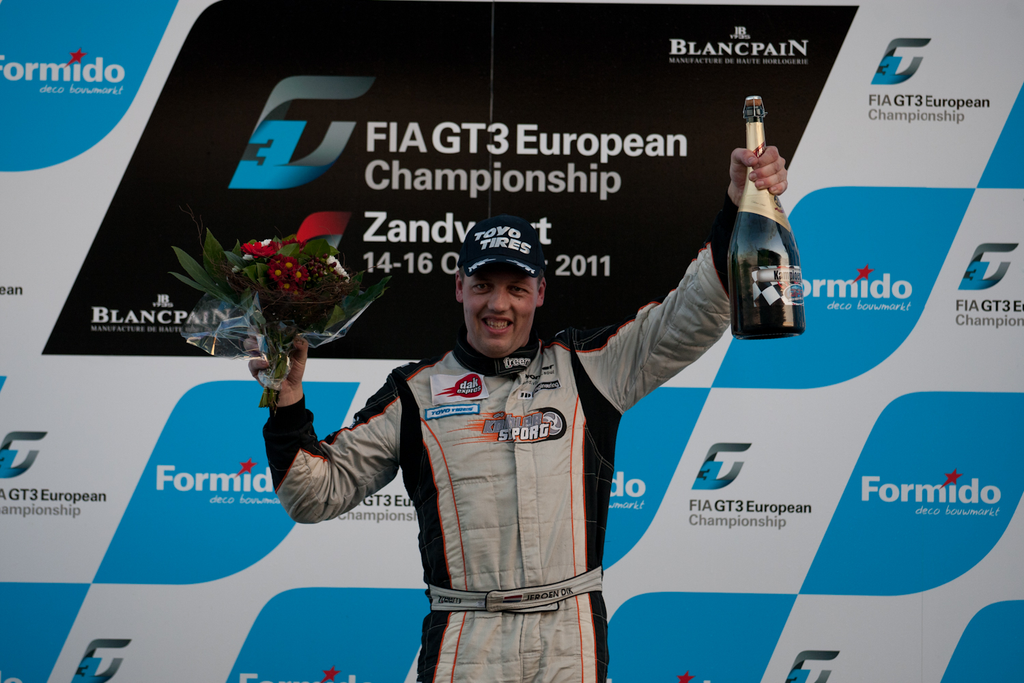
His career developed through years of practical experience with performance cars, especially Volkswagen Group vehicles. He also became known in Dutch motorsport after winning the 2011 Toerwagen Diesel Cup championship with a Volkswagen Golf 5.
His story is especially interesting because it brings together automotive engineering, tuning, business, and competitive racing.
Who Is Jeroen Dik?
Jeroen Dik is a Dutch automotive professional associated with performance tuning, vehicle engineering, and motorsport. He is best known as the founder and owner of JD Engineering, a specialist company based in Lochem, Netherlands.
According to JD Engineering’s own history, Dik started tuning cars during the 1990s. His early work was closely connected with Volkswagen vehicles, including G60 models. Over time, his experience developed into a professional tuning business that became particularly recognized within the Volkswagen Group performance community.
Jeroen Dik is not best understood as a mainstream celebrity. His reputation comes primarily from a specialist automotive industry where technical ability and real-world results are extremely important.
This is an important point when researching his career. There are many online pages that provide broad claims about his personal life, wealth, age, or other private details. However, those claims are not always supported by strong primary information. The most reliable picture comes from his professional work, JD Engineering, documented vehicle projects, and motorsport results.
His career can therefore be understood through several major areas:
- Automotive tuning
- Volkswagen Group performance engineering
- ECU and engine calibration
- Specialist vehicle development
- Motorsport
- JD Engineering
- Volkswagen performance culture
One of the strongest parts of his public professional record is his 2011 Toerwagen Diesel Cup championship. He competed with a Volkswagen Golf 5 and secured the title after a highly consistent season.
That achievement is important because it shows that his involvement with performance cars was not limited to workshop tuning. He also experienced the demands of competitive motorsport from behind the wheel.
Jeroen Dik and JD Engineering
JD Engineering is the company most closely connected with Jeroen Dik.
The business developed around specialist performance work for Volkswagen Group vehicles. Its history describes Dik beginning his tuning career during the 1990s and later building a professional operation around this expertise.
The company is associated with VAG vehicles, a term commonly used in the automotive community for Volkswagen Group brands. JD Engineering’s current information identifies Volkswagen, Audi, SEAT, Škoda, and Porsche among the vehicle brands within its area of expertise.
This specialization is one of the most important reasons the company became recognizable among enthusiasts.
There is a major difference between a business that says it can tune almost any vehicle and one that spends years developing knowledge around a specific automotive group.
Specialization allows technicians to become familiar with particular engines, ECUs, turbochargers, transmissions, diagnostic systems, and common vehicle characteristics.
That accumulated experience can become extremely valuable.
A Volkswagen Group performance vehicle may look simple from the outside, but modern performance tuning can involve many interconnected systems. Engine management, fueling, boost control, cooling, transmission behavior, traction, and emissions systems can all affect the final result.
This is why professional tuning requires much more than changing a software file.
JD Engineering’s history also shows the connection between tuning for road cars and tuning for competition cars. That connection became an important part of the company’s identity and helps explain why the name Jeroen Dik became known within enthusiast circles.
How Jeroen Dik Started His Automotive Career
Jeroen Dik began tuning cars in the 1990s, according to JD Engineering’s published history.
The 1990s were an important period for the European performance industry.
Engine management was becoming increasingly sophisticated. Turbocharged and supercharged engines were attracting more attention from enthusiasts. Electronic control systems were becoming a major part of performance development.
At the same time, mechanical knowledge remained essential.
Also Read: Kotora Melnkalne: A Complete Guide to Kotor, Montenegro
A tuner could not simply focus on computer software. Understanding airflow, fueling, ignition, boost, temperature, compression, drivetrain stress, and mechanical reliability was still necessary.
This created an environment in which people with both mechanical curiosity and technical ability could develop valuable expertise.
Dik’s career grew during this changing period.
His early involvement with Volkswagen G60 models became an important part of JD Engineering’s history. The company says it became known for tuning numerous G60 vehicles before moving into more ambitious projects.
This early specialization helped create a foundation for later work.
The lesson is useful beyond the automotive industry.
A technical business often becomes successful by becoming very good at a smaller area rather than trying to cover everything.
Instead of treating every vehicle as the same, a specialist can learn the details that make each platform different.
Over many years, those details become professional knowledge.
Jeroen Dik’s Early Work With Volkswagen G60 Models
The Volkswagen G60 is an important part of the history of European Volkswagen performance.
The G60 used a supercharged engine, creating opportunities for enthusiasts who wanted additional performance. JD Engineering’s own company history states that its early reputation was built partly through tuning many G60 models.
Working repeatedly with a particular engine family can provide a tuner with a valuable learning environment.
Every modification teaches something.
A change in boost can affect temperature.
A change in airflow can affect fueling.
A change in engine output can place additional demands on the drivetrain.
A change in calibration can influence drivability.
This means that serious tuning becomes a process of understanding how individual changes affect the entire vehicle.
The G60 era was also significant because it helped demonstrate the potential of forced induction in relatively compact performance cars.
For enthusiasts, these vehicles were more than transportation. They became platforms for experimentation.
That culture helped create demand for specialist companies capable of modifying cars beyond factory specifications.
Dik’s early experience with these vehicles was therefore more than a historical footnote. It helped form the technical foundation of JD Engineering.
The Volkswagen Golf 1 16V60 and Its Importance
One of the most interesting early projects associated with Jeroen Dik and JD Engineering is the Volkswagen Golf 1 16V60.
The project became well known within the European Volkswagen tuning scene. JD Engineering describes the vehicle as an important early project that helped the company gain recognition and grow.
The car is significant because it represents the type of engineering challenge that makes specialist tuning interesting.
A classic lightweight Golf platform combined with a high-performance engine concept creates a very different vehicle from a normal factory configuration.
Projects like this require attention to many factors.
The engine must produce power reliably.
The cooling system must deal with additional heat.
The drivetrain must cope with increased output.
The chassis must be capable of handling the performance.
The brakes must be appropriate for the vehicle’s speed.
The calibration must allow the engine to operate correctly.
This is why a high-performance build cannot be judged only by horsepower.
A car that produces impressive power but cannot manage its heat, traction, braking, or reliability is not necessarily a successful engineering project.
The Golf 1 16V60 represents a period when tuning companies could combine creativity with hands-on mechanical engineering.
It also helped demonstrate the type of performance development for which JD Engineering became known.
Jeroen Dik’s Expertise in VAG Performance Tuning
VAG performance tuning is one of the clearest areas connected with Jeroen Dik’s career.
VAG refers broadly to the Volkswagen Group automotive ecosystem. For enthusiasts, this includes vehicles from Volkswagen, Audi, SEAT, Škoda, and other related brands.
These vehicles share some technologies and engineering concepts, but they are not identical.
Different engines can require completely different tuning strategies.
Even two vehicles using related engines may have different ECUs, turbochargers, transmissions, cooling systems, software limits, or factory power outputs.
This is why experience with a specific platform can be valuable.
JD Engineering’s focus on VAG vehicles allowed it to develop specialized knowledge rather than approaching every car as a completely new problem. Its company information emphasizes VAG-specific diagnostics, programming, and technical knowledge.
For an enthusiast, this specialization can be important.
A good tuner should understand the vehicle before deciding what should be changed.
The goal should not simply be maximum power.
The goal should be appropriate performance for the customer’s needs.
A daily driver may require smooth power delivery.
A track vehicle may require stronger sustained performance.
A heavily modified project may require extensive hardware changes.
A professional approach begins by understanding the purpose of the car.
How ECU Tuning Became Part of Jeroen Dik’s Work
Modern engine tuning depends heavily on electronic control.
The ECU controls many important engine functions. Depending on the vehicle, these can include fueling, ignition, boost, throttle behavior, torque management, and other operating parameters.
Changing these parameters can significantly alter how a vehicle performs.
However, ECU tuning is not simply about finding the largest possible number.
A calibration must work with the physical hardware.
If the engine receives more boost, for example, other systems may need to support the additional load.
More power can produce more heat.
More torque can increase transmission stress.
Different fuel can affect calibration requirements.
The intended use of the car can also change what constitutes a good tune.
This is where specialist experience becomes important.
JD Engineering describes its use of VAG-specific diagnostic and programming equipment as part of its tuning approach.
That type of platform-specific knowledge can help a tuner understand how the factory systems are designed to work.
It also illustrates an important principle in automotive engineering: software cannot be separated completely from hardware.
A good performance result requires both to work together.
Jeroen Dik and Volkswagen Performance Engineering
Volkswagen performance engineering has changed considerably since Dik began tuning cars in the 1990s.
Earlier projects often involved substantial mechanical modifications.
Today, modern vehicles contain increasingly sophisticated electronic systems.
However, the basic engineering principles remain similar.
An engine still needs air.
It still needs fuel.
It still produces heat.
The drivetrain still has to transmit torque.
The tires still have to convert engine power into movement.
The brakes still have to control the vehicle.
The cooling system still has to remove heat.
The major difference is that modern electronic systems allow engineers to control many aspects of vehicle operation with much greater precision.
This makes modern tuning both more powerful and more complicated.
A professional tuner therefore needs to understand the interaction between mechanical components and software.
Jeroen Dik’s long association with Volkswagen Group vehicles places his work within this broader evolution of automotive performance technology.
His career began during an earlier generation of tuning and continued into an era where ECU calibration became central to performance development.
Jeroen Dik’s Motorsport Career
Jeroen Dik’s professional story is not limited to workshop tuning.
He also competed in motorsport, particularly in the Dutch Toerwagen Diesel Cup.
This part of his career is important because racing creates a completely different environment from normal road driving.
A road vehicle may experience occasional hard acceleration.
A race car can operate near its limits for long periods.
The engine can remain under heavy load.
Brakes can reach high temperatures.
Tires experience significant stress.
Cooling systems are pushed hard.
Small setup problems can become major performance issues.
For a tuner, this environment provides practical experience.
It can reveal how a vehicle behaves when pushed much harder than it normally would be on public roads.
JD Engineering has described the connection between Dik’s tuning work and motorsport, noting that knowledge could move between road and circuit applications.
That is one of the most interesting aspects of his professional career.
The workshop and the racetrack can provide different types of information.
A customer car shows what works in everyday use.
A race car shows what happens when the vehicle is pushed toward its limits.
Together, they can create a broader understanding of performance engineering.
Jeroen Dik in the Toerwagen Diesel Cup
The Toerwagen Diesel Cup became one of the most important chapters in Jeroen Dik’s racing career.
The series involved diesel-powered touring cars and created a competitive environment in which drivers had to combine speed with consistency.
Dik’s 2010 season was already highly competitive.
He came close to winning the championship but finished as runner-up by only one point, according to JD Engineering’s account of his career.
That result made the following season especially important.
Losing a championship by one point can be frustrating.
However, it can also provide valuable information.
A driver can examine where points were lost.
A team can identify technical problems.
The driver can improve race strategy.
The car can be developed.
The next season becomes an opportunity to turn a near miss into a championship.
That is effectively what happened in 2011.
Dik returned with a Volkswagen Golf 5 and produced the consistency required to win the title.
The 2010 Racing Season and Vice-Championship
The 2010 season is important because it provides context for the 2011 championship.
According to JD Engineering’s published account, Dik won seven races during the 2010 Toerwagen Diesel Cup season but still missed the overall title by one point.
This is an excellent example of why motorsport championships cannot be judged only by race victories.
Winning individual races is important.
Also Read:Antarvwsna: Meaning, Inner Desires, Self-Awareness, and the Human Mind
But championships are generally decided by the total points accumulated across the season.
A driver can win many races and still lose a championship if another competitor consistently scores strong results.
This makes consistency a central part of professional racing.
The 2010 experience also gave Dik another important lesson: being fast is not enough.
A championship requires the ability to manage an entire season.
That includes qualifying, race starts, overtaking, tire management, reliability, technical preparation, and decision-making.
The one-point deficit from 2010 therefore made the 2011 season more than just another racing year.
It became an opportunity to complete unfinished business.
How Jeroen Dik Won the 2011 Toerwagen Diesel Cup
The 2011 Toerwagen Diesel Cup championship is one of the clearest documented achievements associated with Jeroen Dik.
He competed with a Volkswagen Golf 5 and consistently collected strong results throughout the season.
JD Engineering’s championship account states that he reached the podium at least once during every race weekend.
That consistency was critical.
At the final weekend at Circuit Park Zandvoort, Dik arrived with a 39-point advantage while 44 points were still available.
He needed only a small number of points to make the championship mathematically secure.
Instead of taking unnecessary risks, he focused on bringing the car home with enough points.
He finished second in the first race of the final weekend.
That result gave him enough points to secure the championship with one race still remaining.
The final standings showed Jeroen Dik first with 211 points. Ferdinand Kool and Henry Zumbrink finished second with 168 points.
The achievement was significant because it followed the disappointment of 2010.
One year earlier, he had missed the title by one point.
One year later, he became champion.
That is a powerful example of how consistency and persistence can change the outcome of a competitive career.
Why Consistency Was Important to Jeroen Dik’s Success
Consistency may be one of the most useful ways to understand Jeroen Dik’s 2011 championship.
A racing championship is not normally won by one perfect weekend.
It is won by collecting points again and again.
JD Engineering’s account specifically notes that Dik reached the podium at every race weekend during the 2011 season.
That record tells us something important about his racing approach.
He did not need to dominate every race.
He needed to remain competitive.
He also needed to avoid major mistakes.
This principle applies to automotive engineering as well.
A tuning business does not build a strong reputation because of one spectacular car.
It builds a reputation when customers repeatedly receive good work.
The same basic principle appears in motorsport.
One fast lap can attract attention.
Consistent performance wins championships.
This may be one of the most important lessons that can be taken from Dik’s career.
Jeroen Dik’s Influence on European Automotive Tuning
Jeroen Dik’s influence is best understood within specialist European automotive tuning rather than mainstream popular culture.
JD Engineering developed a reputation around Volkswagen Group vehicles and performance development.
Its early history included G60 tuning and the Golf 1 16V60 project. Later, the company became associated with more modern electronic tuning and VAG performance work.
This evolution mirrors the larger development of the tuning industry.
The basic idea of modifying cars remained the same, but the technology changed.
Mechanical modifications remained important.
However, software became increasingly central.
Today, a modern performance vehicle can involve sophisticated ECU programming, electronic throttle control, torque management, turbocharger control, transmission software, and numerous sensors.
That means tuning requires a broader technical understanding than it did decades ago.
Dik’s long career provides an example of how a specialist can remain relevant by working through these technological changes.
The underlying principles of engines did not change completely.
The tools used to control them did.
What Makes Jeroen Dik’s Professional Approach Different?
The strongest distinction is specialization.
Jeroen Dik’s professional identity is closely connected with VAG vehicles rather than every automotive brand on the market.
That focus allows deeper platform knowledge.
There is also an important difference between tuning and simply increasing power.
A professional approach considers the complete vehicle.
For example, if an engine produces significantly more torque, the tuner should consider whether the transmission can handle it.
If boost is increased, the cooling system and engine hardware become important.
If power increases significantly, brakes and tires become more important.
If a car is intended for track use, sustained heat management becomes more important than it might be for a daily driver.
This is why serious performance engineering is a system-level activity.
Historical coverage of JD Engineering emphasized the company’s philosophy that tuning should not be reduced simply to creating more horsepower.
That idea remains relevant today.
More power is not automatically better.
The best setup is the one that provides the right balance for the vehicle’s purpose.
Jeroen Dik’s Legacy and Relevance for Modern Car Enthusiasts
Jeroen Dik’s legacy is connected with several important areas of automotive culture.
He represents the specialist tuner.
He represents the Volkswagen enthusiast community.
He represents the connection between road-car tuning and motorsport.
He also represents the idea that technical reputation can develop over many years without requiring mainstream celebrity status.
For modern enthusiasts, his career offers several useful lessons.
First, specialization matters.
Second, real-world testing matters.
Third, reliability matters.
Fourth, consistency matters.
Fifth, experience accumulates over time.
These ideas remain relevant even though automotive technology continues to change.
Modern vehicles may use hybrid systems, advanced turbochargers, complex ECUs, sophisticated transmissions, and extensive electronic controls.
But the fundamental question remains the same:
How can performance be improved without creating an unsuitable vehicle?
That question is at the heart of professional tuning.
The answer depends on the vehicle, the hardware, the software, the driver’s needs, and the intended use.
Jeroen Dik’s career provides an example of how that question can be approached through specialization and practical experience.
What Jeroen Dik’s Career Can Teach Automotive Enthusiasts
There is more to learn from Jeroen Dik than the basic facts of his career.
His professional journey provides a useful example of how expertise is developed.
A person does not become a specialist simply by reading specifications.
Experience comes from working with real vehicles.
A tuner sees how components behave.
A mechanic discovers how different systems fail.
A racing driver learns how a vehicle behaves under pressure.
A business owner learns how to turn technical knowledge into a service.
These experiences can reinforce each other.
This is particularly clear in Dik’s combination of tuning and motorsport.
His workshop experience gave him technical knowledge.
Motorsport gave him direct experience with competitive vehicle behavior.
Business ownership required him to apply that knowledge consistently for customers.
The result is a professional profile that goes beyond the simple label of “car tuner.”
It is more accurate to see him as a specialist automotive professional whose career developed around performance engineering.
Why Jeroen Dik Still Matters to VAG Enthusiasts
Volkswagen Group vehicles continue to have a large enthusiast following in the United States and around the world.
Owners modify these vehicles for many different reasons.
Some want better acceleration.
Some want stronger turbo performance.
Some want improved throttle response.
Others are interested in track driving or building highly modified project cars.
The lessons associated with experienced VAG tuners remain useful.
A modification should be chosen because it solves a specific problem or supports a specific goal.
Parts should work together.
Software should match hardware.
The vehicle’s intended use should determine the tuning strategy.
Reliability should not be ignored simply to create an impressive dyno number.
This approach is especially important for US enthusiasts because many European performance cars sold in the United States have specifications that differ from their European counterparts.
A vehicle may use different emissions equipment, fuel requirements, engine software, or hardware depending on the market.
Therefore, owners should always make decisions based on the exact vehicle rather than assuming that information from another market applies perfectly.
Separating Facts From Unverified Claims About Jeroen Dik
Searching for Jeroen Dik online can produce many different types of information.
Some pages focus on his automotive career.
Also Read: About Aelftech Com: Services, Digital Marketing Strategy, SEO, PPC, and What Businesses Should Know
Others may provide personal information, financial estimates, or claims about his private life.
It is important to separate these categories.
The strongest documented information concerns his professional association with JD Engineering and his motorsport achievements.
JD Engineering itself provides historical information about his tuning career and company development.
Motorsport publications provide independent documentation of his 2011 championship and individual race performances.
These sources provide a much stronger foundation than unsourced claims copied between websites.
For a professional article, this distinction matters.
A trustworthy biography should not fill gaps with speculation.
If a detail cannot be established reliably, it is better to say that the information is not clearly documented.
This approach is especially important for lesser-known professionals because online articles can easily repeat the same unsupported claim until it appears to be true.
A high-quality profile should focus on what can actually be established.
Frequently Asked Questions About Jeroen Dik
Who is Jeroen Dik?
Jeroen Dik is a Dutch automotive tuning specialist and entrepreneur associated with JD Engineering. He is particularly known for Volkswagen Group performance tuning and for his involvement in Dutch motorsport. He won the 2011 Toerwagen Diesel Cup championship with a Volkswagen Golf 5.
What is Jeroen Dik best known for?
He is best known for his connection with JD Engineering, VAG performance tuning, Volkswagen engineering projects, and his motorsport career. His 2011 Toerwagen Diesel Cup championship is one of the strongest documented achievements associated with his name.
What is JD Engineering?
JD Engineering is a specialist automotive tuning company associated with Jeroen Dik and based in Lochem, Netherlands. The company focuses strongly on Volkswagen Group vehicles and has a history dating back to Dik’s tuning work in the 1990s.
What cars are associated with Jeroen Dik?
His career has been closely connected with Volkswagen Group vehicles. Early JD Engineering work included Volkswagen G60 models and the Golf 1 16V60. His motorsport career also included Volkswagen Golf race cars, including the Golf 5 used during his 2011 championship campaign.
Did Jeroen Dik win a racing championship?
Yes. Jeroen Dik won the 2011 Toerwagen Diesel Cup championship. He secured the title at Circuit Park Zandvoort after finishing second in the first race of the final weekend.
Conclusion
Jeroen Dik’s career is a strong example of how technical expertise can develop into a respected professional reputation. His story began with automotive tuning in the 1990s and developed through JD Engineering, Volkswagen performance projects, VAG specialization, and motorsport. His early work with G60 models and the Golf 1 16V60 helped establish the company’s identity, while his racing career demonstrated his ability to compete at a high level.
The 2011 Toerwagen Diesel Cup championship remains one of the clearest highlights of his career. After finishing second by only one point in 2010, Dik returned in 2011 and used consistent results to secure the championship with a Volkswagen Golf 5. He arrived at the final weekend with a large points advantage and secured the title after finishing second in the opening race.
What makes Jeroen Dik especially interesting is the connection between tuning and racing. His career demonstrates that automotive performance is not simply about producing the largest horsepower number. Good performance engineering involves understanding the entire vehicle, matching software with hardware, managing heat and mechanical stress, and creating a package that works for its intended purpose.
For American readers and VAG enthusiasts, his career also provides a useful look at European performance culture. His professional reputation was built through specialization, practical experience, technical development, and competitive results rather than simply through mainstream publicity.
Ultimately, Jeroen Dik’s story is about the value of long-term expertise. In an automotive world where new technologies and performance claims appear every year, practical knowledge, careful engineering, consistency, and real-world results remain some of the strongest measures of professional credibility.