Yellow Oleander: Complete Guide to the Plant, Care, Flowers, Toxicity, Uses, and Invasive Risk
Yellow oleander is a striking tropical plant known for its narrow evergreen leaves, attractive yellow flowers, and ability to tolerate warm and relatively dry conditions. It can look like an ideal ornamental shrub or small tree, especially in landscapes where gardeners want long-lasting greenery and bright flowers.
However, yellow oleander is very different from an ordinary flowering garden plant. Every part of the plant is poisonous if eaten, and its sap can irritate the skin. Its seeds are particularly dangerous. The plant can also become invasive in suitable climates, which has made it an important subject for gardeners, land managers, and homeowners who want to understand both its beauty and its risks.
The scientific name most commonly associated with yellow oleander is Cascabela thevetia, although Thevetia peruviana is widely used as a former or alternate scientific name. It belongs to the Apocynaceae family, the same broad plant family that includes common oleander and several other plants containing powerful chemical compounds.
In its native range, yellow oleander is associated with tropical regions of Mexico, Central America, South America, and the West Indies. It has also been introduced to many warm regions around the world. In Hawaii, for example, it has become naturalized in several locations.
For a U.S. audience, one of the most important things to understand is that yellow oleander should not be treated simply as a decorative plant. Its toxicity and potential invasive behavior need to be considered before planting or handling it.
This guide explains what yellow oleander is, how to identify it, where it grows, how it behaves in landscapes, what makes its flowers and fruit distinctive, its environmental concerns, and the safety precautions every gardener should know.
What Is Yellow Oleander?
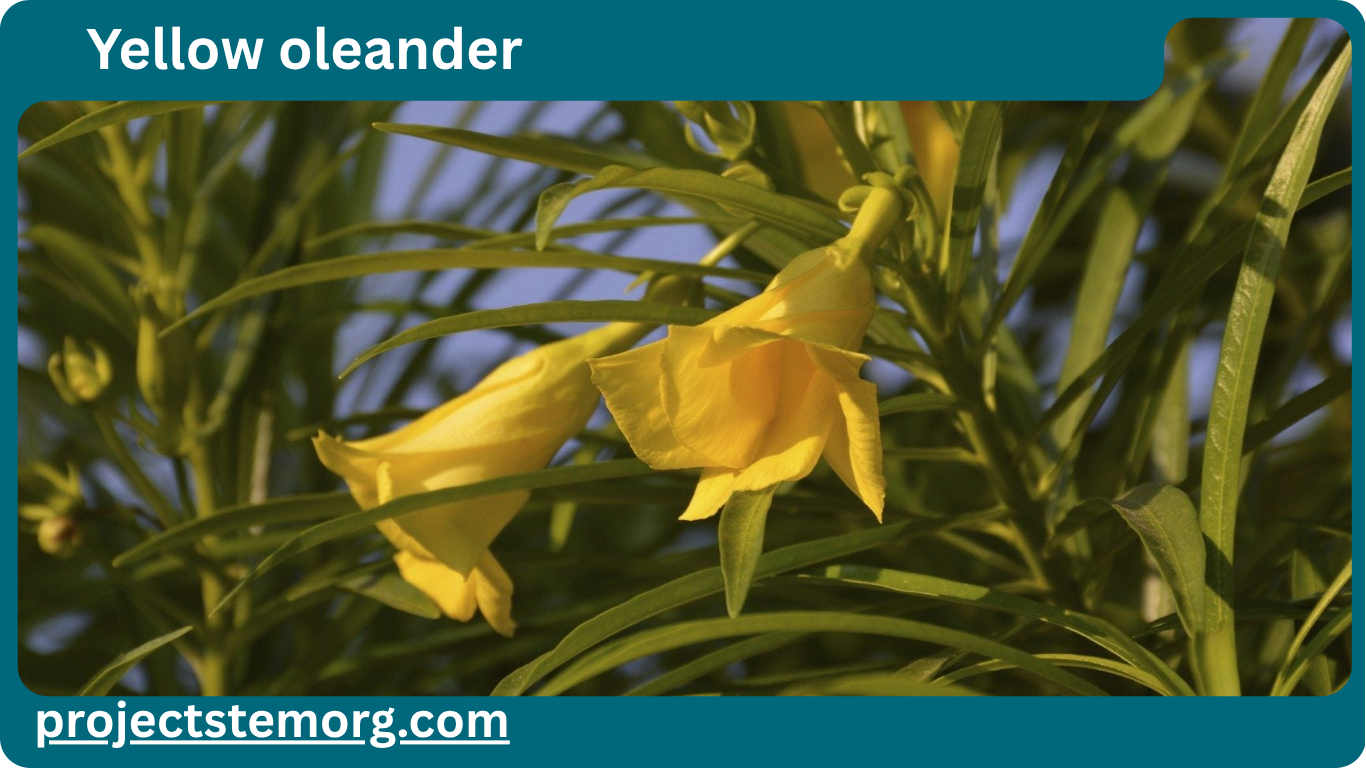
Yellow oleander is an evergreen shrub or small tree with narrow leaves and funnel-shaped flowers.
Its scientific classification can cause some confusion because the plant has been known under more than one botanical name. Many modern plant references use Cascabela thevetia, while Thevetia peruviana remains a widely recognized synonym. Oregon State University lists both names in its plant information, while North Carolina State University identifies Cascabela thevetia as the accepted name and Thevetia peruviana as a previous name.
The plant is commonly called:
- Yellow oleander
- Lucky nut
- Be-still tree
- Cascabela
- Captain Cook tree
- Tree daffodil
Despite the common name, yellow oleander is not the same species as the familiar ornamental oleander, Nerium oleander.
The two plants are related, but they are separate species.
This distinction matters because people sometimes use “oleander” as if it describes only one plant.
Yellow Oleander Scientific Name
The scientific name most often used today is Cascabela thevetia.
The plant was previously widely called Thevetia peruviana.
Both names may therefore appear when researching yellow oleander.
This is common in botanical literature because plant classification changes as researchers study relationships between species.
For gardeners, the important point is to recognize both names when checking plant information, nursery listings, invasive-plant databases, or safety information.
What Does Yellow Oleander Look Like?
Yellow oleander has a distinctive appearance.
It normally grows as an upright shrub or small tree. Depending on climate and growing conditions, it can become several feet tall, and plants in suitable tropical environments can become considerably larger.
North Carolina State University describes it as an upright evergreen tropical shrub or small tree. It can reach around 8 feet in some landscape settings, while plants in warmer native regions may reach approximately 20 to 30 feet.
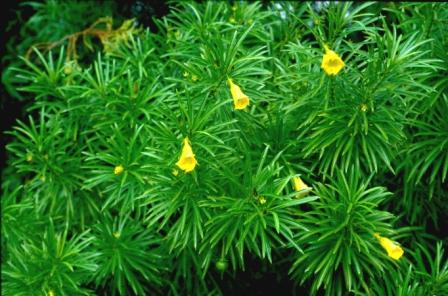
The leaves are one of its easiest identifying features.
They are:
- Long
- Narrow
- Green
- Glossy
- Waxy
- Pointed
- Arranged alternately along the stems
The leaves can look somewhat like those of a willow because of their narrow shape.
The flowers provide the strongest visual feature.
They are usually yellow, funnel-shaped, and showy.
Some sources also describe flowers that can appear orange, apricot, or related shades depending on the plant. Oregon State University notes that the flowers can range from saffron yellow to orange or peachy pink.
Why Is It Called Yellow Oleander?
The name comes mainly from the plant’s yellow flowers and its resemblance to true oleander in general growth form.
The similarity is understandable because both belong to the dogbane family, Apocynaceae.
However, yellow oleander belongs to Cascabela, while common oleander belongs to Nerium.
That means they should not be treated as interchangeable plants.
When researching toxicity, identification is especially important because both species contain potent cardiac compounds, but the specific compounds and concentrations can differ.
Where Does Yellow Oleander Grow Naturally?
Yellow oleander is associated with tropical areas of the Americas.
Its natural range includes parts of:
- Mexico
- Central America
- South America
- The West Indies
It has also been introduced into many tropical and subtropical parts of the world.
Because it tolerates warm conditions and can establish outside cultivation, yellow oleander has become naturalized in some areas.
The Smithsonian’s Hawaiian flora database, for example, records it as naturalized on several Hawaiian islands.
This ability to establish itself beyond gardens is one reason the plant has attracted attention from invasive-plant specialists.
Yellow Oleander in the United States
Yellow oleander is primarily suited to warm climates in the United States.
It is not a typical outdoor landscape plant for regions with prolonged freezing winters.
In colder areas, severe winter temperatures can damage or kill the plant.
In warm regions, however, it can grow successfully as a landscape shrub or small tree.
North Carolina State University lists it as a tropical plant that can be used in containers, patios, and warm landscapes.
Florida and Hawaii are examples of places where its behavior deserves particular attention because warm climates can allow introduced tropical plants to survive and reproduce.
The University of Florida’s current assessment gives Thevetia peruviana a high invasion-risk rating across its assessment zones and states that it is predicted to be invasive and not recommended.
That is an important consideration for anyone researching yellow oleander in Florida.
Yellow Oleander Habitat
Yellow oleander naturally occurs in warm environments.
It can grow in areas where temperatures remain relatively high and where seasonal moisture is available.
The plant can tolerate periods of dryness after becoming established.
Its narrow, waxy leaves are well suited to reducing water loss.
In natural or naturalized settings, it may occur in disturbed areas, open habitats, and other places where conditions allow its seeds to establish.
The exact habitat varies across its introduced and native ranges.
This adaptability helps explain why it can move from being a cultivated ornamental plant to a naturalized species under favorable conditions.
Yellow Oleander Flowers
The flowers are one of the main reasons people grow yellow oleander.
They are generally bright yellow and have a funnel-like shape.
They may appear in clusters toward the ends of branches.
North Carolina State University describes the flowers as fragrant, funnel-shaped blooms that can reach about 1 to 3 inches in size and commonly appear during summer and fall.
The combination of glossy green foliage and yellow flowers gives the plant a strong ornamental appearance.
In warm climates, flowering can continue for a substantial portion of the growing season.
How Long Does Yellow Oleander Flower?
The flowering period depends on climate and growing conditions.
Warm temperatures and adequate sunlight generally support flowering.
In suitable climates, yellow oleander may bloom through much of the warmer part of the year.
In cooler regions, flowering may be reduced or completely interrupted by winter conditions.
The plant’s flowering performance is therefore strongly linked to climate.
Yellow Oleander Fruit and Seeds
After flowering, yellow oleander can produce distinctive fruits.
The fruits begin green and change color as they mature.
Oregon State University describes the mature fruit as becoming red and eventually black, with an angular appearance.
The fruits contain seeds.
These seeds are one of the most important safety concerns associated with yellow oleander.
They can look unusual and may attract attention, especially from children.
The fact that the seeds may have attractive shapes or colors does not make them safe to handle casually or consume.
All parts of the plant are poisonous if eaten, and the seeds are particularly important from a poisoning perspective.
Why Are Yellow Oleander Seeds Dangerous?
Yellow oleander contains cardiac glycosides.
These are compounds that can affect the heart.
Thevetin is one of the cardiac glycosides associated with yellow oleander.
Oregon State University specifically notes that the plant’s milky latex contains thevetin and describes all parts as extremely poisonous, with particular concern for the seeds.
This is not a plant where the seeds should ever be tested as food, medicine, or a home remedy.
Even though the plant has appeared in traditional practices and commercial products, toxicity makes unsupervised ingestion extremely dangerous.
Yellow Oleander Toxicity
Yellow oleander is highly poisonous.
North Carolina State University classifies it as having high-severity poisonous characteristics and states that all parts of the plant are poisonous if ingested. It also notes that the sap can cause allergic skin reactions and that smoke from burning the plant material can be toxic.
This means safety concerns involve more than simply avoiding the seeds.
The leaves, flowers, stems, fruit, and roots should all be treated as potentially dangerous if swallowed.
The plant should also be handled carefully because its sap can irritate the skin.
What Happens if Yellow Oleander Is Eaten?
Ingestion can cause serious poisoning because cardiac glycosides can interfere with normal heart function.
Reported symptoms can include gastrointestinal problems and abnormal heart rhythms.
Medical literature describes yellow oleander poisoning as capable of causing dangerous bradycardia, tachycardia, and other abnormal rhythms.
Possible symptoms can include:
- Nausea
- Vomiting
- Abdominal discomfort
- Weakness
- Dizziness
- Changes in heart rate
- Abnormal heart rhythms
- Low blood pressure
- Serious cardiovascular complications
Symptoms can vary depending on the amount ingested and other factors.
Do not wait for symptoms if you know or strongly suspect that someone has swallowed yellow oleander.
Seek emergency medical advice immediately.
Is Yellow Oleander Poisonous to Dogs and Cats?
Yes.
Yellow oleander should be considered dangerous around pets.
Veterinary references list yellow oleander among plants that can poison animals, and the plant’s cardiac glycosides can affect the cardiovascular system.
Dogs, cats, horses, and other animals should not have access to the plant.
This is especially important if the plant produces fallen leaves, flowers, fruit, or seeds in an area where animals can reach them.
A beautiful landscape plant is not worth creating a poisoning risk for a pet.
Is Yellow Oleander Safe to Touch?
Touching the plant is not the same as eating it, but caution is still appropriate.
The plant produces milky sap, and that sap can irritate the skin.
North Carolina State University specifically notes the possibility of contact dermatitis from the sap.
If you need to prune or handle yellow oleander, wear suitable protective gloves and avoid touching your eyes or mouth.
Wash your hands after handling the plant.
What Should You Do if Yellow Oleander Sap Gets on Your Skin?
If sap contacts your skin, wash the area thoroughly with soap and water.
Avoid touching your eyes.
If irritation develops or the sap enters the eyes, seek appropriate medical guidance.
Also read:Brumeblog Com: A Complete Guide to Its Technology, Business, Finance, and Lifestyle Content
Do not use home remedies that might make irritation worse.
The safest approach is simple: prevent contact whenever possible and use protective gloves when working with the plant.
Is Yellow Oleander Safe to Burn?
No.
Burning yellow oleander is not a safe way to dispose of the plant.
North Carolina State University warns that smoke from burning plant material can be toxic.
This is an important point because people sometimes burn garden waste without considering the chemicals contained in the plants.
Do not burn yellow oleander branches, leaves, or other plant material.
Follow local disposal rules instead.
Yellow Oleander and Traditional Medicine
Yellow oleander has been used in some traditional practices, and products made from its seeds or plant material have also been promoted for various purposes.
That does not make these uses safe.
The University of Texas at El Paso’s herbal safety information warns against consuming yellow oleander seeds or products containing powdered seed, including products promoted for weight loss. It notes that there are no established studies showing the plant produces a weight-loss benefit and that serious poisonings and deaths have been documented.
This is an important example of why “natural” does not automatically mean “safe.”
A plant can contain powerful biological chemicals while also being highly dangerous.
Yellow oleander should never be used as a self-treatment for weight loss, constipation, pain, or another health problem.
Yellow Oleander as a Weight-Loss Product
Consumers should be especially cautious about products marketed as natural weight-loss supplements containing yellow oleander or its seeds.
There is no reason to experiment with a poisonous plant when safe, evidence-based approaches to weight management are available.
The UTEP herbal safety resource specifically warns that yellow oleander seeds have been falsely promoted as natural weight-loss products.
This is one of the clearest examples of why plant identification and safety information matter.
Is Yellow Oleander Invasive?
Yellow oleander has invasive potential in warm climates.
Its ability to produce seeds and establish outside cultivation means it can move beyond gardens.
The severity of the problem depends on the local climate and ecosystem.
In Florida, the University of Florida’s IFAS assessment currently identifies Thevetia peruviana as having a high invasion risk and predicts that it can be invasive.
The Smithsonian also records the species as naturalized in several parts of Hawaii.
This does not mean every yellow oleander plant is invasive everywhere.
It means the plant has characteristics that can allow it to escape cultivation under suitable environmental conditions.
Why Can Yellow Oleander Become Invasive?
Several traits can contribute to its spread.
The plant:
- Produces seeds
- Tolerates warm conditions
- Can survive periods of dryness
- Can establish in suitable habitats
- Can reproduce outside gardens
- Has been introduced widely beyond its native range
When these traits combine with favorable climate, the plant can become difficult to manage.
This is why gardeners should consider the ecological setting before planting it.
Yellow Oleander in Florida
Florida deserves special attention because the state’s warm climate can support many tropical and subtropical plants.
The UF/IFAS assessment currently gives yellow oleander a high invasion-risk rating.
A 2026 UF/IFAS Extension article also highlighted yellow oleander’s toxicity and described it as having a high predicted invasion risk in Florida, even though the author noted that it did not yet appear to be invasive in the particular context discussed.
This distinction is useful.
“Invasive risk” does not necessarily mean “already invasive everywhere.”
It means experts see characteristics that could create future problems under the right conditions.
Yellow Oleander in Hawaii
Yellow oleander has become naturalized in parts of Hawaii.
The Smithsonian’s Flora of the Hawaiian Islands records naturalized populations on Midway, Kauai, Oahu, Molokai, Lanai, and Maui.

National Geographic Kids
This is an example of how a plant introduced as an ornamental can establish outside cultivation.
The lesson for gardeners is straightforward: attractive landscaping plants can sometimes have environmental consequences beyond the garden.
How to Grow Yellow Oleander
Although yellow oleander can be dangerous, its basic horticultural requirements are relatively straightforward in warm climates.
It generally prefers:
- Warm temperatures
- Full sun to partial shade
- Well-drained soil
- Good air circulation
- Adequate moisture during establishment
- Protection from severe cold
North Carolina State University notes that yellow oleander can grow in rich, sandy soil as well as average soil with moderate moisture, provided drainage is appropriate.
Does Yellow Oleander Need Full Sun?
Yellow oleander generally performs well in full sun.
Bright light encourages healthy growth and flowering.
It can tolerate some partial shade, but plants grown in too much shade may become less vigorous and flower less.
If grown in a container, place it where it receives strong light while still considering local temperature conditions.
Watering Yellow Oleander
Established yellow oleander can tolerate periods of dryness.
However, newly planted specimens need regular watering while their roots become established.
The key is to avoid creating constantly waterlogged soil.
Good drainage is important.
Once established in an appropriate warm landscape, the plant can often tolerate more dry conditions than many other ornamental shrubs.
Yellow Oleander Soil Requirements
Yellow oleander is adaptable to different soil types, but drainage is important.
Heavy, constantly wet soil can create root problems.
If growing the plant in a container, use a quality growing medium designed to drain well.
Do not use a container without drainage holes.
Pruning Yellow Oleander
Pruning can help control the shape and size of the plant.
However, pruning yellow oleander requires more caution than pruning an ordinary ornamental shrub.
Wear protective gloves.
Avoid contact with the sap.
Keep children and pets away from freshly cut plant material.
Do not burn the trimmings.
Dispose of them according to local regulations.
Because the plant is toxic, pruning should be treated as a safety task as well as a gardening task.
Can Yellow Oleander Grow in a Container?
Yes.
North Carolina State University lists containers among possible landscape locations for yellow oleander.
Container growing can make it easier to control the plant’s size and location.
However, a container does not remove the toxicity issue.
A potted yellow oleander still needs to be kept away from children and animals.
Fallen leaves and seeds should also be managed carefully.
Yellow Oleander Pests
Although yellow oleander is generally a tough plant, it can experience pest problems.
Potential pests include:
- Aphids
- Scale insects
- Mealybugs
- Caterpillars
North Carolina State University lists several of these as minor pest concerns.
Regular inspection is usually more useful than waiting for a major infestation.
Check the undersides of leaves and newer growth.
Yellow Oleander Diseases
Yellow oleander can experience leaf-related problems, including leaf spots.
If damaged or infected leaves are present, removing affected material may help reduce the problem.
Good air circulation and avoiding unnecessary moisture on foliage can also support healthier growth.
If symptoms spread rapidly, a local extension service or qualified plant professional can help identify the problem.
Yellow Oleander vs. Common Oleander
Yellow oleander and common oleander are closely related but are not the same plant.
Common oleander is Nerium oleander.
Yellow oleander is generally classified as Cascabela thevetia.
Common oleander has longer, narrower leaves and flowers that may be pink, red, white, or other colors depending on the cultivar.
Yellow oleander is recognized mainly by its yellow funnel-shaped flowers.
Both plants are toxic, so neither should be treated casually around children or pets.
Yellow Oleander vs. Desert Rose
Yellow oleander can also be confused with other members of the Apocynaceae family.
Desert rose, Adenium species, is another ornamental plant with attractive flowers and toxic properties.
The plants have very different growth forms.
Yellow oleander generally develops into a shrub or small tree with narrow leaves.
Desert rose is known for its swollen trunk or caudex.
Correct identification is important before handling, pruning, or using any plant for a supposed medicinal purpose.
Why Yellow Oleander Is Attractive Despite Its Risks
From a purely visual perspective, it is easy to understand why yellow oleander has been planted around the world.
It has:
- Evergreen foliage
- Bright flowers
- A neat upright form
- Drought tolerance after establishment
- A long flowering period in warm conditions
- Potential usefulness as a screen or accent plant
These traits make it attractive to landscapers.
The problem is that ornamental value does not cancel out toxicity or ecological risk.
A responsible gardener has to consider both sides.
Should You Plant Yellow Oleander?
The answer depends heavily on location and circumstances.
If you live in an area where yellow oleander is considered invasive or has a high invasion risk, planting it may not be a responsible choice.
If you have children or pets that can reach the plant, its toxicity is another major concern.
Before planting, check your state’s invasive-plant resources and local extension guidance.
The UF/IFAS assessment, for example, currently recommends against yellow oleander based on its predicted invasive risk in Florida.
Safer Alternatives to Consider
If you want yellow flowers without the same combination of toxicity and invasive concerns, consider asking a local nursery or extension service about non-invasive flowering plants suited to your climate.
Good alternatives will depend on your USDA hardiness zone, soil, sunlight, water availability, and whether pets are present.
Rather than choosing a plant solely because it looks attractive online, select one that fits your local ecosystem.
This approach usually produces a healthier landscape and reduces future maintenance problems.
How to Dispose of Yellow Oleander
Do not burn yellow oleander.
Do not compost it unless local guidance specifically confirms that the disposal method is appropriate.
Wear gloves when handling cut material.
Keep the material away from children and animals.
Also read:Pixwox: Complete Guide to the Instagram Viewer, Features, Privacy, Safety, and Alternatives
Follow local waste-management instructions for poisonous plant material.
If the plant is being removed because of invasive concerns, make sure seeds and fruits are not unintentionally spread during removal.
What Makes Yellow Oleander Different From Ordinary Garden Plants?
The biggest difference is that yellow oleander combines three issues that gardeners should consider together:
- Ornamental value
- High toxicity
- Potential environmental risk
Many plants have one of these characteristics.
Yellow oleander can have all three.
That is why a simple “how to grow it” article is not enough.
A responsible guide has to discuss what happens after the plant leaves the garden.
Yellow Oleander and Responsible Landscaping
Responsible landscaping means thinking beyond appearance.
Before adding a plant to your yard, consider:
- Is it native or introduced?
- Can it spread?
- Is it toxic?
- Are children or pets nearby?
- Does it fit the local climate?
- Does it require special disposal?
- Is it recommended by local horticultural authorities?
These questions are especially valuable for tropical plants grown outside their native range.
Yellow oleander provides a useful example of why plant selection should include environmental and safety considerations.
Final Thoughts
Yellow oleander is a beautiful but highly toxic tropical shrub or small tree that deserves careful attention from anyone considering it for a landscape. Its narrow evergreen leaves and bright yellow funnel-shaped flowers make it visually appealing, while its ability to tolerate warm and relatively dry conditions helps explain why it has been introduced to many parts of the world. At the same time, all parts of the plant are poisonous if swallowed, its milky sap can irritate the skin, and smoke from burning plant material can be dangerous. Its seeds are especially important from a safety perspective because they contain potent cardiac glycosides. Yellow oleander also demonstrates why ornamental gardening and environmental responsibility should go together. In places such as Hawaii, it has become naturalized, while the University of Florida’s current assessment identifies a high invasion risk in Florida. For homeowners, the best approach is not to judge this plant only by its attractive flowers. Think about local regulations, invasive-plant guidance, children, pets, safe handling, and proper disposal. If yellow oleander is already growing on your property, avoid eating any part of it, use protective gloves when handling it, never burn the plant, and seek professional advice if you are unsure how to remove or manage it safely.
Frequently Asked Questions About Yellow Oleander
Is yellow oleander the same plant as regular oleander?
No. Yellow oleander is generally known as Cascabela thevetia, while common oleander is Nerium oleander. They are related plants but are different species. Both are poisonous.
Can yellow oleander survive winter in the United States?
It depends on the climate. Yellow oleander is a tropical plant and performs best in warm regions. Freezing temperatures can seriously damage or kill it, so it is not suitable for many colder parts of the country.
Are yellow oleander flowers poisonous?
Yes. The entire plant should be considered poisonous if eaten, including its flowers. Keep flowers, leaves, fruit, and seeds away from children and pets.
Can yellow oleander be used as a natural medicine?
It should not be self-used as medicine. Yellow oleander contains powerful cardiac glycosides and has been associated with serious poisoning and death. Products made from its seeds should not be consumed as weight-loss or other health supplements.
Should yellow oleander be removed if it grows naturally in my yard?
If it is growing where children or pets can access it, or if local authorities consider it invasive or high-risk, professional removal may be appropriate. Because the plant is highly toxic, use protective equipment and follow local guidance rather than handling large amounts of plant material casually.