
Alexander Savin The Flying Elephant Memoirs of an Olympic Champion: A Complete Guide to the Book, Career, and Olympic Legacy
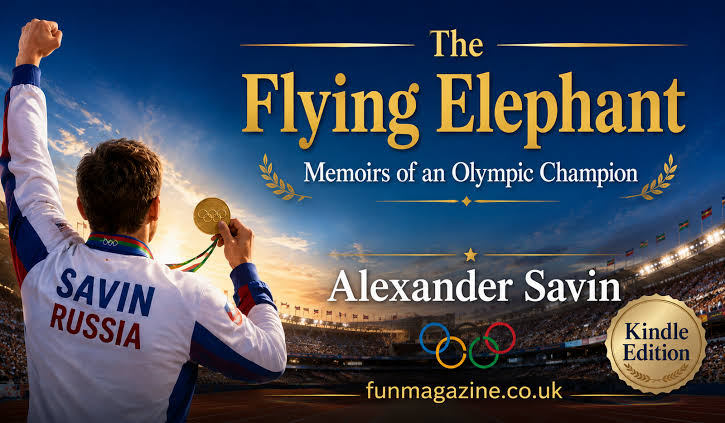
Alexander Savin The Flying Elephant Memoirs of an Olympic Champion is a sports memoir connected to one of the most successful volleyball players of the Soviet era. The book looks beyond medals and match results to explore the life of an elite athlete, the demanding world of international volleyball, team relationships, discipline, competition, and the experience of representing the Soviet Union during the Cold War period.
Alexander Savin is particularly remembered for his role as a middle blocker and for winning Olympic gold with the Soviet volleyball team at the 1980 Moscow Games. He had already won Olympic silver at Montreal in 1976, making his Olympic story one of both disappointment and redemption. His wider career included major international titles with the Soviet national team.
The memoir is therefore interesting for more than volleyball fans. It can also appeal to readers interested in Olympic history, sports psychology, leadership, teamwork, Soviet sports culture, and the personal cost of pursuing excellence.
Current online information describes the English-language edition as a 514-page Kindle book with more than 240 photographs. Reports also identify the English translation and editorial work as a family-linked project involving Andrei Savine and other collaborators. Because some online descriptions of the book contain different publication and availability details, readers should verify current edition information through the retailer or publisher before purchasing.
This guide takes a closer look at the book, Alexander Savin’s career, the meaning of its unusual title, its historical background, major themes, and the reasons it may interest modern American readers.
Who Is Alexander Savin?
Alexander Savin is a former Soviet volleyball player who competed at the highest international level during one of the strongest periods in Soviet volleyball.
He was born on July 1, 1957, in Taganrog in the Rostov region of Russia. Available biographical information states that his family later moved to Obninsk, where his athletic development continued. He eventually became a middle blocker for CSKA Moscow and the Soviet national team.
His international career extended through the 1970s and 1980s.
Savin’s achievements included:
- Olympic silver in 1976
- Olympic gold in 1980
- World Championship gold in 1978
- World Championship gold in 1982
- World Cup gold in 1977
- World Cup gold in 1981
- Multiple European Championship titles
He was also inducted into the Volleyball Hall of Fame in 2010, according to published biographical accounts.
These achievements help explain why his memoir has historical value.
However, a list of medals only tells part of the story.
The more interesting question is what happened between those medals.
How did Savin develop?
What did training look like?
What was it like to compete under enormous expectations?
How did losing affect him?
How did teammates influence his career?
What did Olympic success actually feel like?
Those are the kinds of questions that make a sports memoir different from a statistics page.
Also read:Pixwox: Complete Guide to the Instagram Viewer, Features, Privacy, Safety, and Alternatives
What Is The Flying Elephant: Memoirs of an Olympic Champion?
The Flying Elephant: Memoirs of an Olympic Champion is presented as an autobiographical account of Savin’s athletic life and experiences.
Rather than being simply a record of tournament results, the book looks at the human experience behind elite sport.
Published descriptions of the memoir emphasize areas such as:
- Childhood and athletic development
- Training
- International volleyball
- Team relationships
- Olympic competition
- Pressure
- Setbacks
- Discipline
- Personal development
- Soviet-era sports culture
- Life after competitive volleyball
The available English edition is described as approximately 514 pages and includes a large photographic archive.
That makes the work more than a short collection of Olympic memories.
It is closer to a long-form sports life story.
Why The Title “The Flying Elephant” Is So Interesting
The title immediately creates curiosity.
An elephant is associated with size, weight, and strength.
Flying suggests movement, lightness, speed, and elevation.
Putting the two ideas together creates a contradiction.
How can something large and heavy fly?
That contradiction is closely connected to Savin’s image as a volleyball player.
Published descriptions explain the nickname through the combination of his powerful physical presence and his ability to move and jump effectively on the volleyball court.
This is a useful metaphor for elite sport.
Athletes are often judged by physical characteristics.
Height.
Weight.
Strength.
Speed.
Reach.
But physical size alone does not determine performance.
A volleyball middle blocker must also react quickly, read the opponent, move laterally, time jumps, coordinate with teammates, and make decisions under pressure.
The “flying elephant” idea captures that unusual combination of power and movement.
The Meaning Behind the Flying Elephant Metaphor
The title can also be interpreted more broadly.
An elephant that flies represents something that appears unlikely.
That makes the metaphor relevant to athletic achievement.
Many Olympic performances look almost impossible when viewed from the outside.
A player jumps higher than expected.
A team survives a difficult match.
An athlete performs under pressure after years of training.
The final moment may last only a few seconds, but it is supported by thousands of hours of preparation.
In this sense, the flying elephant represents the gap between appearance and reality.
The audience sees the jump.
The athlete knows the work behind it.
Alexander Savin and Soviet Volleyball
To understand the memoir properly, it helps to understand the sporting environment in which Savin competed.
Soviet volleyball was a major international force during the period of Savin’s career.
The Soviet Union invested heavily in organized sport.
Athletes were developed through structured systems that identified talent and guided players through increasingly competitive levels.
This created a strong pipeline of elite athletes.
For a young volleyball player, entering such a system could change the direction of an entire life.
Training became more than a hobby.
It became a profession and, for successful athletes, a national responsibility.
The Political Background of Soviet Sport
Savin’s career also developed during the Cold War.
The Cold War was not simply a political conflict.
Sport became part of the competition between political systems.
The Olympic Games were one of the world’s biggest stages.
Athletes from the Soviet Union, the United States, and other countries were often seen as representatives of their nations.
This created an unusual burden.
An athlete was not always competing only for personal achievement.
A victory could be presented as evidence of national strength.
A loss could attract significant criticism.
That context makes Soviet-era sports memoirs particularly interesting to historians.
The 1976 Montreal Olympics
One of the most important chapters in Savin’s Olympic story was the 1976 Montreal Games.
The Soviet men’s volleyball team won the silver medal.
For an athlete, Olympic silver is an extraordinary achievement.
But Olympic competition also creates a difficult psychological reality.
Silver means you reached the final stage.
It means you were one of the best teams in the world.
Yet it also means another team finished ahead of you.
This difference between objective success and personal disappointment is one of the most interesting aspects of competitive sport.
A silver medal can represent both achievement and unfinished business.
Why Losing Can Become Part of Winning
Many athletes describe defeat as a major teacher.
Winning can confirm that a strategy works.
Losing forces deeper questions.
What went wrong?
What should change?
Where was the weakness?
Was the preparation enough?
Could the team have responded differently?
This does not mean every defeat automatically produces improvement.
It means athletes have the opportunity to learn from failure if they are willing to examine it honestly.
Savin’s Olympic path from silver in Montreal to gold in Moscow gives this idea particular significance.
The 1980 Moscow Olympics
The 1980 Olympic Games were held in Moscow.
For Soviet athletes, competing at home added another layer of meaning.
The home crowd was emotionally invested in the performance of the Soviet teams.
The men’s volleyball competition ended with the Soviet Union winning the gold medal.
For Savin, this was the Olympic victory that completed a remarkable progression from silver four years earlier to gold on home soil.
That victory is central to his legacy.
But it is also important not to reduce his entire career to one Olympic final.
The road to Moscow had already included years of training and international competition.
What Olympic Gold Really Represents
An Olympic gold medal is often treated as a single achievement.
In reality, it represents a long chain of events.
A medal can reflect:
- Years of practice
- Coaching
- Team selection
- Physical preparation
- Tactical development
- Competition experience
- Recovery
- Mental preparation
- Teamwork
- Timing
- Health
- Opportunity
One match determines the medal.
Thousands of days determine whether an athlete is ready for that match.
This is one reason memoirs can add value to Olympic history.
They show the process behind the result.
Alexander Savin’s Role as a Middle Blocker
Savin played as a middle blocker.
This position is extremely important in volleyball.
Middle blockers are involved heavily in blocking and quick attacks.
They must read the opposing setter and hitters.
They also need excellent timing.
A middle blocker may have only a short amount of time to determine where the opponent is attacking and how to respond.
This requires both physical ability and fast decision-making.
Why Middle Blocking Requires Intelligence
Volleyball can look like a simple game from a distance.
The ball moves over the net.
Players jump.
Teams attack.
But elite volleyball is highly strategic.
A middle blocker must watch patterns.
Where is the setter looking?
Which hitter is likely to receive the ball?
How quickly can the blocker move?
Should the player commit to a block or stay available?
These decisions happen quickly.
This means elite volleyball is not simply about strength.
It is about reading the game.
The Importance of Timing
Timing is one of the most important skills in volleyball.
A player can be physically powerful and still block poorly if the jump happens at the wrong moment.
Likewise, a technically skilled player may struggle if positioning is poor.
This provides an important lesson beyond volleyball.
Performance often depends on coordination.
The best individual ability is not enough without correct timing and execution.
Teamwork in The Flying Elephant
One of the strongest reasons to read a volleyball memoir is the focus on teamwork.
Individual sports can sometimes be centered around one athlete.
Volleyball is different.
Every player depends on other players.
A successful attack may involve:
A reception.
A set.
An approach.
A jump.
A hit.
A defensive response.
Each stage depends on the previous one.
A mistake by one player can affect everyone else.
This creates a special kind of team responsibility.
Why Olympic Volleyball Is Different From Club Volleyball
Representing a national team is different from playing for a club.
A club may be a professional employer.
A national team represents a country.
The expectations can therefore be much greater.
Players may feel pressure from:
- Coaches
- Teammates
- Fans
- Officials
- Media
- National sporting organizations
During the Soviet era, this pressure could be particularly significant because international sporting results had political and symbolic importance.
The Human Side of Elite Athletes
Sports coverage often shows athletes at their best.
We see the medal ceremony.
We see the celebration.
We see the winning point.
We do not always see:
- Fear
- Doubt
- Fatigue
- Injury
- Loneliness
- Failure
- Boredom
- Pressure
Memoirs can provide a different perspective.
They allow athletes to describe events from inside rather than from the audience’s viewpoint.
That is one of the greatest strengths of athlete autobiographies.
Discipline as a Daily Practice
Elite performance does not come from motivation alone.
Motivation changes.
Some days an athlete feels excited.
Other days training may feel repetitive.
Discipline provides continuity.
An athlete trains because training is part of the job.
This is an important lesson for readers outside sports.
The same principle applies to:
- Education
- Business
- Writing
- Music
- Programming
- Fitness
- Entrepreneurship
Progress usually depends on repeated actions rather than occasional bursts of motivation.
The Difference Between Talent and Development
Talent can create an opportunity.
Development turns that opportunity into performance.

A young athlete may have height, strength, or coordination.
But without coaching and practice, those characteristics may never become elite skills.
Savin’s career illustrates the importance of development.
His success occurred within a structured sporting environment that combined physical training, coaching, competition, and team development.
Coaching and Athlete Development
Coaches have a major influence on elite athletes.
A good coach does more than teach technique.
Coaches can help athletes understand:
- Strategy
- Positioning
- Discipline
- Team roles
- Mental preparation
- Competition
- Recovery
The relationship between athlete and coach can also be difficult.
High standards create pressure.
Feedback can be uncomfortable.
But constructive criticism is often necessary for improvement.
What Modern Athletes Can Learn From Savin
Modern athletes compete in a very different environment.
They have:
- Advanced sports science
- Modern nutrition
- Video analysis
- Performance tracking
- Social media
- Professional sports psychologists
- Specialized equipment
Yet many fundamental lessons remain unchanged.
An athlete still needs:
Consistency.
Teamwork.
Focus.
Adaptability.
Mental strength.
Good coaching.
The technology may change.
The fundamentals do not disappear.
The Psychological Side of Competition
Elite sport is as much mental as physical.
Imagine preparing for an Olympic match knowing that millions of people may watch.
The pressure can affect concentration.
One mistake can feel enormous.
A player must recover quickly.
There is no time to replay the previous point mentally.
The next ball is already coming.
This is a valuable lesson in emotional control.
Recovering After Mistakes
Volleyball provides a powerful example of rapid recovery.
A mistake is often followed almost immediately by another rally.
Also read:Automatic Power Reduction: A Complete Guide to APR in Fiber Optic Networks
Players cannot spend several minutes thinking about what went wrong.
They have to reset.
This ability can be applied to everyday life.
A business mistake does not have to define the next decision.
A failed exam does not have to determine an entire career.
A poor presentation does not mean every future presentation will be poor.
The ability to reset is a major competitive advantage.
The Value of Team Trust
A successful volleyball team needs trust.
Players need to believe that teammates will perform their roles.
If a player constantly worries that someone else will make a mistake, the team’s performance suffers.
Trust does not mean assuming everything will be perfect.
It means knowing that everyone is committed to the same objective.
That distinction is important in business and other group environments as well.
The Soviet Sports System as Historical Context
The Soviet sports system was different from modern American professional sports.
Sports development was connected to state institutions and organized training systems.
Athletes could receive structured support, but they also operated within a highly controlled environment.
Understanding that system helps readers understand Savin’s career.
His story is not simply the story of one talented volleyball player.
It is also a window into a particular sporting culture.
Why This Memoir Has Historical Value
Historical sports records often preserve scores.
They tell us:
Who won.
Who lost.
Where the event occurred.
What year it happened.
But scores cannot fully explain how athletes experienced an era.
A memoir adds personal perspective.
It can show how athletes understood training, competition, relationships, and pressure.
That makes The Flying Elephant potentially useful to readers interested in sports history beyond the results.
The Importance of Photographs
Reports about the English edition describe more than 240 photographs, including material drawn from family and archival collections.
Photographs can add a different dimension to a sports memoir.
A written description tells readers what happened.
A photograph can show:
- Teammates
- Uniforms
- Sporting venues
- Training environments
- Historical settings
- Competition moments
For a book covering decades of sporting history, photographs can help readers visualize the period.
Why the Visual Archive Matters
The Soviet volleyball era may feel distant to American readers.
Photographs help reduce that distance.
They provide a visual connection to players and places.
This is particularly valuable for younger readers who were not alive during the 1970s and 1980s.
Instead of seeing the era only as a historical concept, readers can see the people who lived it.
The English Translation
The English-language edition is particularly relevant for American readers.
Savin’s career took place primarily in the Soviet sporting world, and much of the historical context may be unfamiliar to English-speaking audiences.
The translation therefore creates access to a story that might otherwise remain outside the reach of many readers.
Available descriptions identify Andrei Savine and other collaborators in connection with the English version.
Because edition details can change, readers should check the current listing for the exact translator, format, and publication information.
Why American Readers May Find the Book Interesting
American readers do not need to be experts in Soviet history or volleyball.
The central themes are universal.
People understand:
- Competition
- Failure
- Ambition
- Teamwork
- Pressure
- Success
- Sacrifice
- Personal growth
These ideas cross national boundaries.
That is why sports memoirs can connect with readers even when the sport or country is unfamiliar.
Is The Flying Elephant Only for Volleyball Fans?
No.
Volleyball fans will naturally have a special reason to read it.
They can better appreciate the technical and historical details.
But the book can also interest:
- Olympic fans
- Sports historians
- Coaches
- Athletes
- Leadership students
- Cold War history readers
- Biography readers
- People interested in resilience
The story is ultimately about a human being trying to perform at an extraordinary level.
What Makes a Good Sports Memoir?
A strong sports memoir should do more than list achievements.
It should answer questions about the person.
What did the athlete fear?
What did they learn?
Who influenced them?
How did they handle defeat?
What did success change?
What did they sacrifice?
What did they misunderstand when they were younger?
These questions create depth.
The Difference Between a Memoir and a Biography
A biography is usually written by another person.
A memoir is based on the author’s own memories and experiences.
That distinction matters.
A memoir gives readers direct access to the author’s perspective.
But it is still a personal account.
Memory can be selective.
People may remember events differently over time.
That does not make memoirs useless.
It simply means they should be understood as personal historical documents rather than perfectly neutral records.
How Readers Should Approach Historical Memoirs
A good approach is to enjoy the personal story while maintaining historical awareness.
If a memoir makes a major historical claim, readers interested in academic research can compare it with:
- Official Olympic records
- Historical publications
- Sports archives
- Interviews
- Contemporary news reports
This provides a more complete picture.
The Broader Lesson of Savin’s Career
Perhaps the most useful lesson is that extraordinary performance is rarely the result of one quality.
Savin’s career combined:
Physical ability.
Technical skill.
Training.
Competition.
Coaching.
Teamwork.
Experience.
Mental resilience.
Opportunity.
This is important because modern culture sometimes searches for one secret to success.
There is usually no single secret.
Excellence is built from many smaller parts.
What Young Athletes Can Take From the Memoir
Young athletes can learn several practical lessons from Savin’s career.
Also read:Faibloh: Meaning, Pop Culture Influence, Music, Fashion, Social Media, and Why the Term Matters
First, development takes time.
Second, losing does not automatically mean failure.
Third, teammates matter.
Fourth, physical talent needs technical development.
Fifth, pressure must be managed.
Sixth, consistency is more reliable than motivation.
These lessons apply across sports.
What Coaches Can Learn
Coaches can also find useful ideas in an Olympic memoir.
The book’s broader themes encourage coaches to think about:
- Athlete development
- Team culture
- Competition preparation
- Communication
- Mental resilience
- Long-term growth
A coach’s job is not simply to produce a winning team.
It is also to develop people who can perform under pressure.
What Business Leaders Can Learn
The lessons are not limited to sports.
Businesses also depend on teams.
A company may have talented employees but still perform poorly if communication is weak.
Likewise, a sports team can have exceptional individual players but struggle without coordination.
The same principles apply:
Clear roles.
Shared goals.
Trust.
Preparation.
Feedback.
Adaptability.
Accountability.
What Students Can Learn
Students can also relate to the story.
Preparing for an Olympic competition resembles preparing for a major academic challenge in one important way.
The final performance is visible.
The preparation is mostly invisible.
A student sees the exam.
A viewer sees the match.
But both are preceded by preparation.
This is why focusing on the process can be more useful than obsessing over the final result.
The Relationship Between Failure and Growth
Savin’s Olympic silver before his eventual gold creates a useful example.
Failure is not always the opposite of success.
Sometimes it becomes part of the path toward success.
The important question is what happens next.
An athlete can become discouraged.
Or the athlete can analyze the experience and improve.
That choice is often more important than the result itself.
The Cost of Elite Performance
It is also important not to romanticize elite sport.
Olympic success requires sacrifice.
Training takes time.
Travel can be demanding.
Competition creates stress.
Injuries can interrupt careers.
Personal life may be affected.
Athletes may spend years pursuing one goal that ultimately depends on a small number of moments.
This is the less glamorous side of Olympic achievement.
A good memoir can help readers understand that cost.
Why the Book Goes Beyond the Medal
The Olympic gold medal is the easiest part of Savin’s story to understand.
The more interesting part is everything around it.
The years before the medal.
The teammates.
The coaches.
The losses.
The pressure.
The changing sporting environment.
The years afterward.
That is why the memoir can be viewed as a story of a complete athletic life rather than simply a story about winning Olympic gold.
The Lasting Legacy of Alexander Savin
Savin’s legacy rests on more than the 1980 Olympic title.
His career represents an important period in international volleyball.
He competed when the Soviet Union was a dominant force in the sport.
He experienced both Olympic success and disappointment.
He played at the highest level for many years.
His later recognition through the Volleyball Hall of Fame further reflects his importance to the sport.
The memoir adds another part to that legacy by preserving his personal perspective.
Is The Flying Elephant Worth Reading?
For readers interested in volleyball or Olympic history, the book has an obvious appeal.
For general readers, its value depends on what they enjoy.
If you like personal stories about discipline, competition, teamwork, and resilience, the memoir may be worth exploring.
If you are mainly interested in quick sports statistics, a memoir of more than 500 pages may feel too detailed.
The book is better suited to readers who want the story behind the results.
What Readers Should Know Before Buying
Edition information can change.
Current online descriptions identify a Kindle edition and report a length of approximately 514 pages, along with more than 240 photographs.
However, different websites currently provide different publication and availability details.
Therefore, prospective buyers should verify:
- Current edition
- Kindle availability
- Page or file information
- Current price
- Translation information
- Regional availability
- Included photographs
The retailer’s current listing should be treated as the best place to confirm purchasing details.
The Flying Elephant as a Story of Impossible Goals
The unusual title can ultimately be understood as a story about achieving something that initially seems unlikely.
An elephant is not supposed to fly.
Yet the athlete finds a way to move beyond expectations.
This is a powerful idea in sport.
The best athletes often redefine what observers believe their bodies or minds can accomplish.
But the deeper lesson is not that limits do not exist.
It is that some limits can be expanded through training, technique, preparation, and persistence.
A Balanced View of Olympic Greatness
Olympic athletes are often presented as extraordinary people.
They are.
But they are also human.
They experience doubt.
They get tired.
They make mistakes.
They lose.
They recover.
This balance is important.
If athletes are treated as superheroes, their stories can feel distant.
When readers understand their human struggles, their achievements become more meaningful.
That is one of the strongest reasons to read a memoir like The Flying Elephant.
Why Alexander Savin’s Story Still Matters
Although Savin’s Olympic career belongs to another generation, the basic challenges of excellence remain relevant.
Athletes today still face pressure.
Teams still need trust.
Coaches still influence development.
Competitors still experience failure.
And people still struggle with the question of how to become better at something difficult.
That makes Savin’s story relevant even decades after his greatest Olympic achievement.
Final Thoughts
Alexander Savin The Flying Elephant Memoirs of an Olympic Champion offers readers a look at the life and career of a remarkable Soviet volleyball player, from athletic development and international competition to Olympic disappointment and gold-medal success. The story becomes more meaningful when viewed beyond the medals because it shows the discipline, teamwork, pressure, and persistence behind elite performance. For volleyball fans, Olympic history readers, and anyone interested in the human side of competition, the memoir provides a valuable perspective on an important period in international sport. Current edition details should be checked before purchase because availability and format information can change.
Frequently Asked Questions About Alexander Savin The Flying Elephant Memoirs of an Olympic Champion
Who is Alexander Savin?
Alexander Savin is a former Soviet volleyball player and Olympic champion who competed as a middle blocker. He won Olympic silver in 1976 and gold in 1980. He was also inducted into the Volleyball Hall of Fame in 2010.
What is The Flying Elephant about?
The Flying Elephant is a memoir about Alexander Savin’s life and career in elite volleyball. It explores his athletic development, training, competition, teamwork, Olympic experiences, and the wider world of Soviet-era sport.
Why was Alexander Savin called the Flying Elephant?
The nickname reflects the contrast between Savin’s large, powerful physique and his ability to move and jump with remarkable athleticism on the volleyball court.
What Olympic medals did Alexander Savin win?
Savin won a silver medal at the 1976 Montreal Olympics and a gold medal at the 1980 Moscow Olympics.
Is The Flying Elephant suitable for people who do not follow volleyball?
Yes. Although volleyball is central to the memoir, its broader themes include discipline, teamwork, failure, pressure, resilience, leadership, and personal growth. These subjects can interest readers who know little about volleyball.