Variegated Pothos: Complete Care Guide, Types, Light, Watering, Propagation, Problems, and Growing Tips
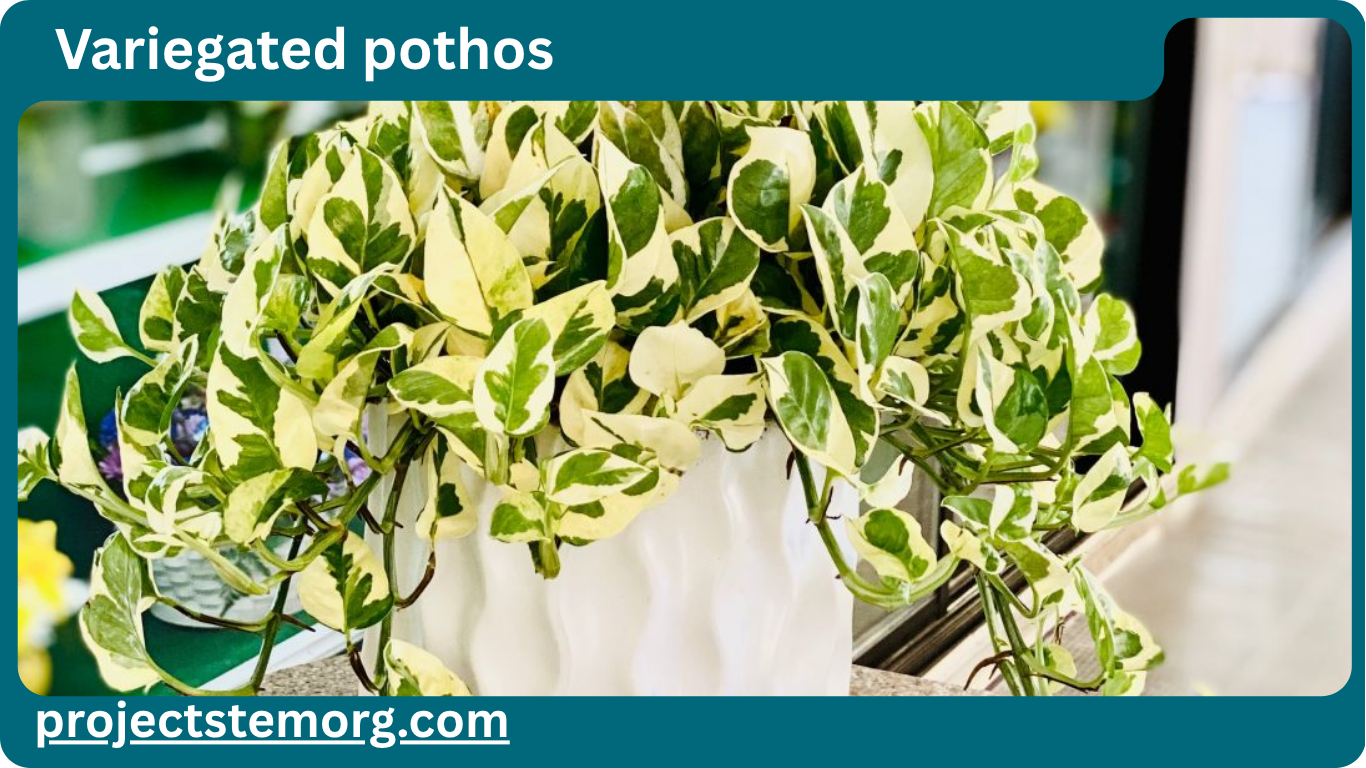
Variegated pothos is one of the most popular choices for indoor plant lovers who want something easy to grow but more visually interesting than an ordinary green houseplant. Its leaves can display beautiful combinations of green, cream, white, yellow, or lighter green patterns. Depending on the variety, the markings may appear as stripes, patches, speckles, marbling, or large blocks of color.
The name “variegated pothos” does not describe just one plant. It is a broad term used for several pothos cultivars with different leaf patterns and colors. Common examples include Marble Queen, Golden Pothos, Snow Queen, N’Joy, Pearls and Jade, and Manjula. These plants belong to the genus Epipremnum and are widely grown as indoor foliage plants.
One reason variegated pothos remains so popular is its flexibility. It can be grown in hanging baskets, placed on shelves, trained along supports, or allowed to trail from containers. With suitable conditions, some varieties can produce long vines that make a room feel greener and more natural.
However, variegated pothos is not completely carefree. Variegation changes how the plant uses light. Parts of a variegated leaf contain less chlorophyll than green areas, so highly variegated plants may need brighter light than their all-green relatives. At the same time, too much direct sunlight can damage the leaves.
The key is balance.
This guide explains how to grow variegated pothos successfully in a typical U.S. home. It covers light, watering, soil, humidity, temperature, fertilizing, pruning, propagation, common varieties, problems, yellow leaves, loss of variegation, pests, toxicity, and practical ways to encourage healthier growth.
What Is Variegated Pothos?
Variegated pothos refers to pothos plants whose leaves contain areas with different colors or shades.
The most familiar pothos species used as houseplants is Epipremnum aureum. Its natural form has mostly green leaves, while cultivated varieties have been selected for attractive patterns.
The term “variegation” simply means that different areas of the leaf have different pigmentation.
In pothos, the lighter areas often contain less chlorophyll than the green portions.
Chlorophyll is important because plants use it during photosynthesis.
anthonynewmancamps.com
This explains an important care difference.
A plant with a lot of white or cream coloring may need more usable light than a mostly green pothos because it has less green tissue available for photosynthesis.
That does not mean it should be placed directly under intense sunlight.
Instead, it usually means that bright, indirect light is especially valuable.
Why Is Variegated Pothos So Popular?
There are several reasons indoor gardeners love variegated pothos.
First, the foliage is attractive.
A single plant can contain many different leaf patterns, making it look more interesting than a uniform green plant.
Second, pothos is adaptable.
It can grow in many indoor environments as long as its basic needs are met.
Third, it can be propagated relatively easily from stem cuttings.
Fourth, its trailing growth makes it useful for home decoration.
You can place it on a bookshelf, let it hang from a basket, or train it upward on a moss pole or other support.
Finally, there are many cultivars to choose from.
This means two people can own “variegated pothos” while having plants that look completely different.
How Variegation Works in Pothos
Understanding variegation makes pothos care much easier.
A green leaf contains chlorophyll throughout much of its tissue.
White or cream sections contain much less chlorophyll.
Yellow and pale-green sections may also contain reduced amounts compared with darker green tissue.
As a result, a highly variegated plant can have a lower photosynthetic capacity per leaf area.
This is why light matters so much.
If a variegated pothos is kept in a very dark room, it may struggle to produce enough energy.
The plant may respond by producing smaller leaves, longer spaces between leaves, or new growth with less attractive patterns.
The solution is usually better light rather than more fertilizer.
Types of Variegated Pothos
There are many pothos cultivars, and their patterns can look very different.
Some have golden-yellow areas.
Others have white patches.
Some have marble-like patterns.
Others have sharp blocks of cream against dark green leaves.
The following varieties are among the best-known examples.
Golden Pothos
Golden Pothos is one of the most common pothos plants.
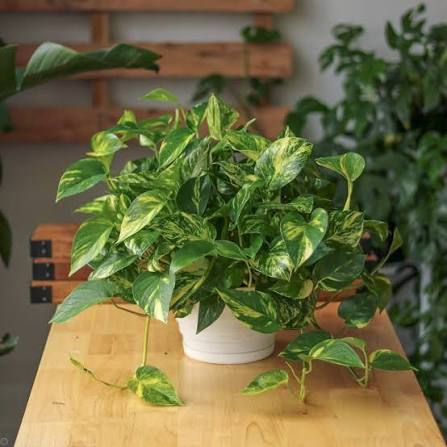
Its leaves are green with yellow or golden variegation.
The amount of yellow can change depending on the growing environment.
Brighter indirect light can help the plant maintain stronger coloration.
Golden Pothos is often recommended to beginners because it is adaptable and vigorous.
Its vines can become long and trailing, making it excellent for hanging containers.
Marble Queen Pothos
Marble Queen is known for green leaves covered with white and cream marbling.
The patterns can vary significantly from leaf to leaf.
Some leaves may have mostly green areas with small white sections.
Others can be heavily variegated.
Because of the lighter leaf tissue, Marble Queen generally benefits from bright indirect light.
If it is kept too dark, growth may become slower and new leaves may contain less attractive variegation.
Snow Queen Pothos
Snow Queen is often confused with Marble Queen because both have white-and-green patterns.
The main visual difference is that Snow Queen typically appears more heavily white or cream overall.
Individual plants can still vary.
As with other highly variegated pothos varieties, adequate light is important.
A bright room with filtered sunlight can help maintain attractive foliage without exposing the leaves to excessive direct sun.
N’Joy Pothos
N’Joy has smaller leaves compared with some larger pothos varieties.
Its leaves usually display distinct green and white sections rather than the flowing marbled pattern associated with Marble Queen.
This makes N’Joy especially attractive for smaller shelves and compact indoor displays.
It can also trail nicely from a hanging container.
Pearls and Jade Pothos
Pearls and Jade is known for smaller leaves with detailed patches of green, cream, and white.
The variegation is often concentrated around parts of the leaf rather than appearing as one large uniform section.
Its compact appearance makes it a popular choice for collectors.
Because the leaf pattern can be more intricate, good light is helpful for maintaining its visual character.
Manjula Pothos
Manjula is another highly attractive cultivar.
Its leaves tend to have broader shapes and irregular cream, white, and green patterns.
Some leaves may show large areas of pale coloring while others have more green.
Manjula can be slower-growing than some of the most vigorous green pothos varieties.
This is not necessarily a problem.
Its growth habit and variegation are part of its appeal.
Global Green Pothos
Global Green is known for green-on-green variegation.
Instead of dramatic white or yellow sections, its leaves can display different shades of green.
This gives it a more subtle appearance.
It can be a good option for people who want variation without the strong contrast of white-variegated cultivars.
Jessenia Pothos
Jessenia has green leaves with chartreuse or yellow-green coloration.
Its appearance is softer than heavily white-variegated varieties.
Like other pothos cultivars, its color can change depending on light conditions.
Best Light for Variegated Pothos
Light is arguably the most important factor when growing variegated pothos.
Most variegated pothos plants do best in bright, indirect light.
This means the room should be bright, but the plant should not sit in intense sunlight for long periods.
A window with filtered light can be an excellent location.
An east-facing window may provide gentle morning sunlight.
A south- or west-facing window can also work if the plant is protected from intense direct rays.
Why Variegated Pothos Needs More Light Than Green Pothos
This comes back to chlorophyll.
Green sections of the leaf can photosynthesize efficiently.
White sections cannot contribute to photosynthesis in the same way because they contain little or no chlorophyll.
Therefore, a highly variegated plant may require brighter conditions to produce enough energy.
This is one reason a Marble Queen or Snow Queen can grow more slowly than a green pothos in the same room.
It is not necessarily unhealthy.
It is simply working with less photosynthetic leaf tissue.
Can Variegated Pothos Grow in Low Light?
It can survive in relatively low light, but survival is not the same as strong growth.
In low light, variegated pothos may:
- Grow slowly
- Produce smaller leaves
- Develop longer spaces between leaves
- Lose some variegation
- Become leggy
- Produce weaker stems
If your plant is becoming sparse, consider moving it closer to a bright window.
Make the change gradually if it has been living in low light for a long time.
Can Variegated Pothos Get Too Much Sun?
Yes.
Direct, intense sunlight can scorch pothos leaves.
Signs of excessive sun may include:
- Brown patches
- Pale or bleached areas
- Crispy leaf edges
- Curling
- Sudden leaf damage
If this happens, move the plant farther from the window or add a sheer curtain.
The goal is bright light without harsh exposure.
Best Temperature for Variegated Pothos
Variegated pothos prefers warm indoor conditions.
A typical comfortable household temperature is usually suitable.
Avoid placing it near very cold drafts or sudden temperature changes.
Keep it away from doors that open frequently during freezing weather.
Likewise, avoid placing it directly beside a heating vent.
Rapid temperature swings can stress the plant.
Humidity for Variegated Pothos
Pothos generally appreciates moderate to higher humidity, but it can adapt to normal indoor conditions.
If your home has dry air, especially during winter, the plant may benefit from additional humidity.
Possible approaches include:
- A room humidifier
- Grouping plants together
- Moving the plant away from dry heating vents
- Keeping it in a naturally more humid room
A bathroom with suitable light can sometimes be a good location.
However, humidity should not replace proper watering and airflow.
How Often Should You Water Variegated Pothos?
Watering should be based on soil moisture rather than a strict calendar.
Allow the upper portion of the soil to dry before watering again.
Then water thoroughly until excess water drains from the bottom of the pot.
Do not leave the plant sitting in water.
Your watering frequency may change throughout the year.
During bright, warm periods, the plant may use water faster.
During winter, growth may slow and the soil may stay wet longer.
This is why a fixed “water every seven days” rule can cause problems.
Signs of Overwatering in Variegated Pothos
Overwatering can cause:
- Yellow leaves
- Soft stems
- Drooping
- Slow growth
- Mushy roots
- Persistent wet soil
- Root rot
One common mistake is assuming a drooping plant always needs water.
A plant can droop because its roots have been damaged by excessive moisture.
Always check the soil before watering.
Signs of Underwatering
Underwatered variegated pothos may develop:
- Drooping leaves
- Dry soil
- Curling leaves
- Crispy edges
- Leaf drop
If the soil has become extremely dry, water thoroughly and allow excess water to drain.
Avoid repeatedly giving tiny amounts of water.
A thorough watering followed by an appropriate drying period is generally more effective.
Best Soil for Variegated Pothos
The best soil is one that holds enough moisture for the plant while still allowing excess water to escape.
A high-quality indoor potting mix can work well when combined with materials that improve drainage.
Many growers use mixtures containing:
- Potting soil
- Perlite
- Orchid bark
- Coco coir
The exact recipe is less important than the final result.
The soil should not remain waterlogged for long periods.
Choosing the Right Pot
The pot should always have drainage holes.
This is more important than whether the pot is ceramic, plastic, terracotta, or another material.
A decorative container without drainage can trap water around the roots.
If you want to use a decorative outer pot, keep the plant in a nursery pot with drainage holes and place that inside the decorative container.
Remove excess water after watering.
How to Fertilize Variegated Pothos
Variegated pothos can benefit from regular feeding during active growth.
A balanced liquid houseplant fertilizer can be used according to the product instructions.
Avoid assuming that extra fertilizer will make variegation stronger.
Fertilizer mainly supports general growth.
If your plant has poor light, adding more fertilizer will not solve the underlying problem.
In fact, excessive fertilizer can damage roots or create mineral buildup.
When Should You Fertilize?
Spring and summer are often the best periods for regular feeding because the plant is actively growing.
During fall and winter, growth may slow.
If your plant receives less light during winter, reduce feeding accordingly.
Plants do not need the same amount of fertilizer throughout the year.
How to Prune Variegated Pothos
Pruning is useful for controlling length and encouraging fuller growth.
If your plant has very long vines with large gaps between leaves, trimming the stems can help create a more compact appearance.
Use clean scissors or pruning shears.
Make cuts just above a node when possible.
The node is the point on the stem where leaves and potential roots emerge.
Those cuttings can then be used for propagation.
Also read:Brumeblog Com: A Complete Guide to Its Technology, Business, Finance, and Lifestyle Content
How to Make Variegated Pothos Bushier
If your pothos looks thin, there are several steps you can take.
First, improve the lighting.
Second, prune long, bare sections.
Third, propagate healthy cuttings and plant them back into the same pot.
This can create the appearance of a fuller plant.
A single long vine will naturally look different from a container containing several rooted vines.
How to Propagate Variegated Pothos
Stem cuttings are one of the easiest ways to propagate pothos.
A basic process is:
- Choose a healthy vine.
- Cut below a node.
- Make sure the cutting contains at least one healthy node.
- Place it in water or a suitable propagation medium.
- Provide bright indirect light.
- Wait for roots to develop.
- Transfer water-rooted cuttings into soil when they have a suitable root system.
The node is essential because that is where new roots can develop.
A piece of leaf without a node usually will not produce a new complete pothos plant.
Water Propagation vs. Soil Propagation
Both methods can work.
Water propagation is popular because you can watch the roots develop.
Soil propagation can reduce the transition from water to soil because the cutting begins in the medium where it will eventually grow.
For beginners, water propagation can be satisfying because the rooting process is easy to observe.
However, roots grown in water may need time to adapt after being moved into soil.
How Long Does Variegated Pothos Take to Root?
Rooting time varies.
Temperature, light, cutting health, humidity, and the cultivar can all influence the process.
Healthy cuttings in warm conditions may produce roots relatively quickly.
Do not judge success after only a few days.
Give the cutting time.
Can You Propagate Variegated Pothos From a Leaf?
A single leaf without a node generally cannot produce a complete new pothos plant.
The node is the key part.
If you want to propagate pothos, make sure each cutting contains at least one node.
A cutting with several nodes can provide more opportunities for root development.
Why Is My Variegated Pothos Losing Variegation?
Loss of variegation is one of the most common concerns among pothos collectors.
The most likely factor to consider is light.
If the plant receives too little light, it may produce greener leaves.
This gives the plant more chlorophyll and can help it photosynthesize efficiently.
In simple terms, the plant may be favoring green growth because green tissue is better equipped to capture light energy.
Move the plant to brighter indirect light.
Do not expect every future leaf to suddenly become heavily variegated.
Different cultivars have different patterns, and individual leaves naturally vary.
Can You Increase Variegation With More Light?
Better light can help some variegated pothos varieties maintain or express stronger patterns, but light cannot completely control genetic variegation.
A plant cannot be forced to produce a specific pattern simply by placing it in stronger light.
If a cultivar naturally produces variable leaves, you should expect some variation.
The goal is to provide enough light for healthy growth and good color expression.
Why Is My Variegated Pothos Producing All-Green Leaves?
An all-green leaf can happen, particularly in some variegated cultivars.
Low light is one possible reason.
The plant may be producing greener tissue because it contains more chlorophyll.
If several new leaves are consistently coming out green, improve the lighting and monitor future growth.
Pruning may also become necessary if a completely green section starts growing strongly and appears to be overtaking the variegated growth.
What Is Reversion in Variegated Pothos?
Reversion refers to a variegated plant producing growth that becomes less variegated or returns toward a greener form.
This can happen in certain cultivars.
It is important to understand that reversion is not simply a watering problem.
Genetics and the stability of the cultivar play major roles.
If one green branch is growing much faster than the rest of the plant, pruning it may help preserve the appearance you want.
Why Is My Variegated Pothos Growing Slowly?
Slow growth does not automatically mean something is wrong.
Highly variegated plants often grow more slowly because their leaves have less chlorophyll.
Other possible causes include:
- Low light
- Cold temperatures
- Root problems
- Poor nutrition
- Small or stressed root systems
- Seasonal dormancy
- Recent repotting
Before changing everything at once, check the basics.
Light and watering should be your first priorities.
Why Are My Variegated Pothos Leaves Turning Yellow?
Yellow leaves can have many causes.
The most common concern is overwatering.
Check whether the soil stays wet for a long time.
If it does, improve drainage and allow the plant to dry more between waterings.
Older leaves can also naturally turn yellow and fall as part of normal plant development.
If only one old leaf changes color while new growth looks healthy, there may be no serious problem.
Why Are the Leaves Turning Brown?
Brown leaf tips or patches can result from several factors.
Possible causes include:
- Dry air
- Underwatering
- Excessive fertilizer
- Direct sunlight
- Root stress
Look at the location of the damage.
If the brown patches are on the side facing intense sunlight, consider light stress.
If the tips are crispy and the soil is very dry, watering or humidity may be involved.
Why Are My Variegated Pothos Leaves Curling?
Curling can occur when the plant is stressed.
Possible causes include:
- Dry soil
- Low humidity
- Excessive sunlight
- Temperature stress
- Root problems
Check the soil first.
Then examine the light and surrounding temperature.
Plant problems are often caused by more than one factor.
Common Pests on Variegated Pothos
Pothos can experience several common houseplant pests.
These may include:
- Mealybugs
- Scale
- Spider mites
- Thrips
Inspect the underside of leaves and along the stems.
Small infestations are easier to manage when discovered early.
If you bring a new plant home, keeping it separated from your existing plants for a short observation period can also reduce the risk of introducing pests.
How to Prevent Pothos Pest Problems
Healthy plants are generally better able to tolerate stress.
Provide appropriate light.
Do not overwater.
Avoid extremely poor air circulation.
Check leaves regularly.
Clean dust from foliage when needed.
Most importantly, inspect new plants before placing them beside your established collection.
Is Variegated Pothos Toxic?
Yes.
Pothos plants contain insoluble calcium oxalate crystals that can cause irritation if plant material is chewed or swallowed.
This is important for homes with young children, cats, dogs, or other animals that may chew plants.
Symptoms can include mouth irritation, drooling, difficulty swallowing, and other signs of discomfort.
Keep pothos out of reach of children and pets.
If a child or animal has eaten part of the plant and symptoms develop, contact an appropriate medical or veterinary professional.
Can Cats Eat Variegated Pothos?
No.
Variegated pothos should not be considered safe for cats.
Cats may chew leaves simply because they are curious or attracted to hanging vines.
Place the plant somewhere your cat cannot access it.
The same advice applies to dogs and young children.
Variegated Pothos vs. Regular Pothos
The biggest difference is leaf coloration.
Regular green pothos has mostly green leaves.
Variegated pothos has areas with different pigmentation.
The care principles are similar, but variegated varieties often benefit from brighter light.
Highly variegated cultivars may also grow more slowly.
This difference should be expected rather than treated as a sign that the plant is unhealthy.
Variegated Pothos vs. Philodendron
These plants are often confused because both can have heart-shaped leaves and trailing growth.
Pothos and heartleaf philodendron belong to different genera.
They can look similar at first glance, but leaf texture, growth structures, and other characteristics can help distinguish them.
One practical point is that the name “pothos” should not be used as a general name for every trailing tropical houseplant.
Correct identification makes care easier.
Does Variegated Pothos Climb?
Yes.
Pothos is naturally capable of climbing.
In a home, you can provide a moss pole, trellis, wooden support, or another suitable structure.
When allowed to climb, pothos may produce larger leaves under appropriate conditions.
Trailing plants often have smaller leaves compared with mature climbing growth.
This can make vertical growing an interesting option for collectors.
How to Train Variegated Pothos to Climb
Choose a healthy vine and gently guide it toward a support.
Secure it loosely rather than tying it tightly.
Give the plant bright indirect light.
Over time, the vine can attach or grow along the support depending on the structure.
Avoid forcing the stems into sharp bends.
Pothos vines can be flexible, but they can still break.
How to Get Bigger Leaves on Variegated Pothos
Leaf size can depend on several factors.
Climbing is one factor.
Adequate light is another.
A healthy root system, good nutrition, warmth, and consistent care also matter.
If you want larger leaves, consider giving the plant a vertical support rather than letting every vine trail downward.
Also read:Pixwox: Complete Guide to the Instagram Viewer, Features, Privacy, Safety, and Alternatives
Do not expect every variegated cultivar to produce huge leaves indoors.
Genetics play a major role.
Can Variegated Pothos Grow in Water Permanently?
Pothos can grow in water for extended periods, but growing it permanently in water is different from normal soil cultivation.
A plant kept in water needs appropriate light, clean water, and access to nutrients.
If the goal is long-term, vigorous growth, soil or a properly managed semi-hydroponic system may be easier.
Water propagation is excellent for producing roots, but that does not automatically mean a glass of water is the ideal permanent home.
Repotting Variegated Pothos
Repot when the plant becomes root-bound or when the growing medium no longer drains properly.
Choose a container only slightly larger than the current root ball.
A very large container can hold more moisture than the plant can use.
After repotting, give the plant suitable light and avoid excessive watering.
Some temporary stress after repotting is normal.
Best Time to Repot Variegated Pothos
Spring and early summer are often convenient because the plant is entering or already experiencing active growth.
Repotting can still be done at other times when necessary.
For example, if the plant has severe root problems or the existing soil is causing drainage issues, waiting for spring may not be appropriate.
Plant health comes first.
How Long Can Variegated Pothos Live?
With proper care, pothos can be a long-term houseplant.
It is not a plant that needs to be replaced every year.
Healthy plants can continue producing vines for many years.
Regular pruning and propagation can even allow you to create new plants from an older mother plant.
This makes pothos an excellent plant for people who enjoy watching their collection develop over time.
How Big Can Variegated Pothos Get?
The size depends on the cultivar, growing conditions, container, support, and pruning.
In a home, vines can become several feet long.
If given a structure to climb, the plant can develop a more vertical shape.
The largest possible size is not always the most attractive.
Many indoor gardeners prefer a compact plant with full foliage rather than extremely long, sparse vines.
Best Room for Variegated Pothos
A bright living room, home office, bedroom, or sunroom can work well.
The most important feature is not the name of the room.
It is the amount and quality of light.
A dark room may not be suitable simply because it is labeled a “bedroom.”
A bright bedroom near a window may be excellent.
Can Variegated Pothos Grow in a Bathroom?
Yes, if the bathroom has enough light.
Bathrooms often have higher humidity, which pothos can appreciate.
But high humidity cannot compensate for poor lighting.
If your bathroom has no window and very little artificial light, a different location may be better.
A grow light can also make a darker room more suitable.
Using Grow Lights for Variegated Pothos
A grow light can be helpful when natural light is limited.
This is especially useful for highly variegated plants.
Place the light according to the manufacturer’s recommendations.
Do not assume that stronger is always better.
The goal is consistent usable light without excessive heat.
A timer can also provide a regular lighting schedule.
How to Keep Variegated Pothos Healthy in Winter
Winter can be challenging because indoor light levels often decrease.
Your plant may grow more slowly.
Reduce watering if the soil takes longer to dry.
Move the plant closer to a bright window if appropriate.
Keep it away from cold drafts.
Avoid placing it directly against freezing glass.
If necessary, use a grow light to maintain consistent illumination.
Does Variegated Pothos Need a Humidifier?
Not always.
A humidifier can help if your indoor air is extremely dry, but it is not required in every home.
Focus first on light, watering, drainage, and temperature.
A humidifier is an optional improvement rather than a replacement for basic care.
How Often Should You Rotate Variegated Pothos?
Rotating the pot occasionally can encourage more even growth.
Pothos naturally grows toward available light.
If one side constantly faces a window, the plant may become lopsided.
A small rotation every few weeks can help distribute light more evenly.
There is no need to rotate the plant every day.
Can Variegated Pothos Be Placed Outside?
Yes, during suitable weather.
However, an indoor-grown pothos should not be moved suddenly from a relatively protected environment into strong outdoor sunlight.
Acclimate it gradually.
Choose a sheltered area with bright filtered light.
Bring it indoors before temperatures become unsuitable.
Variegated Pothos Care Checklist
For a simple care routine, remember these points:
- Provide bright indirect light.
- Avoid harsh direct afternoon sun.
- Use well-draining soil.
- Use a pot with drainage holes.
- Let the soil dry partially between watering.
- Keep temperatures comfortably warm.
- Provide moderate humidity when needed.
- Fertilize during active growth.
- Prune long or weak vines.
- Propagate from stem cuttings with nodes.
- Watch for pests.
- Keep the plant away from pets and children.
The Biggest Secret to Growing Beautiful Variegated Pothos
There is no secret fertilizer or special watering trick.
The most important factor is giving the plant the right amount of light.
Light influences growth, leaf size, spacing between leaves, and the appearance of variegation.
If your plant is struggling, do not immediately buy another product.
Look at the window first.
Ask:
Is the plant getting enough light?
Is the soil staying wet too long?
Are the roots healthy?
Is the temperature stable?
Are pests present?
This simple diagnostic approach is often more useful than changing five things at once.
Final Thoughts
Variegated pothos is an excellent choice for indoor gardeners who want a plant that combines easy-care qualities with beautiful and unusual foliage. The term includes many cultivars, from golden-yellow Golden Pothos to highly patterned Marble Queen, Snow Queen, N’Joy, Pearls and Jade, and Manjula. Although their exact appearance and growth habits differ, they share many basic needs. Bright indirect light is especially important because variegated leaves contain less chlorophyll than fully green leaves. Good drainage, careful watering, warm temperatures, and occasional feeding can support healthy growth. When a variegated pothos starts producing greener leaves, becoming leggy, or growing slowly, lighting should be one of the first things you check. With regular pruning and node cuttings, you can also create fuller plants and new specimens for your home. The biggest lesson is simple: variegated pothos does not need complicated care; it needs consistent care. Give it enough light without burning the leaves, avoid keeping its roots constantly wet, provide a suitable growing medium, and monitor the plant rather than following rigid schedules. With these habits, a variegated pothos can become a long-lasting and attractive part of an indoor plant collection.
Frequently Asked Questions About Variegated Pothos
Why is my variegated pothos turning more green?
Low light is a common reason. The plant may produce greener leaves because green tissue contains more chlorophyll and can photosynthesize more efficiently. Move the plant to brighter indirect light and monitor new growth.
Can I put my variegated pothos directly in a sunny window?
It depends on the window. Gentle morning sunlight may be fine, but intense direct afternoon sun can scorch the foliage. Filter strong sunlight with a sheer curtain or move the plant slightly away from the glass.
How many nodes should a pothos cutting have?
One healthy node is enough to potentially produce roots, but cuttings with two or more nodes can provide additional opportunities for rooting. Make sure the node is included in the cutting.
Why does my variegated pothos have small leaves?
Small leaves can result from low light, young growth, limited support, root stress, or the natural characteristics of the cultivar. Providing better light and allowing the plant to climb can encourage larger foliage.
Is Marble Queen pothos harder to grow than Golden Pothos?
Marble Queen can be somewhat slower-growing because its leaves often contain more light-colored tissue. It generally benefits from brighter indirect light, while Golden Pothos is usually more vigorous and tolerant of lower-light conditions.