Messeregge: Meaning, Uses, Benefits, and Complete Guide
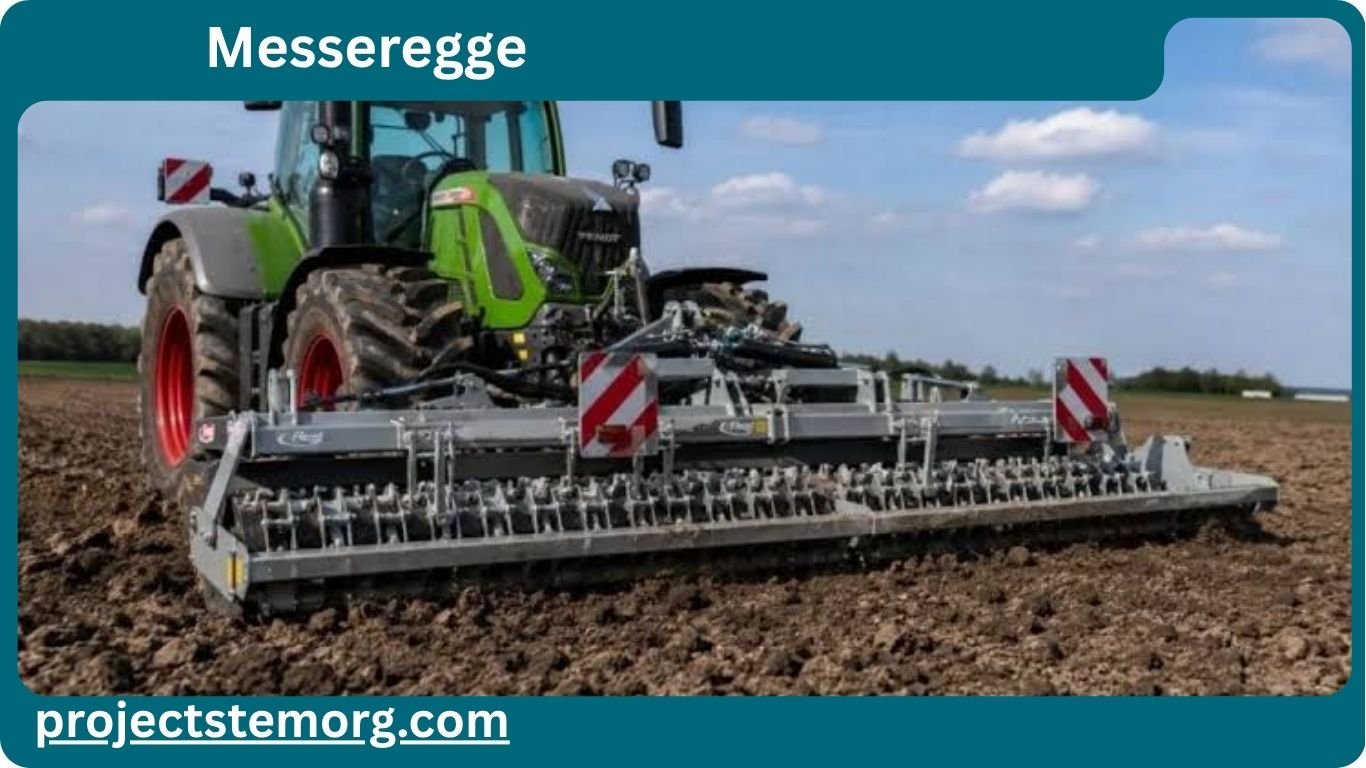
Messeregge is an unusual word that many English-speaking readers may see online without immediately understanding what it means. The term comes from German agricultural vocabulary and is most closely associated with a knife harrow or blade-based harrow used for soil preparation.
At first glance, Messeregge can look like the name of a knife, machine, brand, place, or even a modern digital term. However, its agricultural meaning is much more practical. The word can be understood by looking at its German components. “Messer” means knife or blade, while “Egge” means harrow. Together, the word describes a harrow that uses knife-like or blade-shaped working elements to work the soil.
For farmers, agriculture students, machinery enthusiasts, and people researching German farming terminology, understanding Messeregge can be useful because it connects language with the way agricultural machinery is designed.
A harrow is generally used to work the upper part of the soil. Depending on its design, it can break clods, loosen the surface, level the field, manage light crop residue, control small weeds, and prepare an area for planting. A knife-style harrow uses cutting elements to achieve these tasks.
The term is not a common everyday English word in the United States. American readers may be more familiar with expressions such as knife harrow, blade harrow, shallow cultivation equipment, soil preparation tool, seedbed preparation equipment, or surface tillage implement.
This guide explains what Messeregge means, how it works, where it can be used, how it compares with other agricultural implements, and why understanding the exact meaning of the word is important.
What Does Messeregge Mean?
Messeregge is a German agricultural term that can be translated in simple English as “knife harrow.”
The word has two important parts:
- Messer means knife or blade.
- Egge means harrow.
A harrow is a farming implement designed to work soil, usually near the surface. Different harrows use different working elements.
For example, a disc harrow uses discs, while a tine harrow uses tines or teeth. A knife harrow uses blade-like elements.
The name Messeregge therefore describes the general construction and purpose of the agricultural implement.
In simple terms, a Messeregge is a soil-working tool that uses knife-shaped or blade-like components to cut and disturb the upper layer of a field.
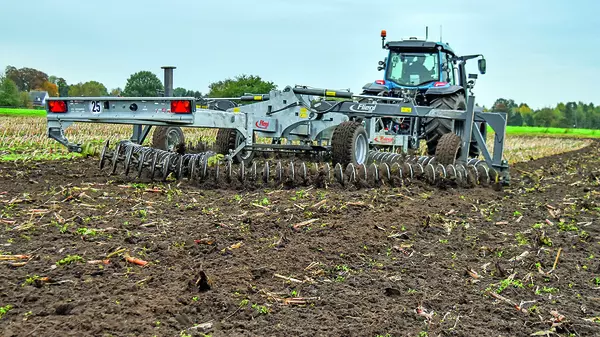
The exact design can vary between machines. Some may be used alone, while others can be combined with rollers, packers, seed drills, or other agricultural equipment.
This is why it is better to understand Messeregge as an agricultural equipment term rather than assuming that every machine described by the word has exactly the same specifications.
Why Is Messeregge Difficult to Understand?
The main reason is that Messeregge is not widely used in everyday American English.
When an unusual German word enters English-language search results, people may interpret it incorrectly. Some websites may also use rare keywords creatively because they want to attract search traffic.
This can produce several different explanations for the same word.
A reader might see Messeregge described as an agricultural tool on one page and as something completely different on another.
The safest approach is to look at the language and agricultural context.
Messer means knife.
Egge means harrow.
That combination makes the agricultural meaning logical.
It is also important not to confuse Messer with Messe.
Messe can refer to a fair, exhibition, or trade show in German.
Messer means knife.
Therefore, the agricultural word Messeregge should not automatically be interpreted as something related to trade fairs or exhibitions simply because the spelling looks similar to Messe.
What Is a Harrow?
To understand Messeregge, it helps to understand what a harrow is.
A harrow is an agricultural implement used to work the soil surface.
Farmers use different types of harrows for different purposes.
Depending on the design, a harrow can help:
- Break soil clods
- Loosen the surface
- Level rough ground
- Prepare a seedbed
- Control small weeds
- Distribute crop residue
- Improve surface conditions before planting
- Remove or break light surface crusting
Traditional harrows were often pulled by animals. Modern agricultural harrows are usually attached to tractors.
The design of the working parts determines how the implement interacts with the soil.
A disc harrow uses circular discs.
A tine harrow uses teeth or tines.
A chain harrow uses flexible linked sections.
A rotary harrow uses powered rotating elements.
A Messeregge is associated with knife or blade-like working elements.
Also Read: TxMyZone: A Complete Guide to the Texas Student Portal, Course Requests, and Academic Planning
How Does a Messeregge Work?
The basic principle is simple.
The tractor pulls the implement across the field. As it moves forward, the knife-like working elements contact the soil.
The shape, angle, spacing, and position of the blades determine how they cut and disturb the soil.
Instead of relying on powered rotating blades like a rotary tiller, a passive knife harrow can use the forward movement of the tractor to create its working action.
The blades may cut through surface soil, break smaller clods, disturb shallow weeds, and help create a more even surface.
The actual result depends heavily on field conditions.
Important factors include:
- Soil type
- Soil moisture
- Working depth
- Tractor speed
- Blade design
- Blade spacing
- Crop residue
- Previous tillage
- Field condition
- Machine adjustment
This means there is no single result that can be guaranteed for every Messeregge.
Good agricultural equipment works best when it is correctly matched to the field.
What Is a Messeregge Used For?
The main purpose of a Messeregge is surface soil preparation.
Farmers may use a knife-style harrow for several related tasks.
Seedbed Preparation
One of the most important uses is preparing the soil before planting.
Seeds need suitable conditions for good germination and early growth.
A well-prepared seedbed should generally provide reasonably uniform soil conditions, suitable moisture, good seed-to-soil contact, and an appropriate level of firmness.
A rough field with large clods and uneven areas can make planting more difficult.
A properly adjusted knife harrow can help improve the upper soil layer.
Breaking Surface Crusts
After rain, irrigation, or drying, soil can sometimes form a hard surface crust.
A crust can make it more difficult for emerging plants to reach the surface.
A shallow soil-working operation can sometimes help break that crust.
However, the machine must be used carefully because excessive disturbance can create new problems.
Leveling the Soil
A rough field can make planting less consistent.
Knife-based harrowing can help smooth minor surface irregularities.
This can be especially useful when the goal is to create a more uniform surface before seeding.
Light Residue Management
Crop residue remains in fields after harvest.
Residue can include:
- Stems
- Leaves
- Small stalks
- Roots
- Plant fragments
Residue is not necessarily something farmers want to remove.
Crop residue can protect the soil surface and contribute organic material.
However, excessive or poorly distributed residue can sometimes interfere with planting.
A suitable knife harrow may help cut or distribute lighter residue.
Messeregge and Seedbed Quality
Seedbed quality can influence crop establishment.
A good seedbed does not simply mean extremely fine soil.
In fact, making soil excessively fine can sometimes create problems such as crusting or poor structure.
The goal is balance.
The soil should be prepared enough for reliable planting without unnecessary disturbance.
This is one reason shallow cultivation tools can be valuable.
Instead of completely rebuilding the soil profile, the farmer can focus on the surface condition that actually needs improvement.
Working Depth of a Messeregge
Working depth is an important consideration.
A knife harrow is generally associated with shallow soil work, but the exact depth varies according to the equipment and its intended use.
It is not appropriate to assume that every Messeregge operates at exactly the same depth.
Some machines are designed primarily for very shallow surface treatment, while other blade-based implements may penetrate deeper.
The correct depth depends on:
- Machine design
- Blade shape
- Soil condition
- Crop
- Residue
- Desired result
- Tractor power
The manufacturer’s operating instructions should always be followed.
The main principle is simple: use only as much soil disturbance as necessary to accomplish the task.
Why Shallow Cultivation Can Be Useful
Deep tillage is sometimes necessary.
But deep tillage is not necessary for every field problem.
If the problem is only a surface crust, shallow weeds, light residue, or minor unevenness, deep soil disturbance may be unnecessary.
A shallow knife harrow gives farmers another option.
This can help reduce unnecessary soil movement.
It can also reduce the energy needed compared with more aggressive tillage operations in suitable conditions.
However, shallow cultivation is not automatically better.
The correct approach depends on the field.
Messeregge vs. Disc Harrow
A Messeregge and a disc harrow are both used for soil preparation, but they work differently.
A disc harrow uses rotating discs.
These discs cut into the soil and can move, mix, and lift soil as the machine travels through the field.
A knife harrow uses blade-like working elements.
The difference can be summarized as follows:
| Feature | Messeregge | Disc Harrow |
| Main working part | Knife or blade | Circular disc |
| General action | Cutting and shallow soil disturbance | Cutting, lifting, and mixing |
| Typical purpose | Surface preparation | More substantial tillage |
| Soil movement | Usually limited | Usually greater |
| Residue handling | Depends on design | Often effective for heavier residue |
| Power requirement | Varies | Varies and can be higher |
| Best use | Targeted surface work | Broader tillage operations |
Neither machine is automatically better.
The correct choice depends on the problem the farmer needs to solve.
Messeregge vs. Tine Harrow
A tine harrow uses metal teeth or tines.
These tines can scratch, loosen, lift, and disturb the upper soil layer.
A knife harrow uses blade-like elements that provide more of a cutting action.
A farmer might choose between them depending on soil condition, weed pressure, residue, and the desired seedbed.
A tine harrow can be useful for general surface loosening.
A knife harrow can be useful when cutting action is particularly important.
Again, the machine should be selected according to the field rather than the name alone.
Messeregge vs. Rotary Tiller
A rotary tiller is different from a knife harrow because its blades are mechanically powered.
The rotating blades actively break and mix soil.
Also Read: OncePik: Smart Picks for Technology, Lifestyle, Trends, and Home Improvement
This can create a fine soil surface quickly, but it can also produce more soil disturbance.
A Messeregge generally relies on the tractor pulling the implement through the field.
The working elements interact with the soil because of the forward movement.
For farmers trying to limit unnecessary soil mixing, a shallow knife-based system may sometimes be a useful alternative.
But a rotary tiller may be more appropriate where intensive soil mixing is actually required.
Messeregge and Crop Residue
Crop residue management is an important part of modern agriculture.
Farmers have to balance two goals.
They may want enough residue on the field to help protect soil.
At the same time, they may need to manage residue so that planting equipment can operate properly.
A knife harrow can provide a cutting action that may help break lighter residue into smaller pieces.
The results depend on residue type and quantity.
For example, dry wheat straw behaves differently from thick corn stalks.
Heavy residue can also create plugging problems if the machine is not designed with enough clearance.
Therefore, farmers should check the implement’s specifications before using it in fields with substantial residue.
Messeregge and Weed Control
A shallow knife harrow can also have a role in mechanical weed control.
Small weeds growing near the soil surface may be cut or disturbed.
This can be useful in certain farming systems.
However, weed control depends on many factors.
These include:
- Weed species
- Weed size
- Soil condition
- Crop stage
- Weather
- Working depth
- Machine speed
- Timing
A harrow pass that happens too early or too late may not provide the desired result.
Mechanical weed control should therefore be planned as part of a broader weed-management strategy.
Messeregge for Different Soil Types
Soil type has a major effect on tillage.
Clay Soil
Clay soil can become very hard when dry and sticky when wet.
Working clay when it is too wet can cause smearing and compaction.
Working it when extremely dry can require high pulling force.
A knife harrow can work well when the moisture condition is appropriate, but timing is critical.
Loam Soil
Loam often provides favorable conditions for many agricultural operations.
A Messeregge can be used for surface preparation and seedbed finishing when field conditions are suitable.
However, even good soil can be damaged by excessive traffic.
Sandy Soil
Sandy soil can dry quickly and may be vulnerable to wind erosion.
Aggressive soil disturbance can increase the amount of loose soil exposed to wind.
A shallow operation may sometimes provide a more controlled approach, but farmers should still consider erosion risk.
When Should a Messeregge Be Used?
There is no universal calendar date for using a Messeregge.
The best time depends on field conditions.
Farmers should consider:
- Soil moisture
- Weather forecast
- Crop schedule
- Planting date
- Weed growth
- Residue
- Previous field operations
The most important factor is usually soil condition.
If soil is too wet, entering the field can create compaction.
If soil is extremely dry, the operation may produce excessive dust and require more energy.
Good timing can make a major difference.
Benefits of Messeregge
A properly selected and adjusted Messeregge can provide several benefits.
Shallow Soil Preparation
It can work the upper soil layer without automatically requiring deep tillage.
Seedbed Improvement
It can help create a smoother and more uniform planting surface.
Surface Cutting
Knife-like working elements can cut through shallow soil crusts and light residue.
Weed Disturbance
It can help disturb small weeds under suitable conditions.
Potential Fuel Efficiency
A shallow passive implement may require less energy than some aggressive powered soil-working equipment.
Reduced Field Passes
Some modern systems combine several operations, potentially reducing the number of tractor passes.
Versatility
Depending on design, a knife harrow may be used with other agricultural equipment.
Limitations of Messeregge
It is important not to treat Messeregge as a universal farming solution.
It has limitations.
It may not be appropriate for deep compaction.
It may not replace a plow.
It may not provide the same soil mixing as a disc harrow.
It may struggle with extremely heavy residue.
It may perform poorly in excessively wet soil.
It can require careful adjustment.
The biggest mistake is expecting one machine to solve every soil problem.
Agricultural equipment works best when each implement is assigned the job it was designed to perform.
How to Maintain a Messeregge
Maintenance is important for reliable agricultural equipment.
The blades or knives should be inspected regularly.
Look for:
- Excessive wear
- Cracks
- Bent parts
- Loose bolts
- Damaged mounting points
- Uneven blade positions
- Worn connections
Worn blades can change the way the implement works.
If some blades are much more worn than others, the machine may not operate evenly across its working width.
Regular maintenance can help prevent larger problems later.
Messeregge Safety
Agricultural machinery can cause serious injuries when used incorrectly.
Knife harrows contain metal components that may have sharp edges.
Before performing maintenance, the tractor and implement should be safely stopped.
Hydraulic equipment should be handled carefully.
Never assume that raised equipment is safe simply because the tractor engine is switched off.
Follow the manufacturer’s safety instructions.
Keep people away from moving machinery.
Children should never be allowed to approach operating agricultural equipment.
Operators should also use appropriate personal protective equipment when maintenance requires it.
How to Choose a Messeregge
If you are considering a knife harrow, start with your farming objective.
Ask yourself:
What problem am I trying to solve?
Do I need shallow cultivation?
Do I need residue cutting?
Do I need seedbed preparation?
Do I need weed control?
Do I need leveling?
Do I need a roller or packer?
Once the purpose is clear, compare equipment specifications.
Important specifications may include:
- Working width
- Working depth
- Blade spacing
- Blade design
- Weight
- Tractor requirements
- Adjustment system
- Transport width
- Replacement parts
- Maintenance requirements
Do not purchase an implement simply because it has a large working width.
A machine that is too large for your tractor or soil can create unnecessary costs.
Questions to Ask a Machinery Dealer
Before buying a knife harrow, ask the dealer several practical questions.
What is the recommended working depth?
What tractor power is required?
How frequently do the blades need replacement?
How does the machine perform in heavy residue?
Can the working depth be adjusted?
Can it be combined with a roller?
How easy is maintenance?
Are replacement blades readily available?
What is the transport width?
What type of soil is the machine designed for?
These questions can help prevent an expensive equipment mistake.
Messeregge and Modern Farming
Modern agriculture increasingly focuses on efficiency.
Farmers want to produce crops while managing:
- Fuel
- Labor
- Soil health
- Water
- Machinery costs
- Time
- Erosion
- Crop residue
This has increased interest in equipment that can perform useful work with limited soil disturbance.
A knife harrow can fit into this approach when used correctly.
The important concept is not simply “less tillage.”
The better concept is “appropriate tillage.”
If a field needs deep tillage, shallow cultivation may not be enough.
If a field only needs surface preparation, deep tillage may be unnecessary.
The best equipment strategy solves the actual problem.
Messeregge and Sustainable Agriculture
Sustainable agriculture requires careful management of natural resources.
Soil is one of the most important resources on a farm.
Good soil management can involve protecting soil structure, reducing erosion, maintaining organic matter, managing water, and avoiding unnecessary disturbance.
Also Read: Eo Pis: A Complete Guide to Enterprise Operations Process Information Systems
A shallow knife harrow may support these goals in some farming systems.
However, it would be incorrect to say that every Messeregge operation is automatically sustainable.
Sustainability depends on the complete farming system.
The timing of the operation, number of passes, soil condition, crop rotation, residue management, and other practices all matter.
Why the Exact Meaning Matters
Messeregge demonstrates how difficult it can be to research rare terms online.
When a word has limited English-language coverage, incorrect explanations can spread quickly.
A website may publish a definition.
Another website may copy or rewrite it.
Eventually, several pages may appear to confirm the same information.
But repetition does not automatically make a claim accurate.
For specialized agricultural terminology, readers should pay attention to language, context, equipment descriptions, and practical use.
In the case of Messeregge, the agricultural interpretation is the most logical because the word combines the German concepts of knife and harrow.
Messeregge and the Keyword “Oral Exams Near Me”
The phrase “oral exams near me” has a completely different search intent from Messeregge.
Someone searching for “oral exams near me” may be looking for a nearby testing center, educational examination service, dental-related examination, language assessment, or another local service depending on the context.
Messeregge, on the other hand, relates to agriculture and soil-working equipment.
There is no direct agricultural relationship between the two terms.
For that reason, a professional article should not repeatedly insert “oral exams near me” into agricultural paragraphs just to increase keyword frequency.
Search engines increasingly focus on whether content satisfies the user’s intent.
A useful article should answer the question the reader actually asked.
That principle is more valuable than unnatural keyword repetition.
Common Misunderstandings About Messeregge
Several misunderstandings can appear when people encounter the word.
Messeregge Is Not Simply a Handheld Knife
Although Messer means knife, the complete compound refers to an agricultural implement.
Messeregge Is Not the Same as Every Harrow
A harrow is a broad equipment category.
Messeregge describes a more specific knife or blade-based type.
Messeregge Is Not Automatically a Disc Harrow
Disc harrows use circular discs and have a different soil action.
Messeregge Does Not Mean Trade Show
The German word Messe can relate to fairs or exhibitions, but Messer means knife.
Messeregge Is Not Automatically a Brand
The term describes an agricultural concept or equipment type and should not automatically be treated as one manufacturer’s brand name.
Frequently Asked Questions About Messeregge
What is Messeregge in simple English?
Messeregge is a German agricultural term that can be understood as knife harrow or blade harrow.
What does Messer mean?
Messer is the German word for knife.
What does Egge mean?
Egge is the German word for harrow, an agricultural implement used for working soil.
Is Messeregge used for farming?
Yes. The term is associated with agricultural soil preparation and knife-based harrowing equipment.
What is the main purpose of a Messeregge?
Its main purpose is generally shallow soil preparation. Depending on the machine, it can help prepare seedbeds, break surface crusts, disturb small weeds, manage light residue, and level the soil.
Is a Messeregge the same as a plow?
No. A plow performs deeper and more substantial soil movement. A knife harrow is generally intended for shallower soil work.
Is a Messeregge the same as a rotary tiller?
No. A rotary tiller uses powered rotating blades. A knife harrow generally uses blade-like elements that work through the forward movement of the tractor.
Can a Messeregge control weeds?
It can help disturb young weeds under suitable conditions. Its effectiveness depends on weed size, crop stage, soil condition, timing, and machine adjustment.
Can a Messeregge be used before planting?
Yes. Seedbed preparation before planting is one of the important applications of knife-harrow-type equipment.
Can a Messeregge handle crop residue?
Some designs can cut and manage light crop residue. Performance depends on blade arrangement, clearance, residue quantity, and crop type.
Is Messeregge a common English word?
No. It is a specialized German agricultural term. English-speaking farmers may use terms such as knife harrow or blade harrow instead.
Why is the word sometimes explained incorrectly online?
Rare terms can be misunderstood, mistranslated, or used creatively by websites trying to target unusual search keywords. The agricultural meaning is the most useful interpretation when discussing German farming equipment.
Can Messeregge improve soil health?
It can support soil-management goals when used appropriately, particularly when shallow disturbance is sufficient. However, no single implement automatically improves soil health. The result depends on the complete farming system.
Does Messeregge work in every type of soil?
It can be used in different soil conditions, but performance varies. Clay, loam, and sandy soils respond differently to cultivation. Proper timing and adjustment are important.
Is deeper cultivation always better?
No. The necessary depth depends on the problem. If only the surface needs treatment, deeper cultivation can create unnecessary soil disturbance and increase energy requirements.
Final Thoughts on Messeregge
Messeregge is a specialized German agricultural term that is best understood as a knife harrow or blade-based harrow. The word combines Messer, meaning knife, with Egge, meaning harrow.
The equipment associated with the term is designed to work the soil surface using blade-like elements. Depending on the specific machine, it can support seedbed preparation, surface leveling, shallow cultivation, residue management, and mechanical weed disturbance.
The most important lesson is that Messeregge should not be viewed as a mysterious or complicated concept. Once the German word is broken into its basic parts, the agricultural meaning becomes much easier to understand.
For American readers, searching for related English terms such as knife harrow, blade harrow, shallow cultivation equipment, or seedbed preparation equipment may produce more useful information than searching only for the German term.
A good farming decision should always begin with the actual field problem. If the problem is shallow surface preparation, a knife harrow may be a useful option. If the problem requires deep soil correction, another implement may be more appropriate.
The value of Messeregge is therefore not simply in its unusual name. Its value comes from the practical agricultural principle behind it: using controlled blade action to prepare the soil surface while avoiding more disturbance than the field actually needs.