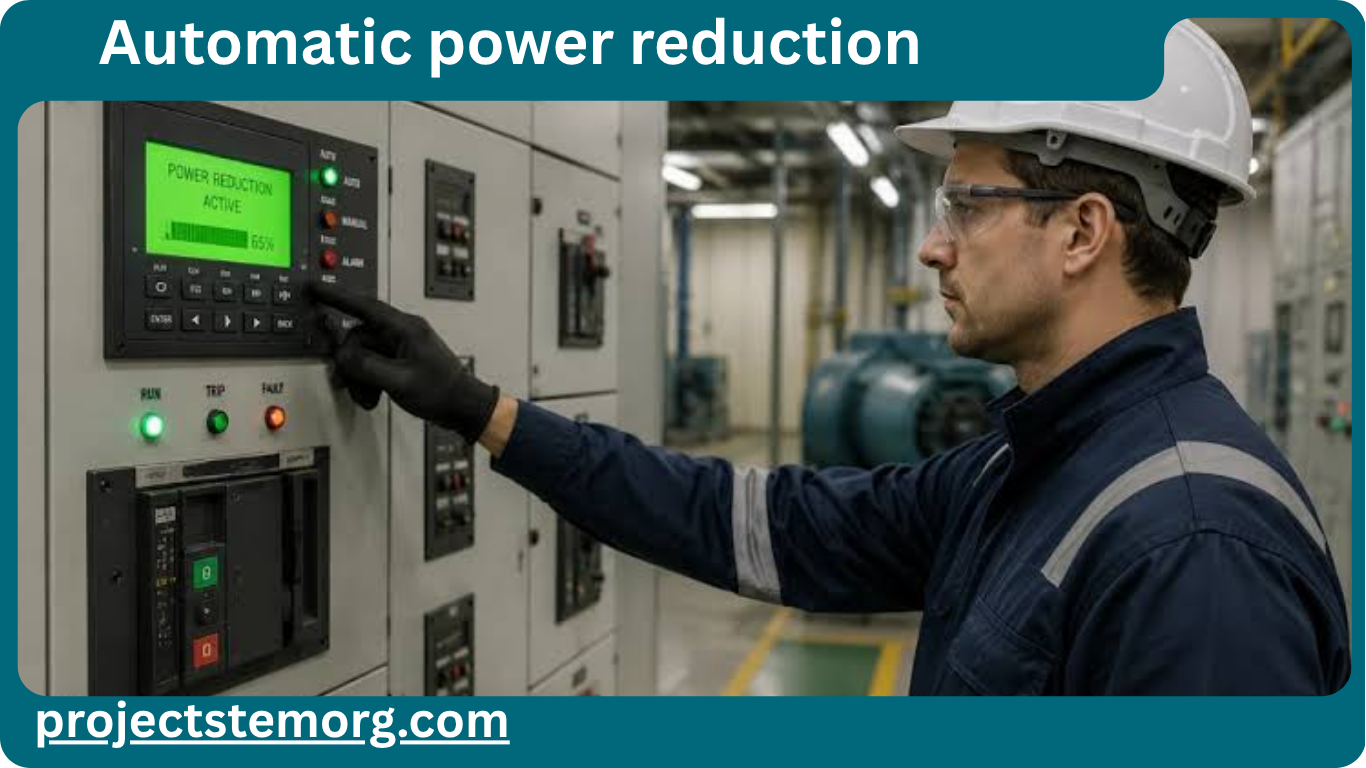
Automatic Power Reduction: A Complete Guide to APR in Fiber Optic Networks
Automatic power reduction is an important safety function used in optical fiber communication systems. It is designed to reduce optical output when a condition such as a fiber break, disconnected connector, equipment fault, or loss of optical continuity could expose people to unsafe levels of optical radiation.
In simple terms, automatic power reduction helps a fiber optic system recognize that something has gone wrong and quickly lower the optical power being transmitted.
This function is especially important in high-power optical networks. Long-distance fiber systems, dense wavelength-division multiplexing networks, optical amplifiers, data center interconnects, and other advanced communication systems can use optical power levels that require careful safety controls.
The International Telecommunication Union defines automatic power reduction as a technique used to automatically reduce the output power of optical amplifiers to avoid exposure to hazardous levels. ITU-T G.664 also describes related functions such as automatic laser shutdown and automatic power shutdown.
Modern optical-fiber safety standards use a broader concept. IEC 60825-2 describes automatic power reduction as a feature that reliably reduces accessible optical power to a specified level within a specified time when an event could result in human exposure to radiation.
That definition explains why APR is more than a network performance feature. Its main purpose is safety.
This article explains automatic power reduction in simple language, including how it works, why fiber breaks can create hazards, how APR differs from automatic laser shutdown, how optical amplifiers use APR, what happens during a fault, common causes of APR alarms, troubleshooting considerations, standards, benefits, limitations, and best practices for modern fiber optic networks.
What Is Automatic Power Reduction?
Automatic power reduction, often shortened to APR, is a safety mechanism that automatically lowers optical output when a fiber optic system detects a condition that could create an unsafe optical exposure.
The system may detect problems such as:
- A broken fiber
- An open optical connector
- A disconnected cable
- Loss of optical continuity
- Equipment failure
- Abnormal optical reflection
- Loss of a supervisory signal
- Certain amplifier faults
When the system detects an appropriate fault condition, it can reduce the optical power to a safer level or, depending on the equipment and configuration, shut the optical source down.
The exact behavior varies by manufacturer and system design.
This is important because automatic power reduction is not one identical implementation across every optical device. Different vendors may use different detection methods, power levels, timing, alarms, and restart procedures.
Why Is Automatic Power Reduction Necessary?
Fiber optic communication uses light to carry information.
The light is usually invisible to the human eye, especially when infrared wavelengths are involved. This creates an important safety issue.
A person may look at a disconnected fiber connector and see nothing even though optical radiation could still be present.
In a low-power system, the optical output may already be within a safe range.
In a high-power amplified system, however, the accessible optical radiation can be significantly higher.
If a fiber is disconnected while high optical power is still being transmitted, a technician could potentially be exposed to that radiation.
This is why optical safety standards include procedures for abnormal conditions.
Also read:Faibloh: Meaning, Pop Culture Influence, Music, Fashion, Social Media, and Why the Term Matters
ITU-T G.664 identifies loss of optical continuity as an event that can create hazardous optical power at some point along an optical transmission system. Examples include cable breaks, equipment failures, and connector disconnections.
How Automatic Power Reduction Works
The basic APR process can be understood in a few stages.
Normal Operation
During normal operation, the optical transmitter or amplifier operates at its required power level.
The system continuously carries optical traffic across the fiber.
Monitoring functions watch for conditions that could indicate a loss of continuity or another safety-related problem.
Fault Detection
The equipment detects a condition that suggests the optical path may no longer be intact.
Depending on the system, this may involve:
- Loss of signal
- Loss of optical supervisory communication
- Excessive optical reflection
- Unexpected input power
- Link failure
- Connector status
- Other equipment-specific measurements
Power Reduction
Once the appropriate condition is confirmed, the system reduces the optical output.
The reduction may be large enough to bring the accessible optical radiation to a safer level.
Some systems reduce power.
Other systems may shut the laser or amplifier off completely.
Alarm Generation
The equipment may generate an alarm or event indicating that APR has been activated.
This allows network operators to identify the condition.
Recovery
After the fault is corrected, some systems can restore normal optical power automatically.
Other systems may require operator intervention.
The recovery process is manufacturer-specific and should always be performed according to the equipment documentation.
Automatic Power Reduction Is Primarily a Safety Function
One of the most important points about automatic power reduction is that its primary purpose is safety.
It is not mainly designed to improve bandwidth.
It does not increase fiber capacity.
It does not repair a damaged cable.
It does not automatically fix a bad connector.
Instead, APR helps reduce the optical hazard associated with abnormal conditions.
This distinction matters because a network administrator may see an APR alarm and think the system is simply experiencing a performance problem.
In reality, the system may be deliberately reducing its optical output because it believes that continuing normal transmission could create a safety risk.
What Causes Automatic Power Reduction?
Several conditions can trigger APR, depending on the optical equipment.
Fiber Break
A fiber cut is one of the most important examples.
When a fiber is physically broken, the normal optical path disappears.
The system may detect the resulting loss of signal or change in optical conditions.
If the equipment determines that the fiber is no longer continuous, it can reduce the output.
Open Connector
An optical connector that has been disconnected can create an open optical path.
High optical power that would normally remain inside the fiber can become accessible at the connector.
APR helps address this type of condition.
Improper Fiber Connection
A fiber may appear connected but may not be properly mated.
A poor connection can create abnormal optical behavior, reflection, or loss.
Depending on the equipment, such conditions may contribute to APR activation.
Equipment Failure
A failed optical component can cause the system to lose expected signals or supervisory communication.
The protection system may respond by reducing optical power.
Abnormal Reflection
Some optical amplifiers monitor reflected optical power.
A sudden change in reflection can indicate a disconnected fiber, damaged connection, or other abnormal condition.
For example, some optical amplifier systems use back-reflection measurements as part of their APR detection logic.
What Is Loss of Continuity?
Loss of continuity means the optical path is no longer functioning as an uninterrupted transmission path.
This can happen because of:
- Fiber cuts
- Connector disconnections
- Equipment failures
- Damaged fiber
- Maintenance activity
The concept is important because APR does not necessarily wait for a technician to discover an open connector.
The system is designed to detect certain abnormal conditions automatically.
ITU-T G.664 specifically describes loss of continuity as an event that may result in hazardous optical power being emitted from a point along the transmission path.
Automatic Power Reduction in Optical Amplifiers
APR is especially important in optical amplifiers.
An optical amplifier increases the strength of optical signals without converting them into electrical signals first.
One common technology is the erbium-doped fiber amplifier, or EDFA.
EDFAs are widely used in long-distance and wavelength-division multiplexing systems.
Because an amplifier can significantly increase optical power, safety protection becomes important.
During normal operation, the amplifier may maintain the required output power.
When a fault is detected, the system can switch into a reduced-power safety state.
Cisco documentation, for example, describes APR behavior in optical transport systems where amplifier power is reduced during certain restart and failure conditions to maintain applicable safety limits.
Automatic Power Reduction and EDFA Systems
EDFA systems are a common environment where APR concepts appear.
A simplified EDFA arrangement can be thought of as:
Input optical signal → Amplifier → Output fiber
During normal operation:
Input → EDFA → High-power output
During an abnormal condition:
Fault detected → Safety logic → Reduced output or shutdown
The actual control process is more complicated, but this simple model helps explain the basic idea.
Some systems switch between normal automatic-gain-control behavior and a reduced-power or automatic-power-control state when a fault is detected. Patent documentation describing optical communication systems shows examples where an EDFA changes operating mode and reduces output power after loss of link conditions.
Automatic Power Reduction vs. Automatic Laser Shutdown
These terms are related but not always identical.
Automatic power reduction means reducing optical power.
Automatic laser shutdown means turning the laser output off.
The International Telecommunication Union defines automatic laser shutdown as a technique that automatically shuts down laser-transmitter or optical-amplifier output to avoid hazardous exposure. It separately defines APR as reducing amplifier output power.
A simple comparison is:
| Function | Basic purpose |
| Automatic Power Reduction | Lowers optical output |
| Automatic Laser Shutdown | Turns optical output off |
| Automatic Power Shutdown | Shuts down optical power |
| Normal power control | Maintains desired operating power |
Modern standards may group some of these related safety concepts under a broader APR definition.
IEC 60825-2:2021 explicitly notes that its APR terminology encompasses automatic laser shutdown and automatic power shutdown terminology used by ITU-T G.664.
Automatic Power Reduction vs. Automatic Power Control
APR should not be confused with ordinary automatic power control.
Automatic power control is normally concerned with maintaining a desired optical output.
APR is triggered by a safety-related condition and intentionally lowers the output.
For example:
Normal power control:
“Keep the output at the required operating level.”
Automatic power reduction:
“A fault has been detected, so reduce the output to a safer level.”
These are different purposes even though both involve controlling optical power.
Automatic Power Reduction vs. Automatic Gain Control
Automatic gain control, or AGC, adjusts amplifier gain to maintain desired performance.
APR is a safety response.
A simplified comparison looks like this:
| Technology | Main purpose |
| AGC | Maintain desired gain |
| APC | Control output power |
| APR | Reduce power during a safety condition |
| ALS | Shut down optical output |
An optical system can use several of these control methods as part of its overall design.
Why High-Power Fiber Systems Need APR
Modern optical transport networks can carry many wavelengths through a single fiber.
DWDM systems can combine numerous optical channels.
Optical amplifiers can then increase the power of those channels so they can travel longer distances.
This creates a useful engineering benefit, but it also increases the importance of safety.
If the fiber is suddenly broken, the optical energy that would normally remain inside the transmission path may become accessible.
APR is one of the mechanisms designed to address that risk.
Automatic Power Reduction and DWDM
Dense wavelength-division multiplexing, or DWDM, allows multiple optical wavelengths to travel through the same fiber.
A DWDM system may contain:
- Optical transmitters
- Multiplexers
- Amplifiers
- ROADMs
- Demultiplexers
- Optical supervisory channels
- Fiber links
APR can be especially important around optical amplifier and line-system equipment.
When the system detects an abnormal optical condition, it may reduce or shut down amplifier output.
This protects people and can also help prevent unsafe conditions around disconnected fiber infrastructure.
Automatic Power Reduction and ROADM Networks
ROADMs, or reconfigurable optical add-drop multiplexers, are used in modern optical transport networks.
They allow wavelengths to be dynamically added, dropped, or routed.
As optical networks become more flexible, safety mechanisms must also respond correctly to changing network conditions.
APR and related automatic shutdown functions can help ensure that high optical power is not unnecessarily exposed at an open interface.
This is particularly important in systems where optical paths can change dynamically.
Automatic Power Reduction in Raman Amplifiers
Raman amplification creates special safety considerations.
Raman systems can use pump lasers that inject significant optical power into fiber.
ITU-T G.664 highlights the need for special care with distributed Raman amplification because high pump powers can be used, and it notes that safety procedures may need to reduce power from both the main optical signal sources and pump lasers.
This means APR design for Raman systems can be more complicated than simply reducing the normal data-channel power.
The system may need to account for multiple optical sources and wavelengths.
Why Fiber Breaks Are a Special Safety Concern
A fiber break can create an unexpected optical endpoint.
Normally, optical energy travels through the fiber from one network component to another.
When the fiber is cut, that continuous path no longer exists.
If the transmitter continues producing high optical power, the broken end can become an accessible emission point.
APR helps reduce the output when the system detects the appropriate loss-of-continuity condition.
This is one of the main reasons automatic power reduction exists.
What Happens When a Fiber Is Disconnected?
The exact sequence depends on the equipment.
A simplified sequence might look like:
- The connector is disconnected.
- The optical signal is interrupted.
- The equipment detects loss of signal or another fault condition.
- Safety logic confirms the abnormal state.
- Optical power is reduced or shut down.
- An alarm is generated.
- The network remains in the safety state until recovery conditions are met.
- Normal power may be restored after the link is repaired.
Some systems use a supervisory channel to help determine whether the remote side is still connected.
Cisco documentation describes an example where loss of optical payload and optical supervisory communication causes amplifiers to shut down, followed by low-power supervisory pulses used during recovery.
What Is an Optical Supervisory Channel?
An optical supervisory channel, often called OSC, is a separate communication mechanism used to carry management or supervisory information across an optical system.
It can help network equipment understand the state of the remote side.
In some optical safety architectures, supervisory information can help distinguish a real fiber discontinuity from other conditions.
This can make APR behavior more intelligent.
However, the exact use of OSC varies by platform.
Automatic Power Reduction and Restart
After a fault is repaired, the system may need to restore normal optical power.
This can happen through:
- Automatic restart
- Manual restart
- Controlled restart procedure
Safety standards place requirements around restart behavior.
IEC 60825-2 includes requirements concerning APR and restart pulses and emphasizes that an APR system used to reduce the assigned hazard level must have adequate reliability.
This is important because simply turning the laser back on at full power immediately could recreate the same safety problem if the fault has not actually been resolved.
Why Restart Must Be Controlled
Imagine a technician is repairing a broken fiber.
The system reduces power.
The technician reconnects the cable.
If the system immediately returns to full power without checking whether the connection is stable, the safety process could become unreliable.
For this reason, optical systems may use controlled restart logic.
The system can verify conditions before restoring normal output.
Some implementations also use low-power pulses or supervisory communication during recovery. Cisco documentation provides an example of low-power OSC pulses being used as part of an automatic restart process.
Automatic Power Reduction and Laser Safety Standards
APR is closely connected to international optical and laser safety standards.
Two important references are:
- IEC 60825-2
- ITU-T G.664
IEC 60825-2 addresses safety requirements for optical fiber communication systems.
ITU-T G.664 addresses optical safety procedures and requirements for optical transport systems.
The standards provide terminology and safety principles for abnormal optical conditions.
For current deployments, engineers should always consult the applicable current edition and the manufacturer’s documentation rather than relying on old examples.
What Does “Safe” Mean in APR?
Safe does not simply mean “low enough that the light is invisible.”
Invisible infrared radiation can still be hazardous.
Safety levels are based on measured and defined optical exposure limits and the applicable standard.
The actual acceptable level depends on factors such as:
- Wavelength
- Accessible location
- Exposure conditions
- Equipment classification
- Installation environment
- Applicable standard
Therefore, technicians should never assume a disconnected fiber is safe simply because they cannot see light.
Automatic Power Reduction and Technician Safety
Technicians working around fiber optic systems should treat optical connectors carefully.
APR is a safety mechanism, not permission to ignore standard procedures.
Technicians should:
- Follow site safety procedures
- Follow manufacturer instructions
- Use appropriate optical safety equipment
- Avoid looking directly into fiber connectors
- Use approved measurement equipment
- Verify the system state before maintenance
- Follow lockout or maintenance procedures where required
The exact safety process depends on the equipment and work environment.
Common Automatic Power Reduction Alarms
Different manufacturers use different alarm names.
An alarm may indicate:
- APR active
- Automatic power reduction
- Automatic shutdown
- Loss of signal
- Fiber break
- Reflection fault
- Link down
- Optical safety event
The alarm name alone does not always identify the root cause.
For example, an APR alarm may be the result of a physical fiber problem rather than a failed amplifier.
This is why technicians should investigate the underlying conditions.
Common Causes of APR Alarms
Some common causes include:
- Fiber cable cut
- Disconnected fiber
- Open connector
- Dirty connector
- Damaged connector
- Incorrect patching
- Missing termination
- Abnormal reflection
- Amplifier fault
- Network configuration problem
- Loss of supervisory communication
- Excessive optical power
- Incorrect amplifier provisioning
Some vendor troubleshooting documentation specifically identifies improper cable mating, disconnected amplifier output fibers, fiber cuts, degraded fiber, missing termination, and excessive power configuration as possible APR-related conditions.
How to Troubleshoot Automatic Power Reduction
Troubleshooting should begin with safety.
Do not immediately attempt to force the system back into normal power operation.
First determine why APR activated.
Check the Alarm
Identify the exact alarm and affected interface.
Check the Optical Path
Look for:
- Fiber cuts
- Disconnected connectors
- Incorrect patching
- Damaged cables
Check Optical Levels
Use appropriate optical test equipment according to the manufacturer’s procedure.
Check Remote Equipment
The problem may be at the far end of the link.
Check Supervisory Communication
If the system uses OSC or another supervisory mechanism, check its status.
Check Reflection Conditions
Abnormal reflections can indicate an open or damaged optical path.
Check Configuration
Incorrect power or amplifier settings can sometimes create abnormal conditions.
Review the Event History
The sequence of alarms can provide important clues.
Follow the Manufacturer’s Recovery Procedure
Do not manually override safety functions unless the documented procedure specifically permits it.
Why Dirty Fiber Connectors Matter
Fiber connectors need to be clean.
Dirt can cause:
- Insertion loss
- Reflection
- Signal degradation
- Connector heating
- Unstable optical behavior
In high-power systems, connector contamination can have additional safety implications.
ITU-T G.664 notes that local absorption caused by connector pollution or damage can create additional hazards, including temperature increases and potentially fire-related concerns in certain high-power situations.
This is another reason proper fiber inspection and cleaning procedures matter.
Automatic Power Reduction and Optical Reflection
Reflection is an important signal in some APR systems.
When a fiber connection is open or damaged, the optical return characteristics can change.
An amplifier may detect that change and interpret it as evidence of an abnormal line condition.
Some equipment uses optical back-reflection or optical return-loss measurements as part of its APR logic. One documented example describes an amplifier entering APR after detecting a defined back-reflection condition and returning to normal after the reflection falls below another threshold.
The exact thresholds are device-specific.
Automatic Power Reduction Is Not Always Immediate Shutdown
The term “automatic power reduction” can cause confusion because some systems reduce output while others shut it down.
There is no single universal response level.
The system may:
- Reduce output to a lower safe level
- Reduce amplifier gain
- Suppress high-power channels
- Shut down the laser
- Shut down an amplifier section
- Enter a low-power safety state
The selected behavior depends on the equipment’s architecture and applicable safety requirements.
Benefits of Automatic Power Reduction
APR provides several important benefits.
Improved Personnel Safety
The primary benefit is reducing potentially hazardous optical exposure.
Automatic Response
The system can respond without waiting for a technician to notice the fault.
Protection During Fiber Breaks
APR helps manage optical power when the physical path is interrupted.
Support for High-Power Networks
It allows advanced optical systems to use high optical power while incorporating safety mechanisms.
Reduced Risk During Maintenance
The system can respond to certain open connectors and line discontinuities.
Controlled Recovery
Many systems support controlled restoration after the fault is corrected.
Limitations of Automatic Power Reduction
APR is valuable, but it has limits.
It Does Not Repair the Fiber
If the cable is cut, APR only reduces the optical output.
A technician still needs to repair the physical problem.
It Does Not Replace Safety Procedures
Technicians must still follow proper fiber safety procedures.
It Depends on Detection
APR can only respond to conditions that its detection system is designed to recognize.
It Is Equipment-Specific
Different vendors use different detection methods and thresholds.
It May Affect Network Availability
When APR activates, optical services can be interrupted or degraded.
This is a safety trade-off.
Automatic Power Reduction and Network Availability
APR can temporarily reduce network availability because the system is deliberately prioritizing safety.
This is not necessarily a design failure.
Consider a fiber break.
The network may already be unavailable because the fiber has been physically damaged.
Reducing optical output does not create the original outage.
Instead, it adds a controlled safety response.
The important engineering goal is to make the safety response predictable and ensure the network can recover correctly after the physical fault is repaired.
Automatic Power Reduction and Redundant Networks
Redundant network designs can reduce the service impact of APR.
For example, an organization may have:
Primary optical path
and
Backup optical path
If one path experiences a fiber break and enters APR, traffic can potentially move through the redundant path.
This demonstrates an important principle:
APR protects people.
Network redundancy protects service availability.
The two functions solve different problems and work well together.
Automatic Power Reduction in Data Centers
Data centers increasingly use high-speed optical links.
These can connect:
- Servers
- Switches
- Storage systems
- Routers
- Data center interconnects
Many short-reach transceivers operate at relatively low optical power compared with long-haul amplified transport systems.
However, optical safety requirements still apply.
The exact APR behavior depends on the optical module and system architecture.
Not every data-center transceiver uses APR in the same way as a long-haul EDFA system.
This distinction is important when comparing different optical technologies.
Automatic Power Reduction in Long-Haul Networks
Long-haul networks are one of the strongest use cases for APR.
Also read:Pappedeckel: Meaning, Origin, Regional Uses, Translation, and Everything You Need to Know
Signals must travel long distances.
Amplifiers are placed along the optical path.
Multiple wavelengths may share one fiber.
The optical power can therefore be much higher than in a basic short-distance link.
APR helps provide safety protection when the optical path is disrupted.
Automatic Power Reduction and Optical Amplifiers
Optical amplifiers can contain multiple sections and optical sources.
A sophisticated system may monitor each section separately.
For example, Cisco’s current open-line-system documentation describes safety behavior in which individual optical amplification sections can be switched off when optical loss of signal is detected, and a transmit EDFA can enter an APR state under a defined line condition.
This shows how APR can be integrated into larger optical safety architectures rather than operating as one simple on/off switch.
Designing a Network With APR in Mind
APR should be considered during network design, not after deployment.
Engineers should understand:
- Where high optical power exists
- Which interfaces can become accessible
- How fiber breaks are detected
- How remote equipment responds
- Where supervisory channels operate
- How alarms are generated
- How recovery works
- What happens when both ends lose communication
This approach creates a more predictable safety system.
Testing Automatic Power Reduction
Testing should be performed according to the equipment manufacturer’s approved procedure.
Testing may include controlled simulation of:
- Fiber disconnection
- Loss of signal
- Supervisory-channel loss
- Equipment failure
- Power restoration
The goal is to confirm that:
- APR activates correctly
- Output reaches the intended safe state
- Alarms appear
- Remote equipment responds properly
- Recovery occurs correctly
- Normal power is restored only when appropriate
Testing should be carefully planned because deliberately manipulating optical systems can create hazards if performed incorrectly.
Documentation Is Important
A network team should document the APR behavior of its equipment.
Useful information includes:
- Equipment model
- Software version
- Optical interface
- Normal output power
- APR trigger conditions
- Alarm names
- Shutdown behavior
- Restart behavior
- Recovery procedure
- Maintenance procedure
This information can save time during an outage.
Best Practices for Automatic Power Reduction
A strong APR strategy should follow several practical principles.
Follow Current Standards
Use current applicable optical safety standards and manufacturer documentation.
Keep Fiber Connections Clean
Clean and inspect connectors using approved procedures.
Monitor APR Alarms
An APR alarm should not simply be ignored.
Understand the Trigger
Find out why the system entered APR.
Do Not Bypass Safety Functions
Avoid disabling safety mechanisms simply to restore service quickly.
Test Recovery
Make sure the system can return to normal operation after a controlled fault.
Train Technicians
People working with high-power optical systems should understand the hazards and the equipment’s safety behavior.
Maintain Accurate Documentation
Record the network design and recovery procedures.
Use Redundancy Where Necessary
If uptime is critical, design alternate paths rather than depending only on APR.
The Future of Automatic Power Reduction
Optical networks are becoming more powerful, faster, and more automated.
Coherent optics, high-capacity DWDM systems, open optical networks, data center interconnects, and advanced photonic systems are increasing the amount of optical power and complexity that engineers must manage.
At the same time, network automation is becoming more important.
Future safety systems may use more advanced monitoring to distinguish between:
- Real fiber breaks
- Temporary signal loss
- Equipment faults
- Configuration changes
- Planned maintenance
Better detection can reduce unnecessary shutdown events while maintaining safety.
Research has shown that incorrect interpretation of loss conditions can sometimes lead to unnecessary amplifier shutdowns in certain optical network architectures, demonstrating why reliable fault detection and carefully designed APR logic matter.
The future of APR will therefore involve a balance between safety, reliability, automation, and network availability.
Why Automatic Power Reduction Matters
At first glance, automatic power reduction may appear to be a small feature inside an optical network.
In reality, it plays an important role in making high-power fiber communication systems safer.
A modern optical network may carry enormous amounts of information through very small fibers.
The same technology that makes long-distance communication possible can also create safety concerns when a physical link is unexpectedly opened.
APR provides an automatic response.
It helps the system recognize that normal conditions have changed and reduce optical output accordingly.
This makes APR an important part of responsible optical-network engineering.
Automatic Power Reduction: Key Points to Remember
The most important ideas can be summarized as follows:
- APR is primarily an optical safety function.
- It reduces optical output during certain abnormal conditions.
- Fiber breaks and open connectors are common examples of conditions that may trigger it.
- Optical amplifiers are an important use case.
- APR can reduce power or, depending on the system, shut down optical output.
- Automatic laser shutdown is closely related but not always identical to APR.
- ITU-T G.664 defines APR and related optical safety functions.
- IEC 60825-2 provides safety requirements for optical fiber communication systems.
- High-power Raman systems require special consideration because of their pump lasers.
- APR does not repair physical fiber damage.
- APR does not replace backups or network redundancy.
- Technicians should never assume that an invisible fiber signal is safe.
- Manufacturer-specific procedures should always be followed.
- Testing and documentation are essential.
- A good APR design balances safety with reliable service recovery.
Final Thoughts
Automatic power reduction is an important safety feature in modern fiber optic communication systems, especially where high optical power is used. Its main purpose is to automatically lower accessible optical power when a fault, such as a fiber break, disconnected connector, or equipment failure, could create a safety risk. Current ITU-T guidance specifically addresses APR for optical transport systems, including high-power Raman amplification, while IEC 60825-2 provides safety requirements for optical fiber communication systems.
The most important point is that APR should be viewed as a safety layer, not as a replacement for proper fiber handling, network redundancy, maintenance procedures, or technician training. A well-designed system combines reliable APR behavior with clean connectors, correct configuration, regular testing, accurate documentation, and safe maintenance practices. When these elements work together, automatic power reduction helps make high-capacity optical networks safer while allowing them to deliver the performance and reliability modern communications require.
Frequently Asked Questions About Automatic Power Reduction
What does automatic power reduction mean?
Automatic power reduction is a safety function that lowers optical output when a fiber system detects a condition that could expose people to unsafe optical radiation.
What can trigger automatic power reduction?
A fiber break, disconnected connector, loss of optical continuity, abnormal reflection, equipment failure, or other manufacturer-defined fault conditions can trigger APR.
Is automatic power reduction the same as laser shutdown?
Not always. APR normally means reducing optical power, while automatic laser shutdown means turning the optical output off. Some modern safety standards use APR as a broader term that can include related shutdown functions.
Does automatic power reduction fix a broken fiber?
No. APR only manages the optical output during the fault. The damaged or disconnected fiber still needs to be inspected and repaired according to the appropriate maintenance procedure.
Why is automatic power reduction important in fiber networks?
It helps protect technicians and other people from potentially hazardous optical radiation when high-power optical systems experience conditions such as fiber breaks or open connectors.