Pappedeckel: Meaning, Origin, Regional Uses, Translation, and Everything You Need to Know
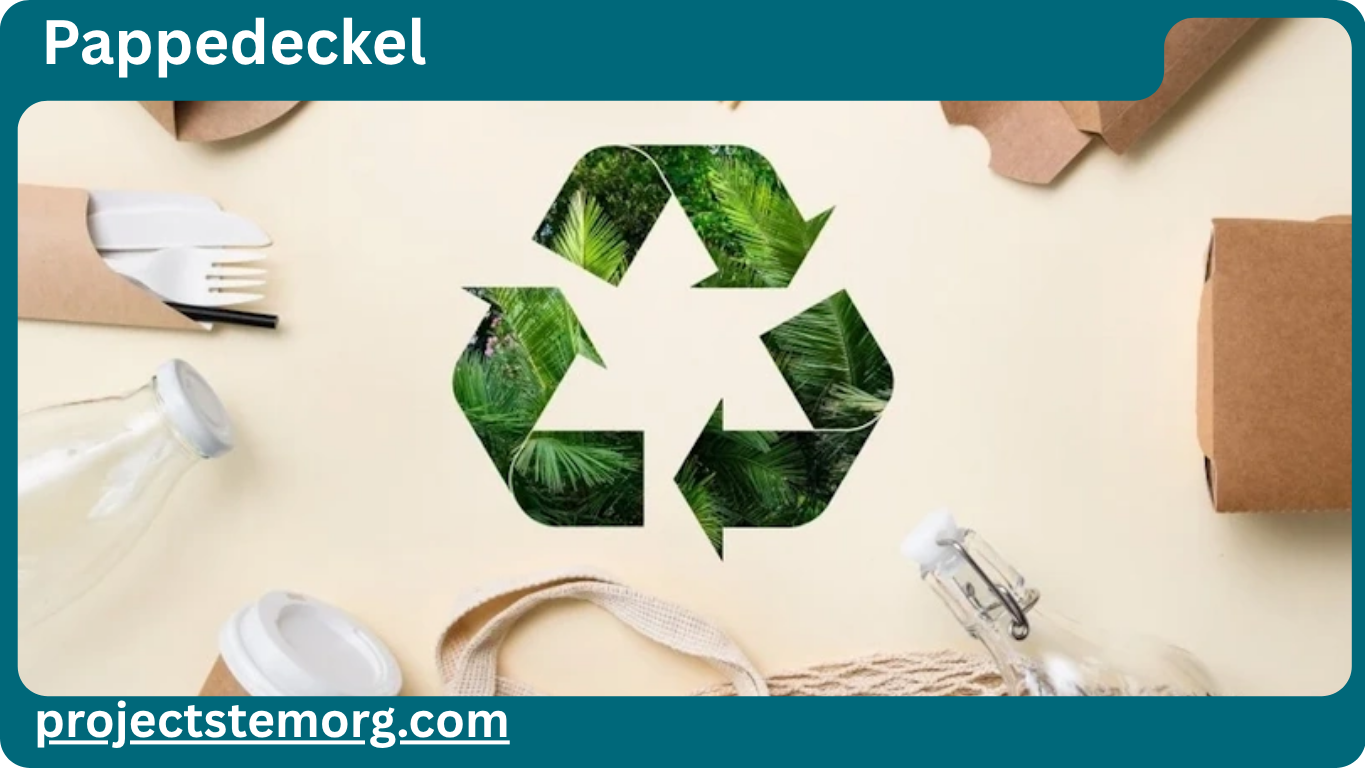
The word Pappedeckel may look unusual to English speakers, and even German speakers from different regions may not use it in exactly the same way. It is a regional and colloquial German expression connected with cardboard, paperboard, pasteboard, or a piece of stiff paper material.
In simple terms, Pappedeckel can refer to a piece of cardboard or a cardboard-like material. Depending on the region and context, however, the word can have additional meanings. In some German-speaking dialects, related forms can even be used informally for a driver’s license, identification document, or other official paper.
This makes Pappedeckel an interesting example of how language develops beyond standard dictionary definitions. A word can begin with a very practical meaning, such as a piece of cardboard, and later become a regional expression, nickname, or humorous reference.
For readers in the United States, the closest everyday English words are usually cardboard, paperboard, pasteboard, cardboard piece, or cardboard cover. The exact translation depends on the sentence and the region where the German speaker comes from.
This guide explains the meaning of Pappedeckel, where the word comes from, how it is used, how it differs from Pappdeckel and Pappendeckel, what it can mean in German dialects, how to pronounce it, and why the word can sometimes refer to a driver’s license.
What Does Pappedeckel Mean?
Pappedeckel generally refers to cardboard, stiff paper, paperboard, or a piece of this material.
The standard German forms Pappdeckel and Pappendeckel are documented in German dictionaries. Duden defines Pappdeckel as a rectangular piece of Pappe, meaning cardboard or a similar stiff paper material. It lists Pappendeckel as a related form.
The meaning can therefore be understood in two basic ways:
- The material itself, such as cardboard or stiff paper.
- A physical piece of cardboard.
For example, someone could use the word to describe a piece of cardboard placed underneath an object.
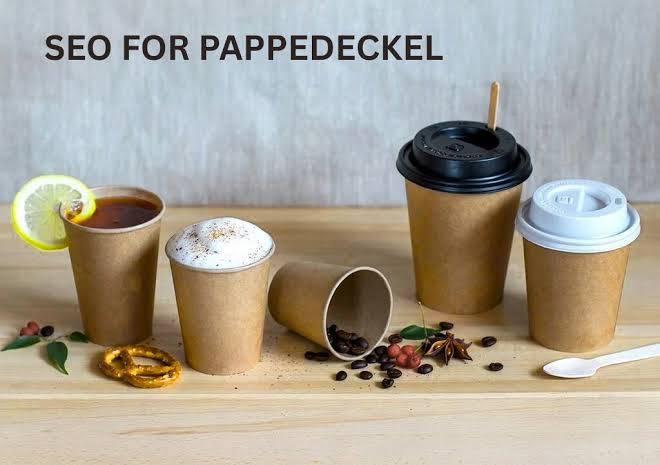
In English, a natural translation might be:
“a piece of cardboard”
or simply:
“cardboard.”
The best translation depends on context.
Also read:Caricatronchi: Meaning, Origins, Style, Uses, and Why Cartoonish Caricatures Are Popular Online
Is Pappedeckel a German Word?
Yes, Pappedeckel belongs to the German dialect and colloquial word family associated with Pappe and Deckel.
However, the exact spelling Pappedeckel is not necessarily the form you will see in standard German dictionaries.
Related forms include:
- Pappdeckel
- Pappendeckel
- Pappedeckel
- Babbedeckel
- Babbadeckel
- Babbadeggl
The variations reflect differences in regional pronunciation, spelling, and dialect.
Duden lists Pappdeckel as a German noun and Pappendeckel as its related form.
Regional dialect sources document forms such as Pappedeckel and Babbedeckel in southern German-speaking areas.
This is important because someone searching for Pappedeckel may actually be looking for information about the broader Pappdeckel or Pappendeckel word family.
What Is the Literal Meaning of Pappedeckel?
The word can be understood by looking at its parts.
Pappe is the German word associated with cardboard or a thick paper-based material.
Deckel generally means lid, cover, or something that covers another object.
The related standard form Pappdeckel is therefore built from Pappe and Deckel. Linguistic references identify this word formation directly.
A literal interpretation would be something like:
“cardboard cover”
or
“cardboard lid.”
Over time, however, the word has developed broader meanings than a literal cardboard lid.
This is common in language.
Words that begin as descriptions of physical objects can later become informal terms for things that resemble those objects or are associated with them.
Pappedeckel vs. Pappdeckel
One of the most important questions about Pappedeckel is how it differs from Pappdeckel.
In many contexts, the two forms refer to the same basic idea: cardboard, stiff paper, or a piece of cardboard.
Duden recognizes Pappendeckel as a related form of Pappdeckel.
The difference is often regional or stylistic rather than a major difference in meaning.
Pappdeckel is the shorter form.
Pappendeckel contains the extra “-en-” sound.
Pappedeckel can occur as a dialect or regional form.
The spelling you encounter may therefore tell you something about the speaker’s regional language background.
What Is Pappendeckel?
Pappendeckel is another form closely related to Pappdeckel and Pappedeckel.
Duden defines Pappendeckel as a rectangular piece of Pappe.
Wiktionary gives two closely related meanings:
- the material, such as cardboard or stiff paper
- a piece of cardboard or stiff paper
English dictionaries translate Pappendeckel with terms including cardboard, millboard, paperboard, and pasteboard.
This means that Pappendeckel should not automatically be translated as “cardboard lid.”
In many contexts, “cardboard” or “piece of cardboard” is more natural.
What Is Pappdeckel?
Pappdeckel is the standard-looking form that appears in major German dictionaries.
Duden defines it as a rectangular piece of Pappe and gives Karton and Pappe among its synonyms.
Collins translates Pappdeckel as “thin cardboard” and provides the example of putting a piece of cardboard underneath something.
Pappdeckel can therefore describe a simple piece of cardboard used as a cover, support, or other practical object.
The word can also appear in bookbinding and publishing contexts where thick paperboard is used as a book cover.
How Is Pappedeckel Pronounced?
Pronunciation depends on the regional form.
The standard-related form Pappendeckel is commonly represented in the International Phonetic Alphabet as approximately:
/ˈpapn̩ˌdɛkl̩/
Wiktionary provides this pronunciation for Pappendeckel.
For an English speaker, a rough approximation might sound like:
“PAP-en-dek-el”
This is only an approximation because German sounds do not always match English sounds exactly.
The pronunciation can also change in dialect.
A speaker from southern Germany may pronounce the word differently from someone speaking standard German.
What Is the Plural of Pappedeckel?
For the related standard form Pappendeckel, the plural is Pappendeckel.
The singular is:
der Pappendeckel
The plural is:
die Pappendeckel
Duden confirms this grammatical pattern for Pappendeckel.
For Pappdeckel, the same form is used for the plural:
der Pappdeckel
die Pappdeckel
This is useful when translating German documents or trying to understand older or regional German writing.
Pappedeckel in Southern German Dialects
Pappedeckel becomes especially interesting when dialect is considered.
German is not one single spoken variety.
Germany contains many regional dialects, and words can change in pronunciation and meaning from one area to another.
Bavarian dialect sources document forms such as Pappendeckel and Pappen- or Pappendeckel in different parts of Bavaria and Swabia. They also show meanings that go beyond cardboard.
Alemannic sources document forms including Pabbedeggel and Pappedeckel in southwestern Germany, where the word can mean cardboard and, in some areas, can also be associated with a driver’s license.
This is a good example of why regional German words cannot always be translated using only a standard dictionary.
Can Pappedeckel Mean Driver’s License?
Yes, in some regional dialects and informal contexts, related forms of Pappedeckel can refer to a driver’s license.
This is one of the most surprising meanings for English speakers.
Bavarian dialect documentation records Pappendeckel and related forms with meanings including an identification document and driver’s license in certain locations.
Alemannic sources also explain that Babbedeckel can be used as a synonym for a driver’s license in some areas.
The connection is informal and regional.
It should not be assumed that every German speaker will understand Pappedeckel to mean a driver’s license.
This is a key point for translation.
If you encounter the word in a sentence involving driving, police, identification, or documents, the intended meaning may be different from cardboard.
Why Would Cardboard Mean a Driver’s License?
The connection is largely based on the physical form and perceived value of older documents.
Historically, official cards and documents could be made from relatively stiff paper or cardboard-like material.
A driver’s license could therefore become associated with a “cardboard” or “little cardboard” object in regional speech.
Over time, the physical description could become a nickname for the document itself.
This is an example of metonymy, where one word associated with an object comes to represent the object.
It is similar to how people in English sometimes use material names or physical objects as informal names for documents or systems.
The exact history can vary by region, so it is better to describe this as a regional linguistic development rather than claim that every German dialect uses the word this way.
Pappedeckel as a Humorous Expression
The word can also appear in humorous or dismissive expressions.
Bavarian dialect documentation records Papp(en)deckel in phrases expressing rejection, meaning something closer to “nonsense,” “nothing,” or a dismissive response in certain local varieties.
This demonstrates how a simple material word can develop emotional meaning.
A person might use a word that literally refers to cardboard to describe something as:
- Worthless
- Insignificant
- Unimportant
- Silly
- Not worth discussing
The exact meaning depends heavily on the phrase and dialect.
Therefore, translating Pappedeckel word-for-word may produce a strange result.
Is Pappedeckel an Insult?
Not necessarily.
The basic meaning is simply connected to cardboard or stiff paper.
However, regional expressions can use the word humorously or dismissively.
That does not mean Pappedeckel itself is automatically an insult.
Context is essential.
If someone says the word while discussing packaging, books, crafts, or materials, the meaning is probably literal.
If someone says it during an argument or uses it to describe a person, object, or idea, the meaning could be figurative.
Pappedeckel in Everyday German
A German speaker might encounter cardboard in many ordinary situations.
For example:
- Packaging
- Shipping
- Books
- Craft projects
- Protective sheets
- Storage boxes
- School projects
- Household repairs
- Printing
- Manufacturing
The standard terms Karton, Pappe, and Pappdeckel may be more common in everyday standard German, while regional speakers may use dialect forms.
Also read:Türk Idla: Meaning, Origins, Digital Identity, and What the Term Really Means
This is why learners should recognize the word family rather than memorize only one spelling.
Pappedeckel and Cardboard
For American readers, cardboard is the easiest comparison.
But German words do not always map perfectly to English material categories.
English uses “cardboard” broadly.
German distinguishes between terms such as Papier, Pappe, Karton, and related compounds.
Depending on thickness, construction, and purpose, the most natural translation can change.
Pappendeckel dictionaries list cardboard, paperboard, pasteboard, and millboard among possible English translations.
This shows why translation should be based on context rather than a single fixed English equivalent.
Pappedeckel and Paperboard
Paperboard is another useful English translation.
Paperboard is generally a thicker and more rigid paper-based material than ordinary writing paper.
It is used for:
- Packaging
- Covers
- Cards
- Folding cartons
- Displays
- Printing
- Craft products
When Pappendeckel appears in a technical or manufacturing context, “paperboard” may sometimes be more precise than “cardboard.”
However, ordinary conversations may simply use “cardboard.”
Pappedeckel and Pasteboard
Pasteboard is an older or more specialized English term.
It generally describes a stiff board made from layers of paper or paper pulp.
It may appear in:
- Bookbinding
- Art
- Historical texts
- Manufacturing
- Dictionary translations
Langenscheidt includes pasteboard and millboard among possible translations for Pappendeckel.
For everyday American English, however, “cardboard” is usually the most understandable translation.
Pappedeckel in Bookbinding
One important historical and practical use of stiff paperboard is bookbinding.
Books have long used rigid boards for covers.
A board can provide:
- Protection
- Structural strength
- Shape
- Durability
- A surface for covering materials
Pappdeckel can therefore appear in contexts involving book covers and pasteboard.
The related English entry for Pappdeckel includes “pasteboard” and “book cover” among its meanings.
This is another reason the word should not always be translated simply as a shipping box.
Pappedeckel in Packaging
Cardboard-based materials are essential in packaging.
They are used because they are:
- Lightweight
- Relatively strong
- Easy to cut
- Easy to print
- Easy to fold
- Widely available
- Recyclable in many systems
A cardboard component may act as a cover, divider, backing, protective layer, or structural support.
The word Pappedeckel can therefore make sense in a practical packaging context.
Pappedeckel in Crafts
Cardboard is also common in arts and crafts.
People use stiff paperboard to make:
- Models
- Signs
- Decorations
- School projects
- Templates
- Small structures
- Handmade covers
- Storage organizers
A thick piece of cardboard can be easy to cut and shape while still providing more structure than ordinary paper.
This practical quality helps explain why words for cardboard have remained part of everyday language.
Pappedeckel in Manufacturing
Industrial applications may require more precise material terminology.
Manufacturers can distinguish materials by:
- Thickness
- Weight
- Fiber composition
- Surface treatment
- Strength
- Moisture resistance
- Flexibility
- Printing quality
- Coating
Therefore, Pappedeckel may be useful in general language, but a technical specification should identify the exact material required.
For example, a packaging engineer may need to specify a particular paperboard grade rather than simply saying “cardboard.”
Does Pappedeckel Mean Cardboard Box?
Not exactly.
This is a common translation mistake.
A cardboard box is a three-dimensional container.
Pappedeckel usually refers to cardboard, a piece of cardboard, or a cardboard-related cover.
The regional form Babbedeckel can be described as a cardboard box in some dialect resources, but that does not mean every occurrence of Pappedeckel means “box.”
Context determines the correct translation.
Is Pappedeckel the Same as Karton?
Not always, although the words overlap.
Karton can mean cardboard or carton and is commonly used for cardboard packaging.
Pappe can refer to a thicker paper material.
Pappdeckel can describe a piece of cardboard.
Duden lists Karton and Pappe as synonyms for Pappdeckel.
However, German material terminology can vary depending on industry and region.
Therefore, the safest approach is to translate the word based on what the object actually is.
The History Behind the Word
The word family has a long linguistic history.
The components Pappe and Deckel are old German vocabulary elements.
The compound Pappendeckel is documented in historical German dictionaries and older language sources. Wiktionary points to the Deutsches Wörterbuch of Jacob and Wilhelm Grimm as a historical reference.
This matters because Pappedeckel is not a newly invented internet word.
It belongs to a much older German vocabulary associated with materials, craftsmanship, covers, books, packaging, and everyday objects.
Its continued regional use shows how older words can survive even when standard vocabulary changes.
Why Regional Words Survive
Regional words often survive because language is connected to identity.
People may use a local word because:
- Their parents used it
- Their grandparents used it
- Their community uses it
- It sounds natural in their dialect
- It expresses something more warmly
- It creates a sense of local identity
A standard German speaker may understand Pappdeckel immediately, while a dialect speaker may naturally use Pappedeckel or Babbedeckel.
Neither necessarily represents a completely different concept.
The difference can be similar to regional vocabulary differences in English.
American, British, Australian, and Canadian speakers may use different words for the same everyday object.
Regional Distribution of Pappedeckel
Pappedeckel and related forms are particularly interesting in southern German-speaking areas.
Bavarian dialect sources document Pappendeckel and related variants across several Bavarian regions, including Swabia and other areas.
Alemannic sources document Pappedeckel and Babbedeckel in southwestern Germany, including southern Baden and neighboring dialect areas.
This does not mean the word is limited to one town or one state.
Dialects overlap.
Language also travels when people move between regions.
Pappedeckel in Austria and Other German-Speaking Areas
Related forms are also found beyond Germany.
Pappendeckel appears in Austrian German vocabulary and dialect sources.
The broader German-speaking region includes:
- Germany
- Austria
- Switzerland
- Liechtenstein
- German-speaking communities elsewhere
A word can have different levels of familiarity across these areas.
That is why regional context is important when translating German.
Why Dictionaries Give Multiple Meanings
A dictionary may list only the main meaning, while a dialect dictionary may record many local meanings.
Shiva Lord
For example, Duden gives the material-related definition for Pappendeckel.
Bavarian dialect documentation adds meanings related to identification documents, driver’s licenses, nonsense, nothing, rejection, and other expressions in specific locations.
Also read:Mila Volovich: A Complete Guide to the Name, Online Presence, Education, and Digital Identity
These are not necessarily contradictions.
They describe different layers of language.
Standard language dictionaries generally focus on broadly recognized meanings.
Dialect dictionaries preserve local vocabulary and expressions.
Both are valuable.
How to Translate Pappedeckel Into English
There is no single perfect translation for every situation.
Here is a useful guide:
Pappedeckel referring to material → cardboard or paperboard
Pappedeckel referring to a piece → piece of cardboard
Pappedeckel referring to a book cover → cardboard cover or pasteboard cover
Pappedeckel referring to packaging → cardboard or paperboard component
Regional Pappedeckel referring to a driver’s license → driver’s license
Figurative Pappedeckel → depends on the local expression and context
This approach is much safer than translating the word automatically.
Common Translation Mistakes
Translating Every Pappedeckel as “Lid”
The word contains Deckel, but it does not always mean a literal lid.
Translating Every Example as “Box”
Pappedeckel can describe a flat piece of cardboard rather than a box.
Assuming It Always Means a Driver’s License
That is only a regional meaning.
Assuming Every German Speaker Uses It
German speakers have different regional vocabularies.
Ignoring Dialect
A word can have a special meaning in one area and sound unusual elsewhere.
How to Understand Pappedeckel in Context
When you encounter Pappedeckel, ask three questions.
First:
What is being discussed?
If the conversation is about packaging, cardboard is likely.
Second:
Where is the speaker from?
A speaker from southern Germany may use a dialect meaning that is less common elsewhere.
Third:
What words appear around it?
If the sentence contains words related to driving or documents, the meaning may be a driver’s license.
If it contains words related to books, packaging, or materials, cardboard is more likely.
Context solves most ambiguity.
Examples of Possible Uses
Here are simplified examples to show the different meanings.
Literal Material Meaning
“Gib mir einen Pappedeckel.”
Depending on dialect, this could mean:
“Give me a piece of cardboard.”
Protective Use
“Leg einen Pappdeckel darunter.”
This can mean:
“Put a piece of cardboard underneath it.”
Collins gives a similar example for Pappdeckel.
Bookbinding Context
“Der Einband besteht aus Pappendeckel.”
A natural translation could be:
“The cover is made from stiff board.”
Regional Document Meaning
A southern German speaker may use a related form when talking informally about a driver’s license.
The exact meaning depends on local dialect.
Why Pappedeckel Is Interesting for Language Learners
Language learners often learn standard vocabulary first.
That is sensible.
But real conversations contain dialects, slang, abbreviations, and regional words.
Pappedeckel is a good example because the basic word is easy to understand once you know the related forms, but its regional meanings can surprise learners.
Learning the word family can therefore be more useful than memorizing one isolated definition.
A learner should recognize:
Pappe → cardboard
Deckel → lid or cover
Pappdeckel → cardboard piece or cover
Pappendeckel → related form
Pappedeckel → regional form
Babbedeckel → dialect form in southwestern German contexts
This gives enough context to understand many occurrences.
Is Pappedeckel Still Used Today?
Yes, related forms remain documented in contemporary German dictionaries and dialect resources.
Duden currently lists both Pappdeckel and Pappendeckel.
Modern dialect databases also continue to document regional usage.
However, frequency varies by location and situation.
A speaker using formal standard German may choose Pappe or Karton instead.
A person speaking a local dialect may prefer a regional form.
That difference is normal.
Pappedeckel and Modern Language
Modern German continues to evolve.
New words appear because of:
- Technology
- Social media
- Business
- Globalization
- English influence
At the same time, older regional words do not necessarily disappear.
Some survive in homes and communities even when younger speakers use them less often.
Pappedeckel therefore represents something important about language:
Old vocabulary can remain alive when it is connected to everyday objects and local identity.
Why Pappedeckel Matters Beyond Its Definition
At first glance, Pappedeckel seems like a simple word for cardboard.
But it provides a small window into German culture and language.
It shows:
- How compounds are formed
- How dialects change vocabulary
- How physical objects create metaphors
- How regional speech preserves older words
- How one word can develop multiple meanings
- Why context matters in translation
That makes Pappedeckel more interesting than its simple English translation suggests.
Pappedeckel and the Broader German Word Family
Understanding the word becomes easier when you recognize related terms.
Pappe means cardboard or a paper-based board material.
Deckel means lid or cover.
Pappdeckel refers to a cardboard piece or cover.
Pappendeckel is a related form.
Pappedeckel is a regional or dialectal form.
Babbedeckel and Babbadeckel represent dialect variations in certain southern German-speaking areas.
This family demonstrates how German compounds can produce very specific vocabulary.
What Americans Should Know About Pappedeckel
For an American reader, the easiest translation is usually “cardboard” or “piece of cardboard.”
If you encounter Pappedeckel in a German-language text, do not immediately assume it refers to a special commercial product.
It is primarily a German word or regional form connected with cardboard and stiff paper materials.
If the context involves a driver’s license, the word may have a regional figurative meaning.
If the context involves books or manufacturing, “paperboard,” “pasteboard,” or “board” may be a better translation.
Final Thoughts
Pappedeckel is a small but fascinating German regional word. In its simplest sense, it relates to cardboard, paperboard, stiff paper, or a piece of that material. The closely related forms Pappdeckel and Pappendeckel are documented in German dictionaries, while regional dialect sources show additional spellings and meanings.
For most English-speaking readers, “cardboard” or “piece of cardboard” is the best starting translation. However, the word becomes more interesting when it appears in southern German dialects, where related forms can sometimes mean a driver’s license or appear in humorous and dismissive expressions.
The most important lesson is that Pappedeckel should always be understood in context. A sentence about packaging will probably involve cardboard. A sentence about books may involve a stiff cover or board. A conversation about driving may use the word as a regional nickname for a driver’s license.
That flexibility is what makes the term valuable for anyone learning German. Pappedeckel is not simply a word for a piece of cardboard. It is also an example of how regional language, history, physical objects, humor, and everyday culture can shape the meaning of a word over time.
For US readers researching the term, the easiest way to remember it is simple: Pappedeckel is generally connected with cardboard or stiff paper, while its exact meaning can change depending on region and context.
Frequently Asked Questions About Pappedeckel
Is Pappedeckel a standard German word?
Pappedeckel is best understood as a regional or dialectal form related to the more standard forms Pappdeckel and Pappendeckel. Major dictionaries document Pappdeckel and Pappendeckel directly.
What is the simplest English translation of Pappedeckel?
The simplest translation is usually “cardboard” or “piece of cardboard.” In technical or bookbinding contexts, “paperboard” or “pasteboard” may be more accurate.
Does Pappedeckel have anything to do with books?
It can. Related terms such as Pappdeckel and Pappendeckel can refer to stiff board used for book covers or other paperboard applications.
Can Pappedeckel refer to something other than cardboard?
Yes. In some southern German dialects, related forms can refer informally to a driver’s license or other documents. Dialect sources document these meanings in specific regions.
Is Pappedeckel used throughout Germany?
Not with the same frequency or meaning. It is associated particularly with regional speech, while Pappdeckel and Pappendeckel are more broadly recognized forms.